Iran war impact on global oil markets

The Iran war is having a significant impact on global oil markets, increasing volatility and raising concerns about energy supply disruptions. Oil and gas industry professionals, along with analysts, governments, academics, and others, are closely watching how the conflict is impacting crude prices, production, and international trade flows.
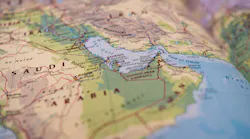
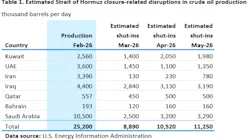
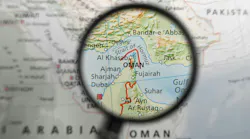
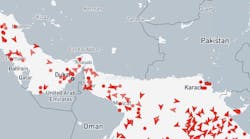
The oil supply disruption from the closure of the Strait of Hormuz, which carries a significant share of the world’s crude exports, remains a key concern for global energy markets and traders.
This page brings showcases ongoing coverage and analysis from Oil & Gas Journal with some content from Offshore, both EndeavorB2B brands, to help readers understand how the Iran war affects oil prices, LNG flows, and the broader energy market outlook. It includes the latest news, expert insights, and data-driven forecasts.
Last updated Oct. 8, 2026
Some of the articles below require a free site‑access membership to view in full. If you are not already registered with Oil & Gas Journal, sign up here for free. For Offshore articles, sign up here for free.
New content will be added as it becomes available.

Expert voices: Iran war and energy markets
The Oil & Gas Journal ReEnterprised podcast examines the economic and operational consequences of the Iran war, drawing on expert analysis from industry researchers, geopolitical analysts, and energy market specialists.
In this Market Focus episode of the Oil & Gas Journal ReEnterprised podcast, Conglin Xu, managing editor-economics, sits down with Dennis Kessler, senior vice-president of trading at BOK Financial, to examine the forces reshaping global oil markets amid renewed geopolitical uncertainty.
Oil & Gas Journal has spent a great deal of time discussing the Strait of Hormuz, not simply because of its importance to global oil markets, but because the events there have fundamentally changed how countries are thinking about energy security.
One country not yet directly involved in the conflict, but nonetheless facing enormous potential consequences, is Iraq.
This Insights episode of the Oil & Gas Journal ReEnterprised podcast highlights and contextualizes Iraq's evolving development ambitions in its pursuit to diversify export options, bolster economic resilience, and influence global energy markets.
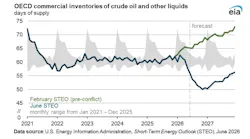
Disruptions to oil and LNG flows through the Strait of Hormuz continue to tighten global energy balances, with recovery likely to lag even under a near-term de-escalation scenario.
In this Market Focus episode of the Oil & Gas Journal ReEnterprised podcast, Managing Editor-Economics, Conglin Xu, provides an overview of the current situation and what lies ahead.
In this episode of the Oil & Gas Journal ReEnterprised podcast, Conglin Xu, managing editor, economics, takes a look into the LNG market shock caused by the effective closure of the Strait of Hormuz and the sudden loss of Qatari LNG supply as the Iran war continues.
Xu speaks with Edward O’Toole, director of global gas analysis, RBAC Inc., to examine how these disruptions are intensifying global supply constraints at a time when European inventories were already under pressure following a colder-than-average winter and weaker storage levels.
In this bonus episode of the Oil & Gas Journal ReEnterprised podcast, Head of Content Chris Smith is joined by Jim Krane, the Diana Tamari Sabbagh Fellow in Middle East Energy Studies and Center for Energy Studies Lead for Energy and Geopolitics in the Middle East at Rice University’s Baker Institute for Public Policy.
The two discuss the regional political forces shaping the Iran war so far, exactly how vulnerable the Strait of Hormuz is, and—shifting inland—what’s in it for the Kurds.
Infographic: Strait of Hormuz energy flows
The Strait of Hormuz is the waterway through which about 20 million b/d of crude and petroleum products flow. Click to enlarge.

Oil prices and market disruptions
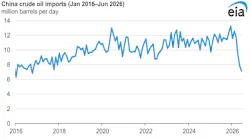
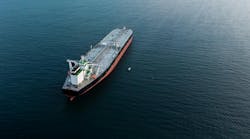
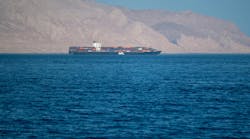
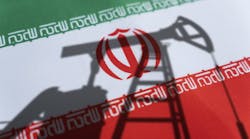
The Iran war has triggered significant volatility across global crude benchmarks, with Brent prices surpassing $100/bbl and the IEA characterizing the disruption as the largest supply shock in history. Market uncertainty has been compounded by Strait of Hormuz transit risks, emergency strategic petroleum reserve releases, and shifting OPEC+ production decisions. Price movements have been sharp and reactive, responding to ceasefire signals, escalation news, and US policy interventions. The articles below track these developments as as they continue to unfold.






















Upstream, midstream, and downstream operational impacts
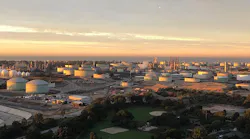
The Iran war has forced material operational changes across the region's upstream and midstream sectors. ExxonMobil has flagged a 6% drop in global oil-equivalent production in first-quarter 2026, with Chevron reporting a similar decline tied to Middle East asset disruptions. Saudi Aramco's Jubail refinery temporarily halted processing following conflict-related damage, while the Dallas Fed survey of energy executives found that capital planning has largely been put on hold. On the supply side, the Trump administration ordered the restart of California offshore oil transport to support military operations, reflecting the conflict's reach into US domestic energy policy. The articles below, from Oil & Gas Journal, document these operational developments as they've emerged.



Iran war impact on offshore oil, gas operations
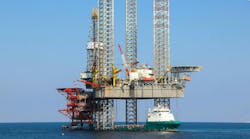
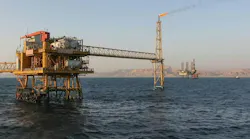
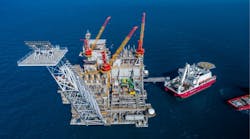
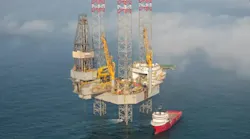
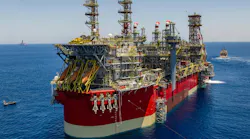
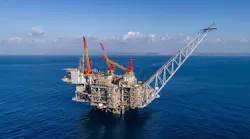
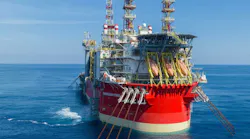
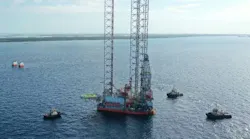
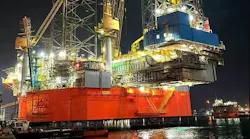
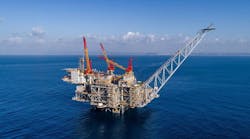
Offshore oil and gas operations in the Middle East face elevated risk as tensions involving Iran increase. Production platforms, subsea infrastructure, and offshore support systems may be affected by military activity, sanctions, or restricted access to key shipping routes. Operators are monitoring potential impacts on offshore production, drilling schedules, and logistics networks.
While offshore assets are generally more insulated than onshore infrastructure, their reliance on secure transport and regional stability introduces operational risk during sustained escalation. The articles below examine how the Iran war is influencing offshore oil and gas operations and project activity.
Offshore investment, project timing, operator strategy
Offshore operators are adjusting investment decisions and project timelines in response to heightened geopolitical risk involving Iran. Exploration programs, final investment decisions, and development schedules may be delayed or reprioritized as companies reassess exposure to regional instability.
Capital allocation across offshore portfolios is also being influenced by shifting market conditions, including price volatility and supply uncertainty.
While long-cycle offshore developments are less sensitive to short-term disruption, sustained tension can reshape investment strategy, slow project sanctioning, and alter the pace of offshore growth.