Trump waives Jones Act for 60 days to blunt oil, gas price spike
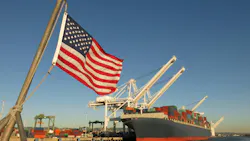
President Donald Trump issued a 60-day waiver of the Jones Act in an attempt to stabilize oil markets as the Iran war continues to disrupt traffic in the Strait of Hormuz.
The temporary waiver “will allow vital resources like oil, natural gas, fertilizer and coal to flow freely to US ports for sixty days,” White House press secretary Karoline Leavitt said in a statement.
Enacted in 1920 to protect the US shipping industry and secure US ports, the Jones Act requires that all goods transported between US ports be carried on ships that are US-built, US-owned, and US-crewed.
The suspension would allow thousands of international tankers to transport gas from the Gulf Coast to Northeast markets and “help relieve structural friction in the US energy supply chain,” Daleep Singh, chief global economist at asset manager PGIM, said in a client note.
Because there are fewer than 100 Jones Act-compliant tankers, buyers in New York and New England usually find it cheaper to purchase fuel from overseas “than to wait for a ship from Texas,” he said.
Even with more international tankers he said, “the efficacy of the plan is limited by a mismatch: about 70% of US refineries are built to process thick, heavy Middle Eastern crude, while the US mainly produces light shale oil. Put plainly: the US can now move fuel around more easily, but it still can't refine enough of what it produces for self-sufficiency.”
Another lever the administration is considering to address the oil price shock—banning US crude exports—carries similar limitations, PGIM’s Singh said.
“Because most US refining capacity is designed to process heavy crude, an export ban would create a domestic glut of light oil that US refineries cannot absorb, potentially forcing plants to throttle down production and reducing the total supply of refined products,” he wrote. “At the same time, pulling US supply from the global market would spike the Brent benchmark along with domestic gas prices.”
The Cato Institute, a libertarian think tank, earlier this week said a Jones Act waiver would not produce “dramatic drops” in fuel costs because “transportation is just one of many factors that determine prices at the pump, and the current price environment reflects global supply disruptions that no domestic shipping policy can fully offset.”
But, it said, it is “equally wrong to claim a waiver would do nothing. There is no question about the directional impact of Jones Act relief, only the magnitude,” Cato said in a blog post.
Iran war coverage hub
This Iran war compilation hub highlights news, insights, and updates from Oil & Gas Journal and Offshore, both EndeavorB2B brands, concerning the war in Iran.
About the Author
Cathy Landry
Washington Correspondent
Cathy Landry has worked over 20 years as a journalist, including 17 years as an energy reporter with Platts News Service (now S&P Global) in Washington and London.
She has served as a wire-service reporter, general news and sports reporter for local newspapers and a feature writer for association and company publications.
Cathy has deep public policy experience, having worked 15 years in Washington energy circles.
She earned a master’s degree in government from The Johns Hopkins University and studied newspaper journalism and psychology at Syracuse University.