OIES: Hormuz disruption could trigger biggest rewrite of LNG contract language in years
Key Highlights
- Force majeure clauses vary in defining disruption thresholds, affecting relief and contractual obligations during supply crises.
- The Strait of Hormuz closure revealed gaps in allocation and shipping risk provisions, especially regarding control over cargo movement and insurance costs.
- Post-disruption resumption practices are underdeveloped, raising challenges in scheduling, volume attribution, and managing multiple buyer claims.
- Dispute resolution needs to incorporate faster, interim mechanisms like mediation or expert determination to handle operational conflicts swiftly.
- Future LNG contracts will likely focus more on resilience, emphasizing supply scarcity management, transportation risks, and flexible resumption terms.
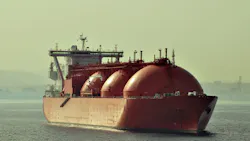
The closure of the Strait of Hormuz earlier this year could trigger the largest revision of LNG sale and purchase agreement (SPA) language in years, according to recent analysis by the Oxford Institute for Energy Studies (OIES).
The report, authored by OIES Senior Research Fellow Agnieszka Ason, notes that a market long characterized by supply growth and commercial flexibility is shifting toward one that must account for scarcity, disruption, and recovery.
The late-February attacks by the US and Israel on Iran disrupted shipping through the Strait of Hormuz, reducing global LNG supply by an estimated 20%—one of the most severe energy shocks in decades. This critical corridor, through which LNG, crude oil, refined products, fertilizers, and metals are transported, saw daily transit come to a virtual standstill.
Ason argues that the incident served as a stress test for LNG contracting practices built up over years of relatively abundant supply conditions. As buyers and sellers scrambled to respond to reduced volumes, the crisis exposed drafting deficiencies in sales agreements across five areas: force majeure, allocation of scarce cargoes, transportation risk, resumption of service, and dispute resolution.
Force majeure thresholds
Force majeure clauses in LNG sale and purchase agreements (SPAs) differ in how they define the level of disruption required to excuse performance. Some require that performance be “prevented,” while others adopt broader terms such as “hindered,” “impeded,” or “delayed.” These drafting choices set the threshold for relief—limiting it either to situations of impossibility or extending it to cases where performance remains feasible but constrained.
More complex cases arise in the latter category, where LNG delivery is still possible but involves reduced volumes, schedule delays, alternative sources, or elevated safety risks. In such situations, the analysis turns on how contractual obligations are defined and whether reasonable alternative means of performance exist.
Portfolio-based LNG supply arrangements introduce additional complexity. When a disruption affects a specific project, facility, or liquefaction train, the key issue is whether the force majeure assessment is confined to that source or extends to LNG available across the seller’s broader portfolio or the market. The answer depends on the SPA’s supply obligation—whether it is tied to a designated source, a portfolio-based commitment, or an alternative performance framework. This distinction is critical, as it determines the extent of ongoing performance obligations and the applicability of allocation provisions.
Force majeure issues may arise across multiple deliveries and interconnected contracts, each requiring separate assessments. A disruption affecting production, loading, shipping, or delivery may yield divergent outcomes where contracts apply different thresholds, notice requirements, and mitigation standards.
Drafting implications center on three areas. First, clarifying whether disruptions short of impossibility suffice to trigger force majeure. Second, defining the scope of assessment in source and portfolio contexts—whether limited to the affected asset or extended to the seller’s portfolio or the market. Third, structuring the treatment of multi-period disruptions, including the scope of initial notices, requirements for updates, and the coordination of cascading notices across related contracts.
Allocation, shipping risks
Many procurement agreements include pro-rata or priority allocation clauses for reduced volumes, but Ason found that such clauses often lack a clear reference scope—leaving it unresolved whether shortfalls should be measured against a single project's output, contractually committed volumes, or the broader market. She notes that without this benchmark, standard allocation clauses may fail to produce workable solutions in an actual shortage.
Meantime, the closure of the Strait of Hormuz highlighted how control over shipping—typically allocated through FOB or DES delivery terms—determines whether cargoes can move once a chokepoint closes. The analysis notes that war-risk insurance premiums, insurance withdrawals, and shipowners' refusal to sail can complicate performance even when cargoes are technically deliverable. Ason argues that existing contracts often fail to clearly specify who bears the additional shipping and insurance costs during such disruptions.
Resumption
Ason identifies post-disruption resumption as the least developed area of LNG contracting. Most sales agreements assume that performance will automatically resume once a crisis ends, but she says this assumption becomes difficult to sustain after a prolonged, large-scale disruption. Unresolved questions include how to reschedule delivery of undelivered cargoes, how to address competing buyer claims on restored capacity, and how to classify delivered volumes against annual contract quantities and take-or-pay obligations.
Where restoration is contemplated, sellers may face competing claims from multiple buyers for limited restored supply, while buyers seek both recovery of missed volumes and continued delivery of future quantities. Tensions are most acute where outstanding volumes are significant and supply is constrained.
Restoration also requires adjustments to delivery programs and shipping. Cargo schedules, vessel allocation, and delivery windows may need to be revised, making reintegration of deferred volumes into already committed programs a key challenge.
A further issue is the attribution of post-disruption cargoes. Where SPAs distinguish between base quantities, restoration volumes, and flexibility, this hierarchy determines whether deliveries satisfy current obligations, restore past shortfalls, or draw on optionality. Absent clear drafting, disputes may arise over both timing and categorization of delivered volumes.
Dispute management
Disruptions like this make contractual disputes more likely, Ason writes, since parties can disagree on when force majeure applies, how much mitigation a seller owes, how reduced supply gets split, and how restoration should work.
The core tension, she argues, is speed: decisions on cargo allocation, shipping, and rescheduling often need to happen within days, while the legal fallout from those decisions can stay contested for months or years—a mismatch between how fast LNG operations move and how slowly formal dispute resolution runs.
The report calls for LNG contracts to incorporate interim dispute-resolution tools—such as mediation, expert determination, or expedited procedures—like those long used in construction contracts, to address time-sensitive operational disputes that arbitration cannot resolve quickly enough.
Ason concludes that while many necessary revisions amount to refinements of existing clauses, allocation and resumption provisions may require more fundamental redrafting. More broadly, she expects that as the industry absorbs the lessons of the Hormuz incident, LNG SPA negotiations will place increasing emphasis on resilience—how contracts perform under constrained supply, the allocation of scarce volumes, transportation risk, and resumption terms.
About the Author
 Conglin Xu
Conglin Xu
Managing Editor-Economics
Conglin Xu, Managing Editor-Economics, covers worldwide oil and gas market developments and macroeconomic factors, conducts analytical economic and financial research, generates estimates and forecasts, and compiles production and reserves statistics for Oil & Gas Journal. She joined OGJ in 2012 as Senior Economics Editor.
Xu holds a PhD in International Economics from the University of California at Santa Cruz. She was a Short-term Consultant at the World Bank and Summer Intern at the International Monetary Fund.