Strait of Hormuz closure likely to impact natural gas markets before crude oil
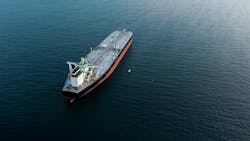
The Strait of Hormuz is a war zone, with strikes on civilian vessels having occurred and military actions ongoing. This follows coordinated Feb. 28 attacks by the US and Israel on Iran and has nearly halted shipping traffic through the waterway, which typically carries about 20% of the world’s crude oil and natural gas.
Baker Institute Center for Energy Studies lead for Energy and Geopolitics in the Middle East, Jim Krane, noted that the strait is narrow enough that it wouldn’t take particularly sophisticated weaponry to keep shipping traffic imperiled even after Iran’s larger weapon systems have been neutralized, noting that the Houthi had managed to effectively close the Bab el-Mandeb Strait from the Red Sea for months even with the US Navy there.
The administration of US President Donald Trump has said the bombing campaign against Iran could last for weeks. Krane feels that the amount of oil in storage will delay major market dislocations beyond what might be the case for natural gas.
In addition to safety, financial factors are also at work. “The insurance coverage seems to be one of the key reasons we're not seeing ships going through right now. They either lack coverage or the changes in the cost of insurance have gotten prohibitive, and the shipping firms are balking,” Krane said.
Initial reactions
Crude prices jumped sharply Mar. 2, 2026, as compared with a normal trading day—Brent crude briefly surged to more than $82/bbl before easing to around $79/bbl, while West Texas Intermediate climbed more than 8% to exceed $72/bbl—but market reaction was somewhat muted vs. expectations.
“Production's been outpacing demand and tons of oil's been going into storage. China has been filling its strategic storage. The Saudis have been filling storage on the Red Sea coast. They've been filling storage in Egypt, next to the Sumed pipeline,” said Krane. “They've been filling storage in Rotterdam, in Japan, in South Korea, and apparently also in South Africa. So, a lot of oil [has been] pre-positioned out of the strait.”
Krane also noted the amount of crude oil on the water—whether in transit or floating storage—as helping cap the immediate price reaction. In mid-January Kpler placed the amount of Iranian crude at sea as 166 million bbl, the highest level it had recorded. This number had ballooned due to sanctions on trading Iranian barrels. But even setting these barrels aside, as of late 2025 S&P Global estimated that 1.2 billion bbl of crude were on the water, levels not seen since the COVID-19 pandemic.
Natural gas price increases have been more pronounced. European prices were up more than 50% and Asian prices nearly 39%, as QatarEnergy halted LNG production and declared force majeure following Iranian attacks on Ras Laffan Industrial City. Qatar produces roughly 20% of the world’s LNG.
“Qatar is exporting to India, Pakistan, Bangladesh—closer-in countries—but also to China, Japan, South Korea, Taiwan,” said Krane. Competition for remaining molecules will likely spread these effects globally and could give “US LNG exporters an opportunity to make a little extra.”
About the Author
 Christopher E. Smith
Christopher E. Smith
Editor in Chief
Chris joined Oil & Gas Journal in 2005 as Pipeline Editor, having already worked for more than a decade in a variety of oil and gas industry analysis and reporting roles. He became editor-in-chief in 2019 and head of content in 2025.