Oil rises sharply as US-Iran conflict disrupts Strait of Hormuz flows
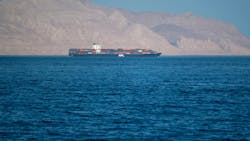
Crude oil prices surged following coordinated US and Israeli strikes on Iranian military targets on Feb. 28, heightening geopolitical tensions and fueling concerns over potential supply disruptions through the Strait of Hormuz, one of the world’s most critical energy chokepoints. Iran retaliated with missile and drone attacks against US bases and regional allies, further amplifying market uncertainty.
As of this writing, Iran’s Supreme Leader and several senior Islamic Revolutionary Guard Corps (IRGC) officials have reportedly been killed in the conflict. Transit through the strategically vital Strait of Hormuz has largely come to a halt, although Iran’s official statements and actions regarding the waterway have remained inconsistent.
Brent crude briefly surged as much as 13% at market open to above $82/bbl before easing to around $79/bbl, while West Texas Intermediate (WTI) climbed more than 8% to exceed $72/bbl. Prices had already risen above $70/bbl last week as geopolitical risk premiums built ahead of the escalation.
Analysts say the price rally primarily reflects the risk of disrupted exports rather than immediate production losses. “Higher oil and gas prices are certain if the Strait of Hormuz remains closed,” Wood Mackenzie said, noting that the waterway carries roughly 15% of global oil supply and nearly 20% of global LNG trade. Oil prices could exceed $100/bbl if tanker flows are not quickly restored.
The conflict in Iran remains a developing story with no clear end in sight, and US officials have indicated that strikes may continue over several days.
“President Trump's own commentary has suggested outcomes ranging from a relatively short operation to an exceedingly long war. All else equal, the apparent US discomfort with ground troops in Iran and messaging from the Trump administration biases towards a shorter duration of conflict. In contrast, achieving ‘regime change’ would represent a more open-ended engagement and the risk of Iranian escalation towards energy targets and flows,” said Macquarie.
Strait of Hormuz disruption
About 20 million b/d of crude oil and petroleum products transit the Strait of Hormuz, linking Persian Gulf producers—including Saudi Arabia, Iraq, Iran, the United Arab Emirates (UAE), and Kuwait—to global markets. While limited pipeline alternatives exist, they cannot fully replace maritime export capacity.
Shipping disruptions have already emerged as maritime authorities and carriers suspend traffic through the corridor amid security concerns.
The closure also threatens LNG markets. Qatar, one of the world’s largest LNG exporters, routes all shipments through the Strait and has reportedly shut its largest LNG plants following a drone attack. Sustained outages could tighten global gas markets, particularly as European storage levels remain near their lowest since 2022 after a cold winter.
Wood Mackenzie estimates that each week of halted transit could remove roughly 1.5 Mt (2.2 bcm) of LNG from global supply, intensifying competition between Asian and European buyers and boosting demand for US LNG exports.
Iranian production losses
Iran produces about 3 million b/d of crude oil, and no confirmed attacks on oil infrastructure have been reported.
“Nevertheless, we expect the impact of any loss of potential production from Iran to have a lesser impact on crude oil prices compared with the closure of the Strait,” said Morningstar DBRS.
Meanwhile, eight OPEC+ members announced Mar. 1 they will begin unwinding part of their voluntary production cuts, increasing output by 206,000 b/d starting in April.
The decision is not surprising given tight markets, said Alan Gelder, senior vice-president at Wood Mackenzie. However, additional supply becomes largely irrelevant if exports cannot move through the Strait. Meantime, strategic stock releases by IEA members could provide temporary relief, he noted.
Outlook
Market outlook remains highly uncertain. Wood Mackenzie analysts say oil prices are “heavily risked to the upside” if disruptions persist for weeks, drawing comparisons to early market reactions during the Russia-Ukraine conflict. While many expect the crisis to prove temporary, prolonged disruptions could significantly tighten global oil and LNG balances and sustain elevated price volatility.
Morningstar DBRS said North American energy markets are positioned to benefit from rerouted trade flows, though near-term volatility is likely to remain elevated.
According to Westwood CIO of Multi-Asset Strategies Adrian Helfert, the most likely outcomes are manageable. “We assign roughly 45% probability to scenarios where this conflict is resolved within weeks and markets recover relatively quickly. The tail risks are real, but they are not the central case.”
Meantime, “the most consequential scenario is regime change, one where the combination of external military pressure and internal fragility produces genuine political transformation in Iran. This has the widest range of near-term outcomes—peak uncertainty during the transition—but potentially the most positive long-term implications. A normalized Iran would add meaningful oil supply to global markets and remove the structural geopolitical risk premium that has been embedded in Gulf energy prices for decades.”
About the Author
 Conglin Xu
Conglin Xu
Managing Editor-Economics
Conglin Xu, Managing Editor-Economics, covers worldwide oil and gas market developments and macroeconomic factors, conducts analytical economic and financial research, generates estimates and forecasts, and compiles production and reserves statistics for Oil & Gas Journal. She joined OGJ in 2012 as Senior Economics Editor.
Xu holds a PhD in International Economics from the University of California at Santa Cruz. She was a Short-term Consultant at the World Bank and Summer Intern at the International Monetary Fund.