US extends waiver allowing Japan to buy LNG from Russia’s Sakhalin 2
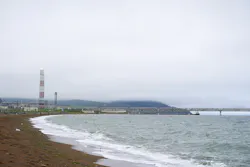
The Trump administration June 11, 2026, said it would extend through Dec. 18 a waiver allowing Russia to export oil and gas from the Sakhalin 2 project to Japan as global supplies remain constrained amid the continued closure of the Strait of Hormuz.
The US tightened sanctions against Russia in response to Moscow's 2022 invasion of Ukraine, but a sanctions exemption was carved out at that time, allowing the Japan transactions related to Sakhalin 2 through June 18, 2026.
Russian state-owned energy giant Gazprom owns more than 70% of Sakhalin 2, while Japanese firms Mitsui & Co. and Mitsubishi Corp. hold 12.5% and 10%, respectively.
The US Treasury Department’s Office of Foreign Asset Control said the exemption continues to allow full authorization for maritime transport of crude oil and products, including LNG, from Sakhalin 2 to Japan, financial clearing (including transactions with Gazprombank), and joint operations funding.
Sakhalin 2 provides Japan with roughly 3.6-3.9 million tonnes/year (tpy) of LNG, nearly 9% of Japan's total LNG imports in 2025. The plant exports about 10.3 million tpy, with Japan taking its portion under long-term utility contracts.
The extension follows negotiations under way since 2025 between the Japanese government and US authorities to extend the waiver. Japan has expressed concerns that failure to access the supplies would raise electricity prices and potentially result in power outages. Those calls grew louder this year when the Strait of Hormuz blockade halted about 90% of Japan’s crude and 11% of its LNG supplies.
About the Author
Cathy Landry
Washington Correspondent
Cathy Landry has worked over 20 years as a journalist, including 17 years as an energy reporter with Platts News Service (now S&P Global) in Washington and London.
She has served as a wire-service reporter, general news and sports reporter for local newspapers and a feature writer for association and company publications.
Cathy has deep public policy experience, having worked 15 years in Washington energy circles.
She earned a master’s degree in government from The Johns Hopkins University and studied newspaper journalism and psychology at Syracuse University.