Oil prices surge as Hormuz, Bab el-Mandeb risks escalate amid renewed US–Iran tensions
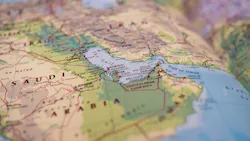
Oil prices jumped on Wednesday, July 22, with escalating geopolitical tensions and mounting risks to key maritime chokepoints driving the rally.
International Brent crude rose nearly 5% to above $95/bbl, its highest level in almost 6 weeks, while US crude climbed more than 4% to above $88/bbl. The gains extend a strong upward trend, with prices up about 30% since the start of the month and more than 55% year to date, reversing declines seen after a mid-June memorandum of understanding (MOU) between the US and Iran.
Stay updated on oil price volatility, shipping disruptions, LNG market analysis, and production output through OGJ's Iran war content hub.
The earlier agreement, aimed at de-escalating conflict and reopening the Strait of Hormuz, was declared “over” on July 8 by President Donald Trump. Since then, hostilities have intensified, with US forces carrying out an 11th consecutive night of strikes on Iran. Comments from US Secretary of State Marco Rubio further dampened expectations for near-term diplomacy, noting that while Washington remains open to talks, Iran does not appear to be engaging seriously.
At the same time, security risks to global shipping have increased. The UK Maritime Trade Operations (UKMTO) has reported multiple recent attacks on vessels in the region, including incidents that forced crews to abandon ships. As a result, traffic through the Strait of Hormuz has fallen sharply, with just 13 vessels transiting Monday and 9 on Tuesday, according to MarineTraffic data.
Concerns are also growing at the Bab el-Mandeb Strait, another critical oil transit route linking the Red Sea to the Gulf of Aden. Iranian-backed Houthi forces in Yemen have threatened a maritime blockade targeting Saudi Arabia, raising fears of broader supply disruptions. While vessel traffic through Bab el-Mandeb remains relatively steady—73 ships transited Tuesday—it has edged lower and signs of hesitation among shippers are increasing.
Market participants warn that simultaneous risks at both chokepoints could significantly disrupt global oil flows. Analysts note that avoidance of the Bab el-Mandeb would force tankers to reroute via the Suez Canal, increasing transit times and costs, particularly for shipments to Asia.
Rising crude prices are also feeding through to refined products. US retail gasoline prices continued to climb, with the national average extending gains above the $4 threshold.
 Jim Krane, Rice University's Baker Institute
About the Author
 Conglin Xu
Conglin Xu
Managing Editor-Economics
Conglin Xu, Managing Editor-Economics, covers worldwide oil and gas market developments and macroeconomic factors, conducts analytical economic and financial research, generates estimates and forecasts, and compiles production and reserves statistics for Oil & Gas Journal. She joined OGJ in 2012 as Senior Economics Editor.
Xu holds a PhD in International Economics from the University of California at Santa Cruz. She was a Short-term Consultant at the World Bank and Summer Intern at the International Monetary Fund.