WoodMac: Ras Laffan attacks upend global LNG outlook
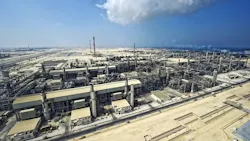
Missile attacks on Qatar’s Ras Laffan Industrial City on Mar. 18 have deepened concern over damage to critical gas infrastructure and sharply worsened the global gas and LNG market outlook, according to Wood Mackenzie analysis.
Qatari LNG production has been shut down since early March, removing about 80 million tonne/year (tpy) of supply from the market, or roughly 19% of global LNG supply. The Mar. 18 strike damaged the Pearl GTL plant and a subsequent attack damaged LNG infrastructure, although the full extent of the impact remains under assessment.
In a release Mar. 19, Shell said all staff at Pearl GTL are safe and that that a fire that broke out within the Pearl GTL plant was rapidly extinguished. The company said the situation is under control and Pearl GTL is in 'a safe state.' Continuing, Shell said the company is assessing any potential damage to Pearl GTL and working with QatarEnergy and relevant authorities to understand the impact on the wider Ras Laffan Industrial City infrastructure.
Longer outage raises risks to supply growth, prices
Wood Mackenzie said market expectations had initially been for a short disruption, with Qatari supply returning to pre-conflict levels by mid-2026, but that outlook now appears increasingly unlikely.
A more prolonged outage would further tighten global supply and keep prices elevated for longer, said Kristy Kramer, head of LNG strategy and market development, Wood Mackenzie.
Before the latest attacks, the consultancy had estimated Qatar could return LNG production to full capacity within 4-6 weeks, based on a scenario of 3 days to restart upstream operations and about 7 days to ramp up each liquefaction train. That timeline is now expected to lengthen depending on the extent of damage and the repairs required.
The disruption also clouds the outlook for Qatar’s North Field East expansion. The expansion project, expected to add 32 million tpy of capacity, was expected to start up late 2026, but was delayed prior to the attacks. Further delays would constrain supply growth into 2027–2028, limiting the market’s ability to rebalance.
Before the Middle East conflict escalated, Wood Mackenzie had forecast global LNG supply growth of 35 million tonnes in 2026. The consultancy said a disruption in Qatar production lasting 5-6 months would be enough to push global LNG supply into year-over-year decline.
“Even if supply were maintained at 2025 levels, the market would still face demand destruction in Asia, lower storage injections in Europe, and sustained upward pressure on gas and LNG prices,” said Daniel Toleman, research director for global LNG, Wood Mackenzie. “Each additional month of disruption removes around 1.5% from annual global LNG availability.”
Asia, Europe most exposed to LNG shortfall
Asia is seen as the most exposed region because it accounted for about 90% of Qatari LNG cargoes in 2025. Wood Mackenzie highlighted Bangladesh, India, and Taiwan as particularly vulnerable because of their exposure to spot prices, rising energy-cost pressures, and limited alternative supply options. The firm said Asian LNG demand, already reduced from a pre-disruption growth forecast of 10 million tonnes to 2 million tonnes under a 2-month outage scenario, is now likely to decline outright if the disruption persists.
In Europe, lower LNG availability is expected to reduce storage injections and accelerate fuel switching, particularly from gas to coal. Wood Mackenzie said European storage levels may reach only about 70%, compared with 76% in October 2021 when Gazprom disrupted Russian pipeline deliveries.
The supply shock is also likely to affect operating strategy across the sector. LNG producers are expected to maximize output from existing plants, while planned maintenance—estimated at 5 million tonnes in second-quarter 2026 before the war—could be deferred where possible to preserve supply.
“Geopolitics continue shaping gas and LNG markets, and despite the industry's large scale, it lacks flexibility to absorb major disruptions, creating market volatility,” Kramer added. “How the industry responds to this event will vary, but we expect buyers to prioritise LNG supply security with a renewed focus on diversity.”
Wood Mackenzie said the disruption could accelerate several broader shifts in the LNG market, including stronger demand for cargoes and contracts from lower-risk suppliers, increased interest in pre-FID projects outside the Middle East, higher valuations for sellers with diversified LNG portfolios, and greater value placed on contract flexibility and portfolio diversity.
Iran war coverage hub
This Iran war compilation hub highlights news, insights, and updates from Oil & Gas Journal and Offshore, both EndeavorB2B brands, concerning the war in Iran.
About the Author
 Conglin Xu
Conglin Xu
Managing Editor-Economics
Conglin Xu, Managing Editor-Economics, covers worldwide oil and gas market developments and macroeconomic factors, conducts analytical economic and financial research, generates estimates and forecasts, and compiles production and reserves statistics for Oil & Gas Journal. She joined OGJ in 2012 as Senior Economics Editor.
Xu holds a PhD in International Economics from the University of California at Santa Cruz. She was a Short-term Consultant at the World Bank and Summer Intern at the International Monetary Fund.