Petrochemicals lie at core of demand destruction
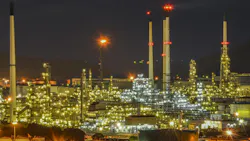
Petrochemicals have emerged as the center of oil demand destruction stemming from the war in the Middle East, with naphtha, LPG, and ethane posting the clearest losses of any petroleum products, according to the International Energy Agency (IEA). Global demand for the three feedstocks in second-quarter 2026 is now estimated to be 1.5 million b/d lower than forecast in the agency’s February report.
IEA said the petrochemical sector has responded especially quickly because it is dominated by a relatively small number of large, price-sensitive producers that are closely tied to global trade flows. The most severe disruption has been concentrated in the Middle East and Asia, though the effects are expected to spread more broadly across global producers.
Middle East outages disrupt petrochemical supply
The Middle East has taken the heaviest hit on the supply side. Petrochemical production in the region, much of it geared toward exports, has been disrupted by upstream shutdowns that have cut feedstock availability, damage to processing plants, and the breakdown of access to overseas markets, according to IEA.
Even where Gulf plants remain physically intact and still have feedstock, the agency assumes they are operating at reduced rates and building polymer inventories rather than moving material normally into export channels. However, some plants have suffered direct losses. IEA pointed to damage or supply disruption at major assets including the Borouge steam cracker complex at Ruwais in the UAE and Qatar’s Ras Laffan Olefins Company. As a result, petrochemical feedstock demand within the Middle East has been reduced by an estimated 780,000 b/d in the second quarter. The outlook for the rest of 2026 will depend largely on the extent of damage to upstream and petrochemical infrastructure and on how easily export routes can be restored.
Asia run cuts ripple across plastics markets
In Asia, the shock has come mainly through the loss of imported feedstocks and the resulting rise in costs. According to IEA, petrochemical plants across the region have responded with widespread run cuts, reportedly equal to 10-30% of capacity. The reductions have affected steam crackers, aromatics plants, and propane dehydrogenation units across all major production hubs, including China, and were already visible in India’s reported March data.
Relative to pre-war expectations, Asian naphtha demand has fallen by 450,000 b/d, while LPG and ethane demand has dropped by another 320,000 b/d, IEA said. In India alone, naphtha demand fell 14%, while LPG and ethane consumption declined 12.5%, despite their heavier use in relatively inelastic domestic and commercial markets.
The consequences are now moving downstream. Lower production in Asia, combined with reduced exports from the Middle East, is beginning to tighten polymer availability in some markets. That raises the risk of disruption for manufacturing chains tied to plastics and chemicals, including textiles, construction materials, packaging, and other industrial goods.
At the same time, the disruption may create openings for producers outside the worst-affected regions. In the US, where NGL-based feedstocks remain abundant, producers may be able to raise operating rates, increase exports, and capture stronger pricing, according to IEA. European crackers could also gain a temporary competitive advantage as long as feedstock supplies remain adequate.
China stands out as a partial exception within Asia. IEA said coal-based chemical routes have become significantly more profitable since February. Plants producing polyethylene and polypropylene via coal-to-methanol pathways are believed to have already been operating at high rates since last year’s tariff turmoil. Even so, the agency cautioned that there may be limited room to further raise output of those plastics, as well as polyvinyl chloride (PVC) and polyester precursor ethylene glycol.
About the Author
 Conglin Xu
Conglin Xu
Managing Editor-Economics
Conglin Xu, Managing Editor-Economics, covers worldwide oil and gas market developments and macroeconomic factors, conducts analytical economic and financial research, generates estimates and forecasts, and compiles production and reserves statistics for Oil & Gas Journal. She joined OGJ in 2012 as Senior Economics Editor.
Xu holds a PhD in International Economics from the University of California at Santa Cruz. She was a Short-term Consultant at the World Bank and Summer Intern at the International Monetary Fund.