Continued Hormuz disruptions strengthen North America's LNG position
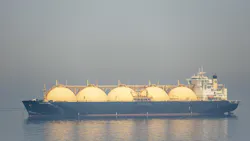
The prolonged disruption of energy exports through the Strait of Hormuz is accelerating a shift in global LNG markets that could strengthen the long-term position of North American suppliers, according to Morningstar DBRS.
Speaking at the firm's Credit Insights Calgary conference, analysts said energy security is increasingly outweighing cost considerations in LNG procurement decisions, a trend likely to persist even if the Middle East conflict ends.
"Given how unpredictable the Iran conflict has been over the last three months, even if a peace deal was to be reached, there's no guarantee that it would last for any length of time," said Ravikanth Rai, associate managing director of Energy & Natural Resources Ratings, "We believe that geopolitical risks, especially for LNG, will continue to exist."
As buyers reassess supply chains through an energy-security lens, politically stable suppliers are expected to benefit.
The Strait of Hormuz previously handled about 20% of global crude oil and seaborne gas trade. Morningstar DBRS said tanker traffic through the waterway has fallen about 80% since the conflict began, while attacks on Qatar's LNG export infrastructure have removed a significant portion of global LNG supply from the market. Qatar accounts for nearly one-fifth of global LNG production, and lost capacity could take 3-5 years to fully recover, the firm said.
The disruption has contributed to an estimated global oil supply deficit of 8-10 million b/d, or roughly 9% of worldwide demand, according to Andrew O'Conor, senior vice-president of energy and natural resources ratings.
To offset lost production, both commercial and strategic inventories have been drawn down. Morningstar DBRS cited estimates showing global crude inventories have fallen 3-5% since the conflict began, while refined-product inventories are down 8-10%, reducing the market's buffer against further disruptions.
Although Saudi Arabia and the UAE can bypass Hormuz for some crude exports through pipeline systems, no comparable alternative exists for LNG exports from the Gulf.
North American gas
North American gas markets remain relatively well supplied, with US storage about 7% above the 5-year average and Canadian storage about 4% above average. Strong production from the Permian basin, Montney, and Duvernay plays continues to support supply and weigh on regional prices.
Meanwhile, European and Asian LNG benchmarks have risen about 50% since the conflict began. However, US and Canadian LNG export plants are operating near capacity, limiting their ability to immediately capture higher international prices.
Morningstar DBRS said the conflict has reinforced concerns about supply concentration and maritime chokepoints, prompting buyers to place greater value on supply reliability and geopolitical stability.
Canada's LNG sector offers shorter shipping routes to Asia from British Columbia and avoids both the Strait of Hormuz and Panama Canal. The US retains advantages through its large gas resource base, extensive pipeline network, and expanding liquefaction capacity. Together, those factors could further solidify North America's role as a preferred LNG supplier in an increasingly security-focused market, Morningstar DBRS said.
About the Author
 Conglin Xu
Conglin Xu
Managing Editor-Economics
Conglin Xu, Managing Editor-Economics, covers worldwide oil and gas market developments and macroeconomic factors, conducts analytical economic and financial research, generates estimates and forecasts, and compiles production and reserves statistics for Oil & Gas Journal. She joined OGJ in 2012 as Senior Economics Editor.
Xu holds a PhD in International Economics from the University of California at Santa Cruz. She was a Short-term Consultant at the World Bank and Summer Intern at the International Monetary Fund.