EOG’s Yacob: Gulf re-entry “a heavy lift,” Venezuela not compelling enough to commit capital
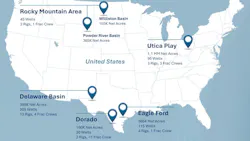
EOG Resources Inc., Houston, has been growing its portfolio domestically and internationally in recent years but chairman and chief executive officer Ezra Yacob said May 27 that expansion into the Gulf of Mexico and Venezuela isn’t in the cards.
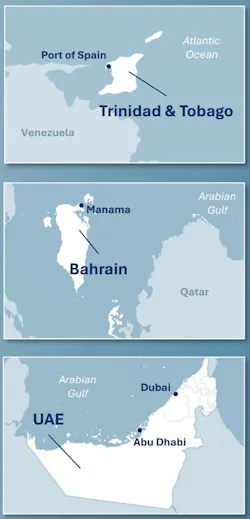
Speaking at the Bernstein Strategic Decisions Conference being held in New York, Yacob said re-entering the Gulf—where EOG hasn’t operated in more than two decades—would be “a heavy ask, a heavy lift” and juxtaposed such a potential move with the company’s presence in Trinidad & Tobago.
“Because of our cost structure and the way that we operate, we’ve got a bit of a competitive advantage in that region,” Yacob said of the southern Caribbean island nation. “To try to step up into an area in the shallow water of the Gulf of Mexico… I do think there are opportunities to bring technology that’s been developed in the deep water and ultra deep water […] back to the shallow water in the Gulf of Mexico. That’s probably right now better suited to the operators that are in the region.”
Addressing a possible entry into Venezuela as that country looks to reinvigorate its oil-and-gas sector, Yacob acknowledged the growth potential. But he said EOG’s leaders need to see a lot more geopolitical certainty before seriously considering committing capital.
“Like I said, we do have some shallow-water expertise that would potentially transfer over there,” he added. “But at this point, we’re a long way from feeling that that’s a compelling opportunity.”
Yacob and his team in 2025 amassed more than 900,000 acres in Bahrain and the United Arab Emirates, where it is still in the exploration phase, while also spending roughly $5.6 billion to buy Encino Acquisition Partners and bulk up in the Utica basin. Executives also are dedicating part of their exploration budget to Trinidad & Tobago, where EOG has been active for more than three decades with a shallow offshore gas operation.
Those assets and the company’s core assets in Texas, New Mexico, and the Rockies are expected to average nearly 1.4 MMboe/d in 2026 (more than 548,000 b/d oil), an increase of about 13% from last year. In the first quarter, EOG’s total production was 1.38 MMboe/d, slightly above the midpoint of executives’ guidance.
At the Bernstein gathering, analyst Bob Brackett asked Yacob why he thinks EOG shares have lagged those of some of their peers. Yacob said the company’s main priority is continuing to lower its break-even costs but he also addressed the perception by some investors that EOG is pivoting to being more of a natural gas company.
“That’s not quite aligned with the strategy,” he said. “When we can invest in opportunities based on a bottom-cycle pricing of $45 oil or $2.50 natural gas and we can create compelling returns of 30% […], that is a very compelling investment opportunity.”
Yacob pointed out that EOG is still growing its oil business more quickly than global oil demand is rising—his team plans for 2026 oil production to rise 5% from last year—and that the strategy of investing in both commodities across multiple basins domestically and internationally puts it “in rarefied air.”
“I think the strategy is working,” he added. “As long as we continue to focus on the business fundamentals, the macro environment [and] the market value will reflect the business value that we’re creating over time.”
Shares of EOG (Ticker: EOG) fell more than 1% to about $134 on May 27. Over the past 6 months, shares have climbed more than 25%, a move that has grown the company’s market capitalization to $72 billion.
About the Author

Geert De Lombaerde
Senior Editor
A native of Belgium, Geert De Lombaerde has more than two decades of business journalism experience and writes about markets and economic trends for Endeavor Business Media publications Healthcare Innovation, IndustryWeek, FleetOwner, Oil & Gas Journal and T&D World. With a degree in journalism from the University of Missouri, he began his reporting career at the Business Courier in Cincinnati and later was managing editor and editor of the Nashville Business Journal. Most recently, he oversaw the online and print products of the Nashville Post and reported primarily on Middle Tennessee’s finance sector as well as many of its publicly traded companies.