Matador CFO: Hormuz resolution won’t change ‘grower’ mindset
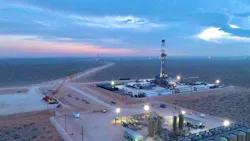
Matador Resources Co. isn’t planning for a substantive strategic change should the Iran war be concluded and commodity flows through the Strait of Hormuz climb back to their historical volume, the company’s chief financial officer told investors this week.
Chris Calvert said the Dallas-based company’s leaders had been planning for 2026 production growth of 3% before the United States and Israel attacked Iran in late February. At the prevailing oil prices then, Matador would’ve generated about $500 million in free cash flow, Calvert added Aug. 27 at the Midwest Ideas investor conference in Chicago.
That approach didn’t change much when the war drove oil prices up about 50% this spring, Calvert said. Matador teams didn’t rush out to add rigs but instead focused on “more ancillary work” that helped maximize production from existing assets and new wells that had been in the company’s plans. The same mentality is driving work today as the price of a barrel of West Texas Intermediate appears to have stabilized between $80 and $85.
“Even when the Strait of Hormuz is settled and pricing falls – […] maybe it’s in the 70s, maybe it’s in the 60s–we still see ourselves as a grower to where we can still generate free cash,” Calvert said.
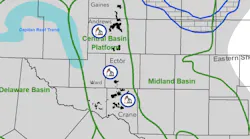 A map showing Ring Energy's CPB operations.
 Shale oil rig and pumpjack at sunset in the distance.
Calvert outlined the main hurdles Matador needs to clear to continue to grow production, which is now on pace to average 218,500-223,500 boe/d this year after a recent guidance range hike. Key among them: Building inventories–which chief executive officer Joe Forlan and his team have done of late via company/asset acquisitions and a Bureau of Land Management lease sale–and finding pricing markets for natural gas away from Waha, something Energy Transfer’s Hugh Brinson Pipeline from West Texas to south of Dallas helps accomplish for Matador.
“I don’t say that I’m agnostic to oil prices but […] we somewhat have been,” Calvert summed up Matador’s approach before his Chicago audience. “We’ve been a little bit more thoughtful around how we see the world because we’re more interested in long-term value creation […] And if the Iranian conflict is resolved tomorrow and the Strait opens up and the infrastructure damage is not as bad as people might think , […] we feel that we’re still in a really good spot to generate free cash and to still grow our production volumes.”
Shares of Matador (Ticker: MTDR) were changing hands around $56.40 on the afternoon of Aug. 28. They’ve climbed about 10% over the past 6 months, which has grown the company’s market capitalization to nearly $7 billion.
About the Author
 Geert De Lombaerde
Geert De Lombaerde
Senior Editor
A native of Belgium, Geert De Lombaerde has more than two decades of business journalism experience and writes about markets and economic trends for Endeavor Business Media publications Healthcare Innovation, IndustryWeek, FleetOwner, Oil & Gas Journal and T&D World. With a degree in journalism from the University of Missouri, he began his reporting career at the Business Courier in Cincinnati and later was managing editor and editor of the Nashville Business Journal. Most recently, he oversaw the online and print products of the Nashville Post and reported primarily on Middle Tennessee’s finance sector as well as many of its publicly traded companies.