Ring’s 2027 target: 10% growth for 10% less
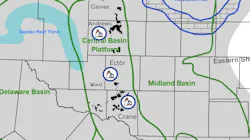
Boosted by an increase in horizontal drilling across its Central Basin Platform (CBP) operations, the leaders of Ring Energy Inc., The Woodlands, Tex., expect a big pop in the company’s 2027 financials.
Speaking Aug. 18 at the EnerCom Denver conference, chairman and chief executive officer Paul McKinney said the Permian basin-focused operator has “an incredible runway of high-return opportunities” in the CBP using technologies refined by operators in the Midland and Delaware basins on either side of Ring’s holdings. Recent developments, he said, have made it easier for Ring and others active in the CBP, which has shallower reservoirs, to drill longer wells.
Two years ago, half of the wells Ring drilled were horizontal. This year, that figure is on pace to be 81%. The length of new wells is similarly shifting to being at least 1.5 miles: In 2024, new wells of that length accounted for only 5% of Ring’s activity but that will be 70% this year.
Those advancements are set to create a big payoff for Ring, which had total production of just under 20,000 boe/d in the second quarter.
“The capital is kind of the story,” McKinney told EnerCom attendees. “We believe that we will deliver 10% production growth for 10% less capital in 2027 […] All this means meaningful upside in adjusted free cash flow. It means a significant increase in earnings.”
 Shale oil rig and pumpjack at sunset in the distance.
 Drilling rig at sunrise
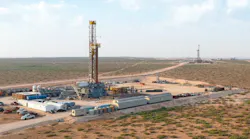 Permian Resources drilling operations.
In the first 6 months of this year, Ring’s capital spending totaled nearly $78 million, up from $49 million in the same period of 2025. As part of that increase, McKinney and his team are leaning more into multi-bench development that is improving recovery rates.
Capex in second-half 2026 is expected to be $80-100 million, which will put the full-year total around $160 million. That figure will drop to around $145 million next year (helped also by lease operating expenses that will be at least 1% lower than in 2026) even though 2027 production is forecast to grow 16% from Ring’s number early this year.
McKinney said the next few quarters will show that Ring has “entered into this new chapter” of higher productivity.
“There are still opportunities out there to be had and we are really looking forward to it,” he said. “We have laid the foundation so that we have years and years of […] inventory to go.”
Shares of Ring (Ticker: REI) closed Aug. 21 at $1.48, down about 1% on the day. Over the past 6 months, they have risen about 7%, which has grown the company’s market capitalization to about $380 million.
About the Author
 Geert De Lombaerde
Geert De Lombaerde
Senior Editor
A native of Belgium, Geert De Lombaerde has more than two decades of business journalism experience and writes about markets and economic trends for Endeavor Business Media publications Healthcare Innovation, IndustryWeek, FleetOwner, Oil & Gas Journal and T&D World. With a degree in journalism from the University of Missouri, he began his reporting career at the Business Courier in Cincinnati and later was managing editor and editor of the Nashville Business Journal. Most recently, he oversaw the online and print products of the Nashville Post and reported primarily on Middle Tennessee’s finance sector as well as many of its publicly traded companies.