Co-CEO: Permian Resources sees opportunity in expected divestiture wave
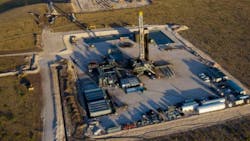
The leaders of Permian Resources Corp., Midland, say the onshore oil-and-gas sector appears to be entering a period where large players unload some of the assets they’ve acquired as part of large deals. And they’re prepared to have the company play a multibillion-dollar role in how that phase plays out.
In conversation with analysts after the operator reported its fourth-quarter results Feb. 26, co-chief executive officer James Walter said his team is “starting to hear rumors and kind of see signs of larger packages coming” as buyer sift through all the assets they picked up as part of deals in recent years. Analysts at Enverus Intelligence Research have tallied the value of US and Canadian transactions announced from beginning-2023 through end-2025 at more than $407 billion. That potential activity includes assets in the prolific Permian basin, where Permian Resources is active on more than 480,000 net acres.
“That’s something we’ve always thought we’d see,” Walter said of the expected asset sales. “The largest companies consolidate and kind of a deconsolidation wave comes a few years late […] It does feel like we could be kind of entering a phase of that over the next couple of years, which kind of I think only adds to the opportunity set.”
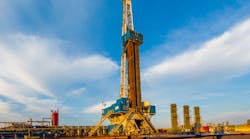 Devon drilling operations
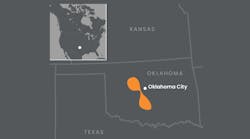 Ovintiv Oklahoma asset map
Permian Resources typically leans on bolt-on and ground-game deals to replenish its inventories and last year spent about $500 million via roughly 700 such deals. But executives also have stepped up in scale when opportunities arise, including last spring via a $608 million deal with Apache Corp. and in 2024 by paying $818 million for Occidental Petroleum Corp. assets in Barilla Draw field.
Walter and co-chief executive officer Will Hickey are open to more such transactions. Walter told analysts the company has the financial muscle to move on up to $3 billion worth of deals between now and end-2027 without taking on much debt.
“The limiter is not going to be access to capital. It’s going to be […] our comfort with leverage,” Walter said. “As you spend more dollars, I think, you do need to get more picky on making sure the transactions are the right ones. [...] We believe we have the horsepower to do whatever is coming down the horizon but we are going to be thoughtful.”
While they track the mergers and acquisitions (M&A) market, Permian’s leaders also are focusing on improving the efficiency of their current assets. They are targeting 2026 average oil production of 186,000-192,000 b/d (and 400,000-430,000 boe/d total), which would be 4% higher than last year, while trimming Permian’s capital expenditures about 6% to $1.75-1.95 billion. The goal is to trim drilling and completion costs by about 8% to roughly $675 per lateral ft and Hickey said Permian’s teams will stick to their knitting rather than try to develop new benches.
“I'd say we’re very much surprised as to what people are doing as far as kind of pushing the play boundaries or even jumping into kind of some more unique conventional pay,” Hickey said. “We feel good about [our] existing inventory quality and duration. I’d say it’s more of just, ‘What do we have on our existing footprint?’”
In fourth-quarter 2025, Permian Resources posted a net profit of $382 million, up from $255 million in late 2024, on revenues of $1.17 billion. A $209 million gain on derivatives was a big contributor; operating income fell to $270 million from $425 million due in part to the company’s average sales price of a bbl of oil falling nearly $11 to $58.78.
Shares of Permian (Ticker: PR) rose nearly 3% to $18.12 after the company’s report and conference call. Over the past 6 months, they have now climbed nearly 30%, which has grown the company’s market capitalization to more than $13.5 billion.
About the Author
 Geert De Lombaerde
Geert De Lombaerde
Senior Editor
A native of Belgium, Geert De Lombaerde has more than two decades of business journalism experience and writes about markets and economic trends for Endeavor Business Media publications Healthcare Innovation, IndustryWeek, FleetOwner, Oil & Gas Journal and T&D World. With a degree in journalism from the University of Missouri, he began his reporting career at the Business Courier in Cincinnati and later was managing editor and editor of the Nashville Business Journal. Most recently, he oversaw the online and print products of the Nashville Post and reported primarily on Middle Tennessee’s finance sector as well as many of its publicly traded companies.