WoodMac: Vaca Muerta well productivity rivals leading US shale

Argentina’s Vaca Muerta play is on track to reach oil production of 1 million b/d by 2030 through infrastructure buildout, capital deployment, and operational learnings, and well productivity in the formation is rivaling leading US shale, according to a recent Wood Mackenzie report.
According to WoodMac, execution, not geology, will determine the basin's trajectory. “Argentina's economic stability and delivery of infrastructure and services capacity remain the defining risks,” the report noted.
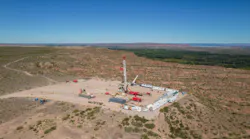



“The basin's primary constraint is no longer what lies underground. Field services capacity, drilling intensity and proppant logistics now set the pace and cost of supply growth. Capacity shortfalls are likely to affect both project timing and costs as activity scales. Closing this gap requires a step-change in rigs, frac crews, and supporting equipment,” said Pietro Ferreira, senior research analyst, Wood Mackenzie.
Increasingly, production growth is led by domestic operators, with Yacimientos Petrolíferos Fiscales (YPF) and local companies accounting for the majority of basin output, WoodMac said.
In recent years, domestic operators have added to their positions by acquiring divested international assets and accelerating consolidation of core acreage, the firm noted, while international operators remain, but continue to reallocate capital. The reallocation reflects broader portfolio priorities rather than basin-specific concerns, WoodMac said, noting the shift “places greater emphasis on domestic execution capacity and reinforces that growth depends on delivery, not resource quality.”
Oil production is projected to grow quickly through 2030, led by YPF and core operators across key development areas, while gas production is projected to exceed 7 bcfd post-2030, with associated gas from oil-focused drilling as a major contributor to incremental supply. LNG projects are emerging as the primary long-term demand driver, WoodMac said, supporting commercialization of volumes that domestic markets cannot absorb.
Sustained upstream and midstream capital expenditure of more than $100 million is needed over the next decade to reach these production targets, WoodMac said. While a large share of this capital is already linked to projects backed by Argentina's Large Investment Incentive Regime (RIGI), another large portion of required investment remains uncommitted.
Vaca Muerta’s next chapter is dependent on pipelines, rigs, and policy credibility, WoodMac said. “If Argentina delivers on all three, the basin has a clear path to becoming one of the most significant shale exporters outside North America by 2030,” said Adrian Lara, principal analyst, Wood Mackenzie.