E&P companies remain cautious on capex, latest Dallas Fed survey shows
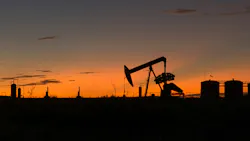
Leaders of exploration and production companies in the footprint of the Federal Reserve Bank of Dallas say they’re prepared to hold the line on capital spending in 2027 even as they’re increasing production, spending more now, and feeling less uncertain about the market.
The latest quarterly Dallas Fed Energy Survey also showed that the nearly 130 executives of producers and service firms in Texas and parts of New Mexico and Louisiana surveyed this month feel better on the whole about business activity and suppliers’ performance than they did in March. Still, their overall outlook slipped from the first quarter, a mood that showed in several respondents’ comments about uncertainty around the resolution of the Iran war.
“If there is a conclusion to hostilities, there will be continued confusion in the oil markets as normalcy may require time, but eventually calming oil markets will result in significantly lower prices,” one executive told Fed researchers.
“The whiplash from diplomacy-by-social-media has become the single most unpredictable input in our planning,” another respondent said. “We don’t need certainty about the future, just certainty that policy won’t change between the morning and the afternoon.”
 line chart representing oil and gas market volatility
Enduring policy uncertainty means players are primarily reacting to price and focusing more on the short term, which showed in the Fed’s questions about capex. More than 51% of E&P executives said they are ramping up spending this quarter, an increase of nearly 12 points from Q1, while only 8% are pulling back. But asked about pushing on from there and increasing capex next year, 10% said they will do so and 80% said they’ll not change their budget in 2027.
“It is going to take more time to assess to what degree the energy business and markets are permanently reordered,” one E&P executive said. “We certainly have learned that it doesn’t matter how much crude you can produce; it is meaningless if you can’t get it to your customer in the normal course of business.”
Asked about where they think prices are headed, the industry players see West Texas Intermediate (WTI) oil averaging of $81/bbl at the end of this year and generally staying in that range for the next 5 years. (The price of a barrel of WTI averaged about $87 while the Fed’s survey was in the field and has since fallen to roughly $70.)
Respondents expect the Henry Hub natural gas price, which averaged $3.15/MMbtu during the survey period, to be $3.36/MMbtu by year’s end and $3.75/MMbtu 2 years from now. Those numbers are down from the forecasts of 3 months ago.
For more information from the Fed’s report, click here.
About the Author
 Geert De Lombaerde
Geert De Lombaerde
Senior Editor
A native of Belgium, Geert De Lombaerde has more than two decades of business journalism experience and writes about markets and economic trends for Endeavor Business Media publications Healthcare Innovation, IndustryWeek, FleetOwner, Oil & Gas Journal and T&D World. With a degree in journalism from the University of Missouri, he began his reporting career at the Business Courier in Cincinnati and later was managing editor and editor of the Nashville Business Journal. Most recently, he oversaw the online and print products of the Nashville Post and reported primarily on Middle Tennessee’s finance sector as well as many of its publicly traded companies.