US Senate negotiators reach permitting bill deal, ending yearslong impasse
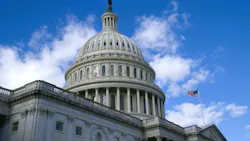
US Senate negotiators introduced bipartisan permitting legislation Sept. 30 that would accelerate federal reviews, sharply curtail the window for legal challenges to energy projects, and improve predictability for developers. The agreement is a breakthrough in the Senate, where lawmakers have struggled for years to advance permitting reform.
The Bipartisan American Affordability and Jobs Act would impose a 150-day window for certain challenges to federal permitting decisions and provide greater certainty that permitted energy and infrastructure projects retain their approvals. It also would reform Clean Water Act reviews that can delay energy infrastructure, establishing more predictable environmental reviews.
The changes could reduce regulatory and litigation uncertainty for interstate gas pipelines, which are often subject to both federal environmental reviews and state water-quality certifications.
The four senators behind the deal—Mike Lee (R-Utah), Martin Heinrich (D-NM), Shelley Moore Capito (R-W.Va.), and Sheldon Whitehouse (D-R.I.)—said the agreement also addresses high-profile electricity issues by expanding federal authority over transmission permitting and requiring data centers to pay associated transmission costs rather than shifting them to other electricity customers.
The bill, released after months of negotiations, still faces hurdles. Senate negotiators reached an agreement on the legislative text, but Democrats also want assurances that wind and solar projects would benefit from the same streamlining and clarity from the Trump administration on what it means to return wind and solar permitting to “regular order,” issues that remain unresolved.
The Senate would consider amendments before voting on the legislation. The target is a vote after the Nov. 3 midterm elections, with Capito noting the permitting bill could be the first vote when the Senate returns.
The House has passed its own permitting legislation, the SPEED Act. While both bills would streamline federal permitting and limit litigation, they take different approaches to reforming NEPA, and the Senate legislation addresses transmission and other issues differently. The House bill specifically excludes offshore wind for key reforms.
If the Senate passes its bill, the two chambers must agree on identical text before the legislation can go to the president.
Energy industry groups expressed confidence that the agreement could advance permitting reform, giving lawmakers a meaningful opportunity to break the congressional stalemate over the issue.
About the Author
Cathy Landry
Washington Correspondent
Cathy Landry has worked over 20 years as a journalist, including 17 years as an energy reporter with Platts News Service (now S&P Global) in Washington and London.
She has served as a wire-service reporter, general news and sports reporter for local newspapers and a feature writer for association and company publications.
Cathy has deep public policy experience, having worked 15 years in Washington energy circles.
She earned a master’s degree in government from The Johns Hopkins University and studied newspaper journalism and psychology at Syracuse University.