Oil majors opt out of federal ANWR lease sale that raises $3.7 million on 5 tracts

Despite keen interest and competitive bidding—by majors and independents—at another recent BLM sale in Alaska, only two companies participated in the most recent auction.

Key Highlights

  • Only 5 leases were sold in the recent ANWR coastal plain sale, generating $3.7 million, indicating tepid industry interest.
  • Legal challenges and environmental concerns have historically limited leasing activity in ANWR, with recent sales attracting minimal bids from major companies.
  • The NPR-A sale set new records with 430 bids and $164.7 million in revenue, signaling renewed exploration interest in that area.
  • Offshore Alaska's Cook Inlet saw no bids during the March 2026 sale, reflecting ongoing legal and regulatory uncertainties.
  • Industry and government remain optimistic about future exploration opportunities, despite current challenges and limited participation.

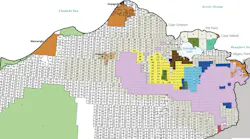
Oil majors opted out of the US Bureau of Land Management (BLM)’s June 5 lease sale offering tracts in Alaska’s Arctic National Wildlife Refuge (ANWR)’s coastal plain, resulting in a tepid showing with 5 leases sold, generating $3.7 million.

Despite keen interest and competitive bidding—by majors and independents—at another recent BLM sale in Alaska, only two companies participated in the most recent auction. The Alaska Industrial Development and Export Authority, a state corporation with existing ANWR leases, won 3 tracts, and Hex Energy LLC, which produces natural gas in Cook Inlet but not on the North Slope, won 2, BLM announced. The tracts cover about 72,000 acres, about 10% of the 690,000 acres offered during the sale.

Moves to open oil and gas exploration in ANWR’s 1.56-million-acre coastal plain, also known as the 1002 area, have faced legal challenges and political controversy for decades. BLM’s recent sales results reflect that uncertainty, with a January 2025 congressionally mandated saleheld in the waning days of the Biden administrationreceiving no bids, and a January 2021 sale garnering no interests from majors and generating $14 million in bids.

While the US Geological Survey estimates that ANWR’s coastal plain could contain 4.25-11.8 billion bbl of recoverable oil, litigation over ANWR leasing remains active and fierce. A broad coalition of conservation groups and Indigenous organizations filed a lawsuit against the federal government in 2020, and updated it in January 2026, alleging the government violated environmental, endangered species, and other laws by leasing the lands. The Alaska state government has engaged in its own legal battles to advance drilling rights against restrictions in the Biden and Obama administrations.

ID 50763166 © Michele Cornelius | Dreamstime.com
Drilling rig in Cook Inlet, Alaska

Another area facing contentious, ongoing legal challenges to oil and gas explorationoffshore in Alaska’s Cook Inletsaw similar results during a March 2026 sale, when the Interior Department’s Bureau of Ocean Energy Management received no bids on the 1 million acres offered.

In contrast, BLM’s Mar. 18 sale of tracts in Alaska's National Petroleum Reserve (NPR-A) set new financial and industry participation records, with 430 bids from 11 companies on 187 tracts. The event, which featured competitive bids from both majors and independents, generated $164.7 million and signaled a resurgence in oil and gas exploration interest in that part of Alaska. Litigation also continues for NPR-A leasing, but the area is near existing production and infrastructure.

While the recent ANWR sale was underwhelming, the administration, under the One Big Beautiful Bill Act, will offer companies additional chances to bid.

“Today’s lease sale underscores the vision that both industry and government share about the viability of development in the Coastal Plain,” BLM Alaska State Director Kevin Pendergast said in a statement. “Alaska is a bedrock of America’s energy security, and this sale will bolster the state’s economy and ultimately lead to additional energy production.”

Bobby McEnaney, director of land conservation for the Natural Resources Defense Council, in a statement, said "the government spent public money to hold an auction no major company showed up for, and that tells you everything you need to know about the economics here."


About the Author

Cathy Landry

Washington Correspondent

Cathy Landry has worked over 20 years as a journalist, including 17 years as an energy reporter with Platts News Service (now S&P Global) in Washington and London.

She has served as a wire-service reporter, general news and sports reporter for local newspapers and a feature writer for association and company publications.

Cathy has deep public policy experience, having worked 15 years in Washington energy circles.

She earned a master’s degree in government from The Johns Hopkins University and studied newspaper journalism and psychology at Syracuse University.

Sign up for our eNewsletters
Get the latest news and updates