Supreme Court rules Chevron can fight Louisiana coastal damage case in federal court
Key Highlights
- The Supreme Court's decision enables Chevron to an environmental lawsuit from state to federal court, citing its WWII-era federal contracts.
- The decision could delay payouts to Louisiana, as federal courts might opt for lower damages or dismissals.
- The ruling highlights the historical role of federal contracts in oil industry activities during WWII, influencing current environmental litigation.
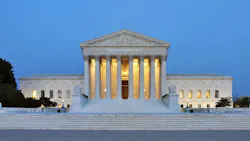
The US Supreme Court, in an 8-0 decision, ruled that Chevron USA Inc. can contest a lawsuit over its responsibility for environmental damage to Louisiana’s coasts in federal court rather than state court. The decision could set a precedent, allowing the oil and gas industry to move nearly a dozen similar legal challenges to federal courts.
The decision in Chevron v. Plaquemines Parish reverses rulings from the Fifth US Circuit Court of Appeals and a federal district court on jurisdictional issues. It also puts into question whether Chevron must pay a $745 million state jury award, issued in April 2025, to help restore coastal wetlands in Louisiana that the parish says were damaged by oil and gas development over the past 80 years, including during World War II.
SCOTUS backs operator defense in state claims
The case dates back to 2013, when Plaquemines Parish and other Louisiana parishes filed 42 lawsuits alleging that oil and gas companies violated the State and Local Coastal Resources Management Act of 1978. The lawsuits claimed Chevron and other oil companies caused severe environmental damage through unpermitted activities; practices, including vertical drilling and dredging canals, that contributed to coastal erosion; and failing to restore wetlands after drilling activity during and immediately after World War II.
Chevron and other oil companies counter that when they began work in Louisiana in the 1940s, it was under contracts with the federal government. The government needed more crude oil production, which was refined into the jet fuel needed for military operations during World War II. Because of that, a federal court should hear the case, Chevron argued.
The Supreme Court agreed, and in a 12-page decision authored by Justice Clarence Thomas, held that the companies' wartime crude oil production was sufficiently "related to" the company’s federal military contracts to qualify for removal under the federal officer removal statute. The statute allows private parties "acting under" federal directives to move state lawsuits to federal court if the claims relate to acts performed under federal authority.
Industry-wide litigation shift?
Thomas’ ruling found that the company’s actions were a “wartime necessity,” and he noted that the US government oversaw the entire oil industry during WWII to maximize production for high-octane aviation gasoline. He wrote that Chevron’s use of canals and earthen pits—some of the “damaging practices” cited by the plaintiffs—was connected to these federal priorities, such as expediting crude and jet fuel production and preserving steel for the war effort.
“Chevron’s case fits comfortably within” the parameters required under the federal officer removal statute because the lawsuit “implicates acts by Chevron that are closely connected to the performance of its federal duties,” Thomas concluded.
The ruling directly impacts at least 11 of the 42 pending lawsuits in Louisiana where companies, including ExxonMobil, ConocoPhillips, Shell, and BP America produced crude oil and refined it for the military and could set a precedent for other oil companies involved in similar litigation across the state and beyond.
For this case and others, the shift to federal court essentially restarts the legal process for these cases, delaying any potential payouts to Louisiana. Federal courts could opt for lower damage awards or case dismissals.
Justice Ketanji Brown Jackson agreed with the case transfer to federal court, but for a slightly different reason. In a separate concurring opinion, she argued that it is not enough for there to be an “indirect relationship between the conduct targeted by the lawsuit and the asserted federal duties.” She contended that the federal officer removal statute requires a cause-and-effect relationship between the duties and the conduct, which she concluded the companies proved.
Justice Samuel Alito recused himself from the case, citing interests in ConocoPhillips, a party in a related lawsuit.
About the Author
Cathy Landry
Washington Correspondent
Cathy Landry has worked over 20 years as a journalist, including 17 years as an energy reporter with Platts News Service (now S&P Global) in Washington and London.
She has served as a wire-service reporter, general news and sports reporter for local newspapers and a feature writer for association and company publications.
Cathy has deep public policy experience, having worked 15 years in Washington energy circles.
She earned a master’s degree in government from The Johns Hopkins University and studied newspaper journalism and psychology at Syracuse University.