Oil, gas industry secures Endangered Species Act exemption in Gulf of Mexico
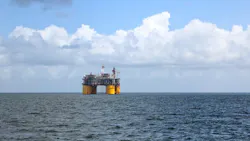
The oil and gas industry has been granted an exemption from certain requirements under the Endangered Species Act (ESA) after a little-known commission, last convened in 1992, voted Mar. 31 on a matter covering federal oil and gas activities in the US Gulf of Mexico, citing national security concerns.
The Endangered Species Committee voted unanimously to allow the exemption, which could make it more difficult for conservation and environmental groups to challenge projects under the ESA and protect endangered species such as the Rice's whale.
The committee is composed of the Secretaries of Interior, Agriculture and the Army, and the heads of the Council of Economic Advisers, Environmental Protection Agency, and National Oceanic and Atmospheric Administration. The meeting, which was live-streamed and lasted about 15 minutes, was convened after the Defense Secretary determined that an exemption was necessary for national security.
“This meeting made clear that energy streams in the Gulf of America must not be disrupted or held hostage by ongoing litigation,” said Interior Secretary Doug Burgum in a press release. He said energy production in the Gulf “is indispensable to our nation’s strength, safeguarding our energy independence and preventing reliance on foreign adversaries,” and that “robust development in the Gulf keeps our economy resilient, stabilizes costs for American families and secures the US as a global leader for decades to come."
The exemption would apply to all federal oil and gas exploration, development, and production activities associated with the Bureau of Ocean Energy Management and BSEE Outer Continental Shelf oil and gas program.
The Center for Biological Diversity had filed an emergency lawsuit in mid-March to prevent the Endangered Species Committee from conducting the meeting aimed at overriding a May 2025 National Marine Fisheries Service opinion that required mitigation measures such as vessel speed restrictions and monitoring to reduce harm to endangered species. A judge ruled that the meeting could proceed.
Fewer than 100 Rice's whales—which are found only in the Gulf of Mexico—are estimated by scientists to remain. The center said the exemption also threatens endangered sea turtles, sperm whales, and other species.
“Burgum’s extinction committee is immoral, illegal and unnecessary,” the center’s executive director Kieran Suckling said at the time of the lawsuit filing. “There’s no emergency, no legal basis to convene the committee, and no legal way to approve the extinction of Rice’s whales.”
The Defense Secretary cited recent tensions involving Iran and threats to global oil transit routes as justification for the national security determination. “This is not just about gas prices. It’s about our ability to power our military and protect our nation, Sec. Hegseth said.
Industry took a low-key approach to the decision.
“Our industry has a long track record of protecting wildlife while developing offshore energy responsibly,” said Andrea Woods, a spokesperson for the American Petroleum Institute, in an email. “Over the long term, American energy leadership depends on getting that balance right through reasonable, science-based protections while meeting growing energy demand.”
About the Author
Cathy Landry
Washington Correspondent
Cathy Landry has worked over 20 years as a journalist, including 17 years as an energy reporter with Platts News Service (now S&P Global) in Washington and London.
She has served as a wire-service reporter, general news and sports reporter for local newspapers and a feature writer for association and company publications.
Cathy has deep public policy experience, having worked 15 years in Washington energy circles.
She earned a master’s degree in government from The Johns Hopkins University and studied newspaper journalism and psychology at Syracuse University.