A sector split: Dallas Fed survey shows diverging 2026 capex plans
Oil-and-gas executives in the footprint of the Federal Reserve Bank of Dallas are split quite evenly in their capital spending outlook for 2026, a new survey shows.
As part of the Dallas Fed’s regular quarterly poll of business leaders in Texas as well as parts of New Mexico and Louisiana, the bank’s researchers asked specifically about capex intentions for next year. The collective response from the nearly 130 executives surveyed early this month was as clear as mud: 37% said they’ll spend more than this year (with 11% saying capex will increase significantly) while 39% said their spending will drop (with 20% of all respondents saying it will fall significantly).
Digging a little deeper doesn’t do much to clear up that divide but does suggest smaller players are being more ambitious: Among large firms, defined by the Fed as those producing at least 10,000 b/d, 30% think they’ll grow capex next year. Among small companies, that figure is 43%. And 29% of services-company leaders expect they’ll grow capex.
Those balanced outlooks are more positive than where respondents are during the current quarter. While about half of respondents at exploration and production companies said their capex in the last 3 months of 2025 is in line with third-quarter's reading, the nearly 32% of people who said they were pulling back doubled those who are investing more. That contributed to the Fed survey’s overall reading of business activity slipping slightly from the third quarter to a net -5.6 score.
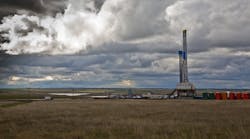 Drilling rig in North Dakota
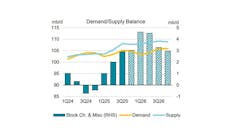 IEA global oil demand/supply forecast
 Aerial view of a heavy crude oil tanker traveling with speed over the ocean
In their comments accompanying the survey, executives focused regularly on the macroeconomic picture and today’s low prices for oil and natural gas and how both of those factors feed into their operating costs. Several said low prices are making a portion of their wells uneconomic and commented that “if economic conditions worsen, drilling and completion activities will cease in 2026.”
The Trump administration received kudos from some respondents for its work on tax breaks in the One Big Beautiful Bill Act as well as its emphasis on LNG exports. But it also caught some flak for trying to push down commodity prices, either verbally or by spurring non-US producers to ramp up production.
“The drumbeat that gasoline and crude oil prices are too high and inflationary fails to address the very small impact on consumers as well as the reality of the last 20 years’ real prices,” one respondent told the Fed’s researchers. “Despite all of this, actual industry costs continue in one direction: up.”
To check out more comments and the rest of the survey, click here.
About the Author
 Geert De Lombaerde
Geert De Lombaerde
Senior Editor
A native of Belgium, Geert De Lombaerde has more than two decades of business journalism experience and writes about markets and economic trends for Endeavor Business Media publications Healthcare Innovation, IndustryWeek, FleetOwner, Oil & Gas Journal and T&D World. With a degree in journalism from the University of Missouri, he began his reporting career at the Business Courier in Cincinnati and later was managing editor and editor of the Nashville Business Journal. Most recently, he oversaw the online and print products of the Nashville Post and reported primarily on Middle Tennessee’s finance sector as well as many of its publicly traded companies.