Patriot purchases acreage in Big Horn basin from Anadarko; enters agreement with Bill Barrett
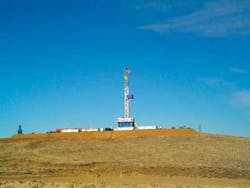
Patriot Exploration Co. Inc. has purchased 18,000 acres from Anadarko Petroleum Corp. in the central Big Horn basin in Wyoming. Terms of the deal were not disclosed. The newly acquired property is adjacent to land that Patriot and Bill Barrett Corp. currently hold. Patriot plans to offer Bill Barrett Corp. its proportionate share under the recently signed area of mutual agreement between the two companies.
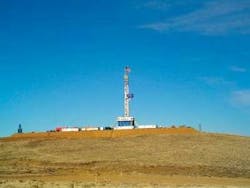
“The purchase from Anadarko increases our position in the Big Horn basin, which we believe to be an area rich in natural gas reserves,” said Jonathan Feldman, founding principal and CEO of Patriot. “This purchase along with our recent participation agreement with Bill Barrett Corporation makes Patriot a significant investor in the Big Horn region.”
Patriot entered into a participation and area of mutual interest agreement with Bill Barrett Corp. The agreement calls for Patriot to own a 25% working interest in all leases and in drilling and development activity. Patriot has made an initial commitment of $14.5 million to the central Big Horn basin project.
The Big Horn basin is one of the last remaining Rocky Mountain Laramide basins without hydrocarbon production from a basin-centered gas accumulation. The US
Geologic Survey estimates that a mean in-place gas resources of more than 333 trillion cubic feet (tcf) of gas exists in low permeability basin-centered gas accumulations within the Big Horn basin.
“The Big Horn basin represents tremendous opportunity for our two companies. Even if only a small percentage of the USGS estimates for Big Horn are economically recoverable, it still represents trillions of cubic feet of natural gas” said Feldman.
Bill Barrett Corp., headquartered in Denver, explores for and develops natural gas and oil in 9 basins and the overthrust belt in the Rocky Mountain region of the US.
With offices in New York and Houston, Patriot Exploration works with small- to mid-size operators as a working interest partner or lender for a variety of upstream projects in the oil and gas industry. OGFJ
Energen and Chesapeake partner up to explore and develop natural gas from Alabama shales
Energen Resources has sold a 50% interest in its lease position in various shale plays in Alabama to Chesapeake for cash and a carried drilling interest. In addition, the two companies have signed an agreement to form an area of mutual interest (AMI) to focus on the further exploration and development of these shale plays throughout Alabama.
Energen Resources received $75 million in cash from Chesapeake for a 50% interest in Energen Resources’ existing shale lease position of approximately 200,000 net acres in Alabama. Chesapeake also will pay for Energen Resources’ first $15 million of future drilling costs. For at least the next ten years, the two energy companies will partner on a 50-50 basis on new leases, development and operations in the AMI. The purchase is subject to post-closing and other adjustments.
“Energen Resources has substantial geological expertise and data in its home-state of Alabama,” James T. McManus, president of Energen and Energen Resources. “We are the largest producer of onshore gas in Alabama and have extensive knowledge of coalbed methane and other tight formations. Together, Energen Resources and Chesapeake are well-equipped to maximize the development potential of natural gas from a variety of shales in Alabama,” he said.
“Chesapeake’s presence in Alabama accomplishes our goal of building a significant leasehold position in every major shale play east of the Rockies,” Aubrey K. McClendon, Chesapeake’s CEO said.
“We now own approximately 4.25 million net acres of prospective shale leasehold onshore in the US including: 650,000 net acres in the Barnett and Woodford shale plays in the Delaware Basin of West Texas; 200,000 net acres in the Barnett Shale play in the Fort Worth Basin; 100,000 net acres in the Woodford shale play in southeast Oklahoma; 1,000,000 net acres in the Fayetteville shale play in Arkansas; 200,000 net acres in the New Albany shale play in southern Illinois and northwestern Kentucky; 2,000,000 net acres in various new shale plays in Appalachia; and now 100,000 net acres in the shale plays of Alabama,” continued McClendon.
Chevron, Los Alamos National Lab team up: project aims to release hydrocarbons from oil shale formations
Chevron Corp. and Los Alamos National Laboratory have created a joint research project to improve the recovery of hydrocarbons trapped in oil shales and slow-flowing oil formations.
The goal of the Chevron-Los Alamos collaboration is to develop an environmentally responsible and commercially viable process to recover crude oil and natural gas from western US oil shales. The joint research and development effort will focus on oil shale formations in the Piceance basin in Colorado. The work will include reservoir simulation and modeling, as well as experimental validation of new recovery techniques, including a form of in-situ (in-ground) processing that has the potential to mitigate greenhouse gas emissions.
Chevron has applied to participate in the Bureau of Land Management’s research, development, and demonstration leasing program in the Piceance basin. Chevron plans to use the 160-acre lease to evaluate the technologies developed through its alliance with Los Alamos, subject both to approval from the bureau and the success of the research program.
Oil shales are sedimentary rocks containing a high proportion of organic matter called kerogen that can be converted into crude oil or natural gas. The US Geological Survey estimates the US holds 2 trillion barrels of oil shale resources, with about 1.5 trillion barrels of those resources located in the western US, primarily in Wyoming, Colorado, and Utah.
The research project will be conducted under the Strategic Alliance for Energy Solutions launched by Los Alamos and Chevron in 2004. The alliance supports Los Alamos in its mission, on behalf of the US Department of Energy, to advance the national, economic, and energy security of the US through scientific and technological innovation. It also supports Chevron’s strategy to develop innovative research and educational partnerships within the energy industry.
“Energy security is one of the greatest challenges facing the nation, and developing new sources of energy, including hydrocarbons, is of paramount importance,” said Terry Wallace Jr., principal associate director for science, technology and engineering at Los Alamos. “The Chevron-Los Alamos alliance links important efforts in energy security with Chevron’s research to develop technologies that can brighten our energy future.”
For Chevron, the collaboration with Los Alamos strategically supports the company’s goal to develop promising energy technologies that will deliver additional energy supplies. “Today’s ‘unconventional’ energy sources, such as oil shales and other tight formations, will become part of the core energy supplies in the future, and our alliance can play a significant role in unlocking the potential of these resources,” said Donald Paul, chief technology officer, Chevron Corp.
“The alliance with Los Alamos has already led to several breakthroughs in oil and gas technology, including the reduction of ultrahigh casing pressures in deepwater wells and improved well performance,” said Mark Puckett, president, Chevron Energy Technology Co. “Oil shale resources offer exciting potential but present significant technological and economic challenges that will be addressed by our alliance. We expect our collaboration with Los Alamos will lead to further advances that will enhance our ability to recover oil reserves in the US.”
The research and development work by the alliance will be performed at Los Alamos National Laboratory in Los Alamos, NM, as well as at Chevron’s technology center in Houston. Over the past two years, Chevron and Los Alamos have cooperated on a variety of projects and breakthrough technologies, including radio frequency telemetry, advanced sensor technology for the collection and transmission of oil well data, and the mitigation of deepwater ultrahigh casing pressures.
In addition to the alliance with Los Alamos, Chevron is actively engaged in several other innovative partnerships with research and development institutions, universities, government laboratories and industry partners. Los Alamos has an active industry partnering program and has worked over the past five years with more than 250 large and small companies to address national technology challenges.
Los Alamos National Laboratory is operated by Los Alamos National Security LLC, for the US Department of Energy’s National Nuclear Security Administration and works in partnership with NNSA’s Sandia and Lawrence Livermore National Laboratories to support NNSA in its mission. Los Alamos develops and applies science and technology to ensure the safety and reliability of the US nuclear deterrent; to reduce the threat of weapons of mass destruction, proliferation and terrorism; and to solve national problems in defense, energy, environment, and infrastructure.
Weatherford performs first EM-LWD operation in Saudi Arabia
Weatherford International Ltd. has successfully installed the first ever Electromagnetic Logging While Drilling (EM-LWD) triple combo operation with extended range set-up for Saudi Aramco in the Hawiyah field in Saudi Arabia.
This project represents the successful proof of concept of EM-LWD with annulus pressure technology and extends the scope of development of future underbalanced drilling (UBD) campaigns, which will require two-phase fluid with drillpipe gas injection.
The objective was to evaluate the feasibility of EM transmission in conjunction with LWD triple combo and annulus pressure sensors in a 6-1/8 in. horizontal section. This horizontal section of Hawiyah-473 well (HWYH-473) was underbalanced drilled from 8,100 ft to 11,189 ft in one run. Gas injection on future wells will preclude the use of mud pulse telemetry. As an alternative, EM telemetry will allow a continuation in the underbalanced drilling planning process to include real-time LWD technology.
“The evaluation objective was met. Real-time data allowed 3,089 ft of 6-1/8-in. horizontal section to be successfully geosteered in one bit run while maintaining underbalanced conditions,” commented Scott Campbell, strategic business manager for Weatherford. Campbell continued, “In addition, the well was flow and pressure tested with real-time annulus pressure data acquired during pumps off operations. One advantage of EM versus conventional mud pulse telemetry is that real-time updates are possible, independent of wellbore hydraulics.”
Wood Mackenzie examines future of FSU gas supplies
In its report titled ‘FSU gas exports - who is in control?’, Wood Mackenzie examines the future of gas supplies from the Former Soviet Union (FSU) following the recent memoranda of understanding between China with Russia, Turkmenistan, and Kazakhstan.
The memoranda includes the construction of four pipelines and the supply of gas between these countries to the Chinese markets. Potentially, around 5.3 tcf (150 bcm) of the FSU gas could be supplied to eastern markets from 2012. Wood Mackenzie estimates that this amount is roughly equivalent to what the FSU will deliver to Europe in 2012 and accounts for 37% of total FSU export potential.
Valentina Kretzschmar, Russia and Central Asia analyst for Wood Mackenzie said; “Possible diversion of gas, traditionally exported to western markets has alarmed European consumers, whose dependence on gas imports from Russia is forecast to increase. The situation highlights Europe’s desire for ‘security of supply’ and Russian desire for ‘security of demand.”
Wood Mackenzie’s report finds that despite the evident discrepancy between the agreed gas volumes and the actual demand by China, the prospect of diversifying gas export routes from Russia gives Gazprom significant leverage in price negotiations with Europe, as well as transit states such as Ukraine and Belarus.
Wood Mackenzie’s research suggests that Russia is the most significant player in the gas supply game with far greater export potential than the Central Asian countries.
Kretzschmar said, “Turkmenistan’s and Kazakhstan’s ambitions to diversify their gas exports to China are unlikely to materialize. Turkmenistan’s net export potential seems to be already fully contracted, whilst Kazakhstan’s recent agreement with Russia to increase export prices is likely to serve as a disincentive for construction of new export routes to China.”
On the demand side, Wood Mackenzie forecasts that China is not likely to require gas from the FSU before 2015, several years after the planned start-up of the pipelines. Moreover, the gas volumes which China is likely to need are only a fraction of those being discussed with Russia, Kazakhstan and Turkmenistan, and could be easily satisfied by any one of the four proposed pipelines.
On the other hand, the report concludes that China is playing a similar game to Russia by negotiating with a number of suppliers, thus intensifying competition. Kretzschmar explained, “With security of supply being a major concern for both China and Europe, and Russia in position to provide necessary gas supplies to both, it is clear that Russia will hold the upper hand in future negotiations on volumes and prices.”
Pogo to divest various mature, non-core assets
Pogo Producing Co. intends to divest certain non-strategic oil and gas properties principally located in the Gulf of Mexico, south and east Texas, south Louisiana, the Permian Basin and Texas panhandle, and in western Canada.
“We are constantly evaluating our assets, in order to high-grade our operations and strengthen our balance sheet,” said Pogo’s chairman and CEO, Paul G. Van Wagenen. “Consistent with our previously stated goal of reducing risk and enhancing investment value to our shareholders, we have initiated a review of all of Pogo’s assets to determine where to deploy our resources most effectively. As part of this review, the company has analyzed the performance of its asset base relative to targeted rates of return, and is determined to enhance value for its shareholders by pursuing a sale of the non-core portion of those assets. We expect this sale to further concentrate Pogo’s asset base into one that is more capable of steady, predictable growth, as well as reducing unit operating costs, improving capital efficiency and increasing Pogo’s profitability.”
Based on current market valuations for comparable properties, the company would expect to ultimately realize in the range of $700 million to $800 million in proceeds from the sales of all non-core assets. Pogo expects to proceed expeditiously with a phased sale process and anticipates closing the sale of the Gulf of Mexico, south Texas, east Texas and south Louisiana properties by the end of the first quarter of 2007. The second phase of this sale process, covering certain properties in the Permian Basin, the Texas panhandle and in western Canada should commence early in 2007 and be completed by mid-year. Proceeds from the asset sales are planned to be used for debt reduction. Pogo has retained Jefferies Randall & Dewey, a division of Jefferies & Co. Inc., to assist in the initial sale process.
The properties included in the first phase of the divestment plan currently would be expected to produce, in 2007, oil and natural gas equal to approximately 37 million cubic feet equivalent per day and represent more than 90 billion cubic feet equivalent of proven reserves, plus meaningful probable and possible reserves, as well as exploratory upside potential, and would include approximately 125,000 gross leasehold acres.