Rethinking Power: How Cordless Innovation Is Transforming Field Work
Key Highlights
- Cordless technology reduces generator reliance and improves mobility across complex jobsites.
- Shared battery platforms help crews scale productivity across multiple tools.
- Modern electrofusion solutions simplify setup and improve workflow efficiency in the field.
- Reduced cords, emissions, and noise help support safer, more controlled jobsites.
- Application-driven innovation prioritizes real jobsite challenges over unnecessary complexity.

Innovation as a Necessity, Not a Luxury
Across the oil and gas industry, innovation has traditionally been measured by scale, larger projects, higher output, and faster expansion. Today, that definition is shifting. As field conditions grow more complex and labor constraints persist, innovation is increasingly being driven by workflow improvements rather than speed alone.
Mobility and reliability have quietly become limiting factors in many common field operations. Crews are expected to work efficiently across diverse jobsites, often with constrained access to power, tighter safety requirements, and little downtime. In this environment, innovation is no longer optional or incremental; it is foundational to maintaining productivity and competitiveness.
The Hidden Cost of Traditional Solutions
Many long-standing tools and systems in oil and gas operations persist not because they are optimal, but because they are familiar. Traditional electrofusion and power solutions, particularly those reliant on gas generators or generator-dependent setups, often introduce operational challenges that have simply been accepted as part of the job.
Noise, emissions, maintenance requirements, and logistical burdens can complicate jobsite setup and disrupt workflows. Equipment downtime, often caused by required service or replacement parts, can stall critical work and force crews to adjust schedules, mobilize backup solutions, or reallocate labor.
These challenges extend beyond the equipment itself. Generator-dependent systems often require additional setup, monitoring, and maintenance that adds complexity to otherwise straightforward operations.
At the same time, many traditional systems were not designed with modern technology integration in mind. Tracking, reporting, and digital documentation are often secondary considerations, despite their growing importance in ensuring quality, consistency, and accountability in field operations.
Because these limitations have long been normalized, they frequently go unchallenged. Yet as projects become more demanding and margins tighter, the cumulative cost of these inefficiencies becomes harder to ignore.
Cordless Technology and the Shift in Field Capabilities
Advances in battery technology have expanded what cordless systems can support, opening the door to rethinking traditionally corded or gas-dependent processes. This shift is not about convenience, it is about enabling new ways of working in the field.
Cordless systems allow crews to operate in locations previously limited by power availability, reduce dependence on secondary equipment such as generators, and adapt more quickly to changing jobsite conditions. Setup times are often reduced, mobility improves, and crews gain the ability to move seamlessly between tasks without reconfiguring their power infrastructure.
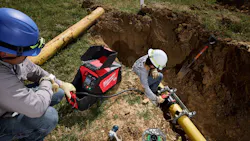
In the context of electrofusion, this evolution is becoming increasingly visible. Solutions such as Milwaukee Tool’s MX FUEL™ Electrofusion Processor illustrate how this technology is being applied to real-world workflows. By eliminating the need for generators and extension cords, cordless electrofusion systems can reduce jobsite setup complexity while improving mobility for crews working between trucks, trenches, and confined spaces. Lighter equipment designs and faster deployment help crews move more efficiently across the jobsite, supporting productivity without compromising performance.
Operating within a broader battery platform also adds another layer of efficiency. Systems like Milwaukee®’s MX FUEL™ battery line are built around compatible, swappable batteries that allow crews to power multiple pieces of equipment with the same battery, reducing equipment redundancy and simplifying jobsite logistics. This level of system compatibility can help crews scale productivity across multiple applications while maintaining consistent performance in the field.
Beyond mobility, technology integration is also becoming a defining factor. Digital tracking, barcode scanning, and fusion data reporting capabilities provide greater visibility into fusion parameters and outcomes, helping crews improve traceability and maintain compliance with project specifications.
The MX FUEL™ Electrofusion Processor represents one example of how cordless innovation is being applied thoughtfully, improving workflows and reducing operational friction rather than simply replacing traditional power sources.
Safety and Risk Reduction Through Smarter Power
Innovation in power and equipment design can also have direct implications for safety. Reducing the number of cords, generators, and auxiliary components on site can significantly decrease trip hazards and potential electrical risks.
Quieter job sites improve communication among crew members, while cleaner operations contribute to better overall working conditions. By minimizing emissions and reducing the number of moving parts required for operation, these battery-powered solutions create more controlled and predictable work environments.
Productivity Gains Beyond Speed
Productivity in oil and gas operations is often equated with speed, but the reality is more nuanced. True productivity gains are often driven by reduced downtime, fewer interruptions, and more predictable workflows.
Traditional electrofusion systems frequently require significant maintenance, which can take equipment out of service for several weeks. These disruptions can cascade through project timelines, creating inefficiencies that extend well beyond the immediate task.
Newer approaches to electrofusion are helping crews maintain momentum in critical activities. By reducing maintenance requirements and improving reliability, these systems support consistency in execution.
When crews can rely on their equipment to perform day after day, planning becomes easier, schedules stabilize, and overall project efficiency improves.
Application-Driven Innovation and the Road Ahead
Meaningful innovation is defined by how effectively it solves real jobsite challenges. Solutions designed around actual field conditions, rather than idealized environments are more likely to deliver lasting value for crews operating under demanding constraints.
Application-driven innovation prioritizes workflow improvements, reliability, and ease of use. By reexamining long-standing processes and redesigning them with the professional user in mind, manufacturers can reduce friction in everyday tasks while maintaining the performance standards required for critical infrastructure work. Milwaukee Tool’s MX FUEL™ Electrofusion Processor technology offers one example of how this mindset is being applied, simplifying processes and improving mobility without sacrificing reliability.
Looking ahead, the most impactful innovation in the oil and gas industry will focus on solving jobsite constraints and introducing new features focused on driving efficiency while maintaining reliability and safety. Designing equipment that balances power, portability, and technology integration will remain critical as field operations continue to evolve.
By prioritizing practical, application-driven solutions grounded in real operational needs, the industry can continue advancing in ways that support both productivity and long-term progress.