Australia launches pre-feasibility, pre-FEED study for grassroots refinery
Key takeaway
If approved, the project would be the first refinery built in Australia since the 1960s, as well as the first since four refineries were closed under the former Coalition Government.
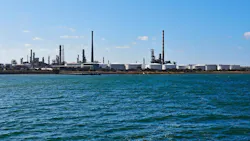
Australia’s federal and Western Australian governments have announced the start of a jointly funded a pre-feasibility study to evaluate the potential of building a new large-scale conventional crude oil refinery in Karratha, Western Australia.
On July 28, Prime Minister Anthony Albanese and WA Premier Roger Cook said the $4-million (Aus.; US $2.8-million) preliminary feasibility study and preliminary front-end engineering and design (pre-FEED) work would investigate Perdaman Group’s proposal to build a grassroots refinery in Karratha as part of a plan to strengthen Australia’s fuel security, with particular emphasis on diesel supply for regional communities in Western Australia.
Officials also linked the initiative to job creation and local economic benefits, including manufacturing opportunities under the state and federal “Made in” policy frameworks.
If approved, the project would be the first refinery built in Australia since the 1960s, as well as the first since four refineries were closed under the former Coalition Government.
Officials also tied the effort to a broader Commonwealth support program for refining capacity.
As the first agreement under an Albanese government’s $10-million support package for feasibility work related to new or expanded fuel refining capabilities, the study specifically comes as part of an attempt to retain in-country refining capability in the decade beyond 2030.
The pre-feasibility work was presented as part of a broader $15-billion federal package focused on fuel security and fuel-system resilience. The package components include:
- $7.5 billion for a fuel and fertilizer installation to increase fuel and fertilizer supply and storage capability.
- $3.2 billion to establish a government-owned Australian fuel security reserve of about 1 billion l., specifically focused on diesel and jet fuel.
- A 10-day uplift to the minimum stockholding obligation for gasoline, diesel, and jet fuel.
- $3.3 billion to reduce fuel excise and extend a heavy vehicle road user charge relief for 4 months.
- $1 billion in interest-free loans through the National Reconstruction Fund’s economic resilience program to support cash-flow needs in critical manufacturing and logistics supply chains.
Without disclosing any proposed timeline or capacity details for the proposed refinery, the governments said the Perdaman project could create thousands of jobs and support diesel availability for regional Western Australia communities.
With the longer duration of conflict in the Middle East increases risks to Australia, Albanese said that the government is working to “shield” the country from the worst impacts while preparing for future challenges.
Western Australia’s approach has focused on securing fuel supplies, noting diesel needs for regional areas, said Cook, adding that the study complements the state’s Made in Western Australia plan.
Chris Bowen, Minister for Climate Change and Energy, framed the work as a response to disruptions in overseas supply chains, describing sovereign onshore refining capability as a “prudent” step toward energy security.
Amber-Jade Sanderson, Western Australia energy minister, said the state’s fuel-crisis response has supported supply and continued economic activity, and that additional west-based refining capacity is intended to add resilience to the energy system and help sustain the state’s mining-driven economy.
In a separate July 28 release, Perdaman said its proposed Made in Western Australia Fuel Refinery project also aims to establish the state as a leader in advanced manufacturing and resource processing.
The proposed refinery also supports Perdaman’s commitment to creating sovereign industrial capability through large-scale infrastructure investment, the company said.
Construction of the refinery also would reduce reliance on imported refined fuels, according to Perdaman.
The combined pre-feasibility and pre-FEED program aims to determine the optimal refinery configuration, supporting port infrastructure and logistics solutions, while advancing the project towards an investable development opportunity, the company added.
Further details regarding the proposed development have yet to be disclosed.
Current refining capacity
Following the closure of four refineries between 2014-21, Australia currently has only two operable conventional crude refineries, including Viva Energy Group Ltd.’s 120,000-b/d Geelong refinery in Victoria, and Ampol Ltd.’s 109,000-b/d Lytton refinery in Brisbane, Queensland.
About the Author
 Robert Brelsford
Robert Brelsford
Downstream Editor
Robert Brelsford joined Oil & Gas Journal in October 2013 as downstream technology editor after 8 years as a crude oil price and news reporter on spot crude transactions at the US Gulf Coast, West Coast, Canadian, and Latin American markets. He holds a BA (2000) in English from Rice University and an MS (2003) in education and social policy from Northwestern University.