German government intervenes to save PCK Schwedt refinery
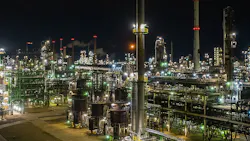
Germany’s federal government is intervening to ensure ongoing employment security for the workforce of PCK Raffinerie GMBH’s 220,300-b/d refinery at Schwedt, in the country’s northeastern Brandenburg state, following Russia’s halt of crude oil feedstock supplies from Kazakhstan to site via the Druzhba pipeline earlier this month.
During a May 11 visit to the Schwedt manufacturing site, Katherina Reiche—federal minister of Germany’s Ministry for Economic Affairs and Energy (BMWE)—confirmed the government will extend existing protections in place for the refinery’s employees by 6 months through yearend 2026, BMWE said.
The extension of employment protections forms part of the federal government’s efforts to offer the refinery’s more than 1,000 employees a sense of security and stability during “a still tense and uncertain situation” for the complex, a major supplier of finished petroleum products to northeastern Germany and western Poland.
Other efforts under way include federal and state intervention in helping PCK secure alternative sources of reliable feedstock supplies for the refinery via alternative routes, including a potential expansion of an existing oil pipeline that runs from Rostock, Germany, to Schwedt, PCK said in late April.
Within Germany alone, fuel production from tSchwedt is responsible for powering about 9 out of 10 cars in Berlin and Brandenburg, according to PCK’s website.
Announcement of the extended federal intervention comes amid deepening uncertainty following the Russian government’s decision that, from May 1, crude oil exports from Kazakhstan to Germany along the Druzhba pipeline would cease as a result of unspecified technical issues.
The loss of feedstock supply poses a sizeable dent in feedstock supplies for the Schwedt refinery, which in 2025 processed 2.15 million tonnes/year (tpy; roughly 43,180 b/d) of Kazakh crude, accounting for about 20% of the site’s overall feed slate, PCK said on Apr. 29.
Cessation of the Kazakh crude shipments also follows the US Department of the Treasury's Office of Foreign Assets Control’s (OFAC) indefinite extension in March of a waiver—originally set to expire at the end of April—for the partially Rosneft Deutschland GMBH (RDG)-held PCK exempting the company from US Russian sanctions to enable ongoing operations of the refinery, according to BMWE.
Rosneft’s RDG and RN Refining & Marketing GmbH (RNRM) remain indefinitely under fiduciary management of Germany’s Bundesnetzagentur (Federal Network Agency), the country’s gas and electricity industry regulator, which has assumed control of RDG’s respective shares in PCK and other RDG-RNRM-held German assets.
In addition to RDG’s 37.5% stake in PCK, other shareholders in the refinery include Shell Deutschland GMBH (37.5%), AET Raffineriebeteiligungs-Gesellschaft MBH (25%), a joint venture of Rosneft Refining & Marketing GMBH and Eni SPA’s Enilive Deutsch GMBH.
Associated SAF project
As part of its plan to support sustainable, long-term operations of the Schwedt site, BMWE also confirmed its symbolic handover of a €350-million ($412-million) government funding decision for the Brandenburg eSAF project to be built co-located at the Schwedt industrial park.
A joint venture between Enertrag SE and Zaffra BV, the proposed sustainable aviation fuel (SAF) plant—which originally received the funding notification in August 2025 after its designation as one the European Union Commission’s Important Projects of Common European Interest and Project of Common Interest—will require an overall investment of €494 million, €245 million of which will come from the federal government and €104 million from Brandenburg state, PCK said on Feb. 27.
While Enertrag is not scheduled to reach final investment decision (FID) on the project until late 2026 or early 2027, PCK said the company has already started technical planning for the plant, which aims to produce synthetic fuels based on green hydrogen and biogenic carbon dioxide.
Previously planned for implementation in Rüdersdorf but approved by the European Commission in early April 2026 for relocation to Schwedt, the plant is designed for large-scale production of 30,000 tonnes/year of renewable synthetic kerosine (eSAF), as well as a by-product of sustainable naphtha that can be used as feedstock for the chemical industry, according to BMWE.
Pending positive FID by 2027, the proposed eSAF plant is slated for start of production in 2030.
About the Author
 Robert Brelsford
Robert Brelsford
Downstream Editor
Robert Brelsford joined Oil & Gas Journal in October 2013 as downstream technology editor after 8 years as a crude oil price and news reporter on spot crude transactions at the US Gulf Coast, West Coast, Canadian, and Latin American markets. He holds a BA (2000) in English from Rice University and an MS (2003) in education and social policy from Northwestern University.