UAE’s TA’ZIZ inks offtake, feedstock deals to anchor chemicals buildout
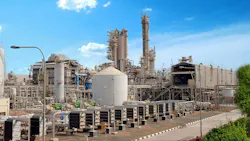
Abu Dhabi Chemicals Derivatives Co. RSC Ltd. (TA’ZIZ)—a joint venture of Abu Dhabi National Oil Co. (ADNOC) and Abu Dhabi Developmental Holding Co. PJSC (ADQ)—has signed $28.5 billion in long-term commercial agreements across its chemicals portfolio, advancing development of its integrated downstream industrial platform in the TA’ZIZ Industrial Chemicals Zone at Ruwais Industrial City in Abu Dhabi’s Al Dhafra region.
The agreements cover offtake, feedstock supply, and product sales for key commodities including methanol, polyvinyl chloride (PVC), ethylene dichloride (EDC), vinyl chloride monomer (VCM), caustic soda, salt, and natural gas, with contract durations ranging from 5-25 years, ADNOC said on May 5.
“These long-term agreements represent a defining milestone for TA’ZIZ and for the UAE’s industrial growth ambitions,” said Mashal Saoud Al-Kindi, TA’ZIZ’s chief executive officer.
“By securing both global demand and reliable local feedstock, we are translating vision into delivery, anchoring [worldscale] chemicals production, strengthening domestic value chains, and creating enduring economic value, jobs, and supply chain resilience for the UAE,” Al-Kindi added.
Securing long-term demand, feedstock
TA’ZIZ—the UAE’s first downstream public-private partnership—said the May 5 agreements specifically aim to simultaneously secure global demand for its products and ensure reliable domestic feedstock supply.
This dual structure underpins development of large-scale chemical production capacity within the UAE while reducing exposure to supply chain volatility, according to the operator.
Key commercial arrangements include:
- Methanol sales agreements with ADNOC and Proman AG, a global leader in the methanol marketing industry.
- Caustic soda supply to Emirates Global Aluminium PJSC (EGA), totaling about 200,000 tonnes/year (tpy). As part of the EGA agreement—which represents a notable milestone in localization of chemical inputs—TA’ZIZ said it will become a domestic supplier of caustic soda to EGA’s Al Taweelah alumina refinery, reducing reliance on imports for a key industrial input.
- Sales agreements with Mitsubishi Corp. and Mitsui & Co. for offtake of EDC, VCM, and caustic soda.
- Additional agreements with a Chennai, India-based Sanmar Group, Tricon Energy Inc., and Vinmar International Ltd.—both of Houston—covering offtake of PVC, EDC, VCM, and caustic soda.
On the feedstock side, ADNOC Gas PLC has committed to a 25-year natural gas supply agreement valued at more than $5 billion to support the TA’ZIZ methanol project.
To support its PVC production chain, TA’ZIZ also signed a 20-year salt-supply agreement with Abu Dhabi-based Sama Salt Production Co. LLC.
Value-chain integration
The feedstock supply and offtake agreements mark another pivotal step in TA’ZIZ’s ongoing development of its Ruwais platform, which is designed to link feedstock supply, utilities, production, and logistics within a single industrial zone.
Phase 1 of the TA’ZIZ integrated chemicals platform slated to deliver 4.7 million tpy of chemical production capacity by 2028. Planned output includes:
- 1 million tpy of low-carbon ammonia.
- 1.8 million tpy of methanol.
- 1.9 million tpy of products from an integrated PVC complex, including PVC, EDC, VCM, and caustic soda.
EDC and VCM serves as intermediate feedstocks for PVC production, while caustic soda is a co-product with applications across alumina refining, water treatment, and other industries.
Methanol production from the platform will serve both traditional petrochemical demand and emerging energy applications, including use as a lower-carbon fuel in shipping and power generation, according to TA’ZIZ.
Future expansion phases under consideration could more than double production capacity and incorporate additional technologies such as carbon capture and low-carbon power integration.
According to TA’ZIZ’s website, the operator’s plans for the platform by 2031 include:
- Doubling production of methanol and ammonia.
- Starting production of linear alpha olefins (LAO), ethylene oxide (EO)/ monoethylene glycol (MEG), ethylene vinyl acetate (EVA), vinyl acetate monomer (VAM), and styrene.
- Installing a proposed low-carbon steam cracker.
Supporting infrastructure, utilities
During the past 2 years, TA’ZIZ has advanced development of the platform through a series of major engineering, procurement, and construction (EPC) awards and infrastructure agreements.
In January 2026, ADNOC and Abu Dhabi National Energy Co. (TAQA) signed a 27-year utilities agreement to supply centralized services to the site. The build-own-operate utilities platform will provide steam, water, compressed air, and wastewater treatment capacity required for multiple chemical units.
Contracted utilities capacity includes:
- 163 tonnes/hour of steam.
- 710 tonnes/hour of water.
- 13,850 normal cu m/hour of compressed air.
- 385 cu m/hour of wastewater treatment.
The utilities system is a core component of TA’ZIZ’s shared-services model, which also includes feedstock pipelines, storage, logistics infrastructure, and centralized safety systems.
In parallel, ADNOC Logistics & Services is developing a dedicated chemicals port at Ruwais under a long-term agreement signed in 2025. The seaport is intended to support export of TA’ZIZ products to Asia-Pacific and African markets.
EPC execution, project timeline
TA’ZIZ has already advanced major process units within Phase 1 through a series of EPC contract awards.
A $1.7-billion contract awarded to Samsung E&A in early 2025 covers construction of the TA’ZIZ platform’s 1.8-million-tpy natural gas-to-methanol plant. Designed for high energy efficiency performance, the plant will be powered by grid electricity to reduce emissions intensity.
Separately, a $1.99-billion EPC contract was awarded in November 2025 for construction of the integrated PVC complex. Mechanical completion is targeted for fourth-quarter 2028, aligning with the broader startup schedule for Phase 1.
The combination of newly secured feedstock, long-term sales agreements amid ongoing construction activities ultimately earmarks TA’ZIZ’s definitive move from years of planning into the project’s official execution and commercialization stages.
Economic, industrial impacts
TA’ZIZ said it expects Phase 1 of the project to contribute about $50 billion to the UAE economy over its lifecycle. The development is also projected to create about 20,000 construction jobs and 6,000 permanent operational roles.
Beyond direct economic impact, the project is intended to enable domestic production of a wide range of chemical derivatives that are currently imported, including downstream products used in construction, packaging, automotive, and consumer goods sectors.
By establishing local supply chains for base chemicals such as methanol, PVC, and caustic soda, the integrated chemicals platform will also support development of secondary manufacturing industries within the UAE, according to TA’ZIZ.
Alignment with ADNOC growth strategy
The May 5 feedstock supply and offtake agreements follow ADNOC’s May 3 announcement that it plans to award about $55 billion in projects between 2026-28, indicating an acceleration in the operator’s execution of its broader upstream and downstream domestic growth strategy.
ADNOC confirmed the newly unveiled multibillion-dollar investment plans specifically will cover projects designed to:
- Expand production capacity to meet global energy demand.
- Strengthen domestic manufacturing capabilities.
- Increase participation of local suppliers through its In-Country Value (ICV) program.
The company said its focus on domestic feedstock sourcing and local industrial integration aligns with its “Local+” initiative, which aims to prioritize UAE-based manufacturers in ADNOC’s procurement processes.
With TA’ZIZ’s long-term commercial agreements now in place and key elements required for project financing and operational stability secured, the timing of the operator’s guaranteed feedstock supply and committed product offtake agreements alongside ADNOC’s accelerated capital spending plans indicate the parent company’s coordinated push to meet its goal of bringing large-scale industrial capacity online by the end of the decade.
About the Author
 Robert Brelsford
Robert Brelsford
Downstream Editor
Robert Brelsford joined Oil & Gas Journal in October 2013 as downstream technology editor after 8 years as a crude oil price and news reporter on spot crude transactions at the US Gulf Coast, West Coast, Canadian, and Latin American markets. He holds a BA (2000) in English from Rice University and an MS (2003) in education and social policy from Northwestern University.