CFO: Phillips 66 could handle “a couple hundred thousand” b/d out of Venezuela

The Lake Charles and Sweeny refining complexes run by Phillips 66, Houston, could today process several hundred thousands of barrels daily of Venezuela oil “if the crudes are available and the economics are there to support it,” chief financial officer Kevin Mitchell told an investment bank gathering Jan. 6.
Mitchell and Mark Lashier, chairman and chief executive officer, told attendees of the Goldman Sachs Energy, CleanTech & Utilities Conference that adding Venezuelan barrels to their operations would also benefit the company’s Mid-Continent refining group. Both divisions process Western Canadian Select, a heavy and sour oil similar to that from Venezuela.
Phillips 66’s refineries on the Gulf Coast—Lake Charles is in Westlake, La., while Sweeny is in Old Ocean, Tex.—have a net capacity of 529,000 b/d. They are part of a broader refining operation that in last year’s third quarter ran at a 99% utilization rate, Phillips 66’s highest since 2018. Historically, 63% of the group’s capacity has been dedicated to processing medium and heavy crudes.
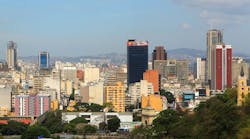 Caracas, Venezuela
 Prax Group Lindsey oil refinery at dusk
“It impacts the entire sort of heavy-crude dynamic,” Mitchell said of the prospect of adding Venezuelan supply to Phillips 66’s refineries. “You’d expect to see that benefit flow up through the consumption we have in the Mid-Continent, where we’re currently a heavy buyer of Western Canadian crude.”
A meaningful financial boost is likely to take some time to show up on Phillips 66’s income statement, though. Echoing other statements made since the weekend arrest by US forces of former Venezuelan president Nicolás Maduro, Lashier told the Goldman gathering that ramping up production in the Caribbean nation “is going to take a lot of investments by the upstream folks over year, if not decades.”
But longer-term structural changes are possible, Lashier added, noting that “we could return to the days where we were exporting a few hundreds barrels a day out of the Gulf Coast to China.”
Speaking more broadly about US refining capacity, Lashier said capacity is likely to remain tight for years. The Phillips 66 team, he said, expects about 500,000 b/d of capacity being added annually through 2030 but he added that, on the flip side, “there’s probably more rationalization going to happen out there than is visible today.”
Shares of Phillips 66 (Ticker: PSX) were down about 2% to nearly $137 in afternoon trading Jan. 6, the day after they popped on the back of the Maduro news. Over the past 6 months, they have risen about 7%, which has grown the company’s market capitalization to about $55 billion.
About the Author
 Geert De Lombaerde
Geert De Lombaerde
Senior Editor
A native of Belgium, Geert De Lombaerde has more than two decades of business journalism experience and writes about markets and economic trends for Endeavor Business Media publications Healthcare Innovation, IndustryWeek, FleetOwner, Oil & Gas Journal and T&D World. With a degree in journalism from the University of Missouri, he began his reporting career at the Business Courier in Cincinnati and later was managing editor and editor of the Nashville Business Journal. Most recently, he oversaw the online and print products of the Nashville Post and reported primarily on Middle Tennessee’s finance sector as well as many of its publicly traded companies.