Neste charts course for renewable fuels amidst industry retreat
Key Highlights
- Despite short-term industry setbacks, the long-term outlook for renewable fuels remains positive due to supportive policies and technological advancements.
- Neste's investments, such as the Martinez Renewables joint venture and Rotterdam SAF refinery, are supporting increased global renewable fuel capacity and innovation.
- Technologies like hydrotreating, isomerization, and renewable hydrogen production are key to producing high-quality, low-emission renewable fuels.
- Robust supply chain networks, strategic raw material sourcing, and supportive regulations are critical to scaling renewable fuel production and adoption.
Matt Leuck
Pratik Chandhoke
Neste US Inc.
Houston
During the last 2 years, demand for hydrocarbons has encouraged many traditional energy companies to reinvest in their core business, reversing pledges to pivot to renewable energy projects that are often longer term and more capital intensive.
As renewable projects faced high inflation, supply chain bottlenecks, and rising interest rates resulting in lower returns compared with fossil-fuel projects, operators began scaling back, divesting, or abandoning their renewable energy portfolios to reduce spending and prioritize higher-return, conventional energy.
The near-term slowdown in renewable energy investments, however, does not mean environmental, social, and corporate governance (ESG) objectives and the energy transition are going away. These goals remain crucial for businesses, extending beyond mere sustainability to influence a company's economic success and public perception.
Despite immediate challenges facing the renewables industry, Neste Corp.—the world's leading producer of renewable diesel and sustainable aviation fuel (SAF)—has remained committed to developing liquid renewable fuels to help heavy-duty sectors reduce reliance on fossil fuels in line with the company's goal of enabling its customers to reduce their greenhouse gas emissions by 20 million tonnes/year (tpy) by 2030 using Neste’s renewable solutions.
This article examines how renewable fuels remain crucial tools for achieving measurable climate-impact reduction across various hard-to-abate sectors, as well as how technical expertise, streamlined supply chains, and strategic investments can help operators navigate uncertainties of the current renewables landscape.
Current industry landscape
While the overall long-term demand outlook for renewable fuels remains positive—driven by supportive policies in key markets, such as North America and Europe, as well as businesses voluntarily adopting renewable solutions to reduce greenhouse gas (GHG) emissions—producers of biodiesel, renewable diesel, and SAF experienced tight-to-negative margins in 2025, which led to decreased production.
In a recent report, the International Energy Agency (IEA) forecasted a 20% drop in biodiesel and renewable diesel use in the US in 2025 from 2024, with production down nearly 15% during the same period. Uncertainties regarding existing tax credits, changes to the US Environmental Protection Agency’s (EPA) Renewable Fuel Standard (RFS) program, and final implementation details for the new 45Z tax credit continued to impact producers’ confidence in the Americas region.
Even amid these challenges, however, positive trends have emerged for the global renewable diesel sector, supporting a positive foundation for future growth. The implementation of the European Union’s (EU) Renewable Energy Directive III (RED III) into local legislation of countries (e.g., Germany) encourages the use of renewable diesel and will likely increase the demand for renewable diesel to 10 million tpy by 2030 from a current demand estimate of 5 million tpy.
SAF also has been gaining momentum due to supportive regulatory frameworks encouraging increased demand from the aviation industry. But despite this growth potential, SAF use remains relatively limited, likely to have represented only 0.7% of airlines’ total fuel consumption in 2025. The International Air Transport Association (IATA) projects that in 2026, global SAF production growth will further slow, reaching 2.4 million tpy from 1.9 million tpy in 2025.
While some producers are scaling back, the foundational regulatory drivers for renewable fuels remain robust. With policy frameworks like the EU’s RED III and ReFuelEU Aviation regulations, as well as the Low Carbon Fuel Standard (LCFS) in North America, volumes of renewable fuels are expected to grow steadily in the transportation sector. Despite 2025 margin pressures on producers, the long-term outlook remains positive, with production expected to rise further toward 2026.
Martinez Renewables partnership
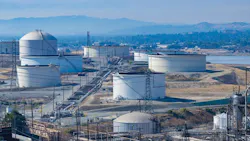
In 2022, Neste and Marathon Petroleum Corp. (MPC) announced an agreement to establish a 50-50 joint venture to produce renewable diesel following a conversion project of Marathon's former petroleum refinery in Martinez, Calif. (the Martinez Renewable Fuels project; Fig. 1).
Operated by MPC, Martinez Renewables LLC started production in 2023 and reached full capacity in 2025, increasing Neste’s total global renewable products capacity by slightly more than 1 million tpy (365 million gal/year), when combined with the company’s other refineries in Finland, the Netherlands, and Singapore.
Located in the center of the US’ biggest renewable diesel market, Martinez Renewables effectively uses existing industrial infrastructure to accelerate the supply of renewable fuels to meet growing market demand, particularly in California. Hydrotreating is used at the joint operation to produce renewable diesel.
The initial stage of the hydrotreating process involves pretreatment. Renewable raw materials including used cooking oil and animal fat waste, like other feedstocks, contain impurities such as water, flour, spices, floating food chunks, or even metals, that need to be removed before hydrotreating to help protect catalyst material and other components of the refining process.
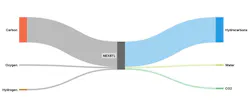
Following pretreatment, catalytic hydrogenation is employed to achieve the saturation of double bonds in the hydrocarbons and the removal of oxygen. This process involves introducing the pretreated feedstock into a high-pressure reactor, where it is heated and mixed with hydrogen and a catalyst that drives the hydrogenation reaction. The reaction liberates the oxygen in the raw materials as water and creates a pure hydrocarbon with high-energy density. In the last stage of the renewable diesel production process, the hydrocarbons are isomerized to tune the properties of the end products for different applications.
Renewable diesel produced at Martinez Renewables meets ASTM D975 standards, and due to its similar chemical composition to conventional diesel, renewable diesel is a drop-in fuel that can be used neat or blended at any ratio with fossil-based diesel without any modifications to either the vehicle or the fuelling infrastructure. Many engine manufactures across all industries have officially approved the use of renewable fuel for their diesel engines.
Beyond roadways
Today, renewable diesel usage is expanding beyond just road transportation. During the last decade, Neste has partnered with companies from the construction, agriculture, railway, marine, mining, and data center industries to help their transition to renewable diesel.
For fleet owners who have already invested in new fleets with internal combustion engines, renewable diesel delivers the same strong performance but with a smaller carbon footprint on a lifecycle basis compared with fossil-based diesel. The biggest GHG emissions reduction are attributable to the raw materials used to produce renewable diesel.
The production process also recycles carbon dioxide (CO2) already existing in the atmosphere, so combustion of renewable fuel does not add new carbon emissions to the atmosphere. For example, with the use of renewable diesel, GHG emissions can be reduced by up to 90% or by up to 75% when emissions over the fuel’s lifecycle are compared with those of fossil diesel.
The GHG emissions reduction, however, varies depending on the region-specific legislation that provides the methodology for the calculations (e.g., California’s LCFS in the US), and the raw-material mix used to manufacture the product for each market.
According to a report by the International Renewable Energy Agency, heavy duty trucks represent only about 9% of the global vehicle stock but are responsible for almost a quarter of all transport-related GHG emissions. To put this into perspective, total GHG emissions from heavy-duty trucks are larger than those from the international aviation and shipping sectors combined. Out of all the pathways available today for the heavy-duty transportation to reduce GHG emissions, renewable diesel’s advantages make it an important solution for the energy transition.
Expanding SAF production
Neste marked 2025 with key milestones and deepened industry partnerships—most notably in aviation—driven by sustained customer demand for renewable fuels. Strong procurement commitments from a broad customer base, together with supportive regulatory frameworks, point to long-term growth in SAF demand.
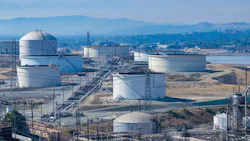
The outlook underpins Neste’s confidence in its ongoing strategic expansion at its 1.4-million tpy renewable fuels refinery at the Port of Rotterdam in Rotterdam, the Netherlands (Fig. 2).

The refinery officially started production of up to 500,000 tpy SAF in 2025 using Neste’s proprietary NEXBTL—or next generation biomass-to-liquid—technology, which the complex also uses to produce renewable diesel (Fig. 3).
The technology enables the refinery to process a wide range of renewable raw materials, regardless of type or quality, into consistent-to-specifications, high-quality renewable fuels. This flexibility insulates production against raw-materials price spikes or supply shortages that often impact single-feedstock producers, ensuring a more stable and reliable supply chain. Designed for maximum efficiency, NEXBTL technology also results in very little waste.
The refinery uses the hydroprocessed esters and fatty acids (HEFA) co-processing route—currently the most mature and commercially viable technology—to produce SAF. Similar to the NEXBTL production process for renewable diesel, HEFA involves the hydrotreatment of renewable raw materials such as used cooking oil and animal fat waste to remove oxygen and saturate double bonds, resulting in a pure, high-quality hydrocarbon.
Neste's NEXBTL biomass-to-liquid technology (Fig. 3)
To meet stringent aviation quality and safety standards specified in ASTM D7566, the refined hydrocarbon next undergoes isomerization to tailor the fuel’s properties for cold-flow performance required for aviation fuels. An additional distillation process is also performed to ensure correct chemical composition of the hydrocarbons within jet-fuel range and to remove impurities. The process results in a final SAF product that maintains excellent fluidity and avoids crystallization at the low temperatures encountered during high-altitude flights.
As a key lever to reduce the aviation industry’s GHG emissions, SAF has been used by many airlines around the world since 2011. It can currently be used to power aircraft blended up to a maximum level of 50% with conventional jet fuel. Once blended, it is certified as a regular jet fuel and ready for use.
Using SAF also reduces non-CO2 emissions, such as particulate matter (PM) and sulfur dioxide (SOx) emissions, which are estimated to have a climate impact similar to that of CO2 emissions, if not worse.
In addition to expanding production capability, Neste’s Rotterdam refinery is exploring new technologies that can further reduce the carbon footprint of its production processes.
In 2025, Neste participated in the MultiPLHY project, designed to demonstrate the viability of renewable hydrogen production using the world's largest multi-megawatt high-temperature electrolyzer (HTE) in an industrial environment. This pilot project—in partnership with a consortium including Sunfire SE, France’s Commissariat à l'énergie atomique et aux énergies alternatives (CEA), and ENGIE SA—seeks to validate the technology's performance and direct integration of renewable hydrogen into a running refinery, thereby lowering GHG emissions from the refining process.
Scheduled for completion in 2027, Neste’s Rotterdam expansion will increase the company’s total global annual renewable fuels production capacity to 6.8 million tpy, including Neste’s total annual SAF production of 2.2 million tpy, enabling the company to contribute to the implementation of the ReFuelEU Aviation regulation in the EU and similar SAF policies in other parts of the world.
Robust long-term outlook
To overcome industry challenges and ensure long-term viability, renewable producers can leverage new raw-materials development and supply chain networks optimization, as well as advocate for supportive policy frameworks.
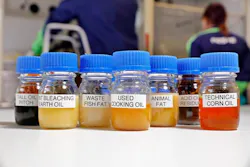
A core pillar of Neste's strategy is the continuous expansion of its raw-materials pool. In 2025, 95% of Neste’s global renewable feedstock consisted of waste and residues (Fig. 4). Soon, the company also aims to increase the availability of emerging, lower-quality waste and residue raw materials and explore novel vegetable oils from regenerative agricultural concepts.
Regenerative farming practices aim to trap carbon in healthier soils, promote biodiversity, and reduce emissions from agriculture, while increasing farm productivity. A few concepts Neste focuses on relate to intermediate cropping, which does not create additional demand for agricultural land.
Looking long-term, lignocellulosic waste and residues from the forest industry and agricultural production can make an important contribution as a new scalable raw material providing additional volumes of fuels with reduced climate impact.
Another technology that could provide massive potential to help meet rising energy demand and contribute to global climate goals is renewable hydrogen. Renewable hydrogen—or green hydrogen—is produced by electrolysis, where hydrogen is processed from water using renewable electricity (e.g., wind, solar) by splitting water molecules. Currently, around 95% of all hydrogen is made using fossil-derived natural gas, resulting in high GHG emissions. Since renewable hydrogen is nearly free of GHG emissions, the transition to a renewable hydrogen economy hold potential to transform the energy landscape. Just as with Neste’s the pilot program in Rotterdam, renewable fuel producers could benefit by evaluating options for replacing fossil-based hydrogen with renewable hydrogen in their production processes.
In the renewable fuels production process, supply chain optimization is critical to ensure stable flows of both raw materials and end products. For Neste, this means an extensive global network for sourcing renewable raw materials and a market-centric distribution network to ensure renewable fuels reach customers and key markets quickly and efficiently.
In the US, Neste made a major strategic move to enhance its supply network with the acquisition of Mahoney Environmental in 2020. This integration provides Neste with access to used cooking oil from over 100,000 locations across the country.
To ensure efficient product delivery, Neste has also been fostering partnerships with infrastructure providers to lease terminals that are strategically located near key markets. These terminals are often well-connected to fuel logistics via vessels, barges, trucks, and pipelines.
Having terminal capacities close to key markets can notably increase the availability and accessibility of Neste's renewable fuels to customers. For example, the streamlined logistics system enabled a major expansion of Neste’s SAF supply in 2025, when Neste and United Airlines Inc. extended their partnership, making United the first commercial airline to purchase SAF for use on flights from George Bush Intercontinental Airport in Houston, Newark Liberty International Airport in New Jersey, and Dulles International Airport in Washington D.C. This partnership underscores the importance for renewable fuels providers to execute complex supply chain movements necessary to meet growing regulatory and voluntary SAF demand in the aviation sector. Additionally, repurposing existing fuel distribution infrastructure can accelerate the much-needed transition to renewable energy.
Regulatory support in the form of mandates and incentives is also crucial to ramp-up renewable fuels demand and production. The EU and UK SAF mandates went into force at the start of 2025, both starting with a 2% SAF supply obligation. Whereas the ReFuelEU mandate remains flat until 2030, the UK mandate will increase linearly to 10% in 2030, practically doubling to almost 4% in 2026. In the Asia-Pacific region, 2026 will bring the start of Singapore’s 1% SAF target as other countries in the region continue the development of similar supporting policies. While these developments will increase the demand for SAF, the growth of SAF supply is expected to outpace the growth of SAF demand until at least 2030 when the ReFuelEU mandate increases to 6%.
In the US, 45Z was the only US Inflation Reduction Act-created credit the government extended and expanded in the One Big Beautiful Bill (OB3), clearly showing a commitment to stimulate renewable fuels. The US EPA’s proposed renewable volumes obligations (RVOs) for 2026 and 2027 for biomass-based diesel are commendable and appropriately recognize the growth of the industry. Those achievable volumes set the stage for more abundant and more cost-competitive fuel choices for US businesses.
Looking ahead
In 2025, Neste’s renewable products helped its customers reduce GHG emissions by 14.2 million tpy, equivalent to GHG emissions from more than 30,000 full-aircraft roundtrips from Amsterdam to San Francisco. The achievement illustrates the impact that renewable fuels can have and the essential role they play as a key solution to reducing the GHG emissions of the transportation sector—on land, on sea, and in the air.
The authors
Matt Leuck ([email protected]) is the renewable diesel technical manager for Neste US Inc. in Houston, where he acts as principal technical point of contact for the renewable road transport team and provides expertise to stakeholders about renewable fuel’s position in the larger energy picture as a solution to fighting climate change. He previously served as an application engineer and technical sales manager at Cummins Inc. He holds a BS (2007) in engineering technology from Texas Tech University and an MS (2016) in global energy management from the University of Colorado. He is a member of the Transportation Energy Institute, the Society of Automotive Engineers, Diesel Technology Forum, and Young Professionals in Energy.
Pratik Chandhoke ([email protected]) is the SAF technical fuel manager for Neste US Inc. in Houston, where he is responsible for ensuring adherence to technical, quality, and operational standards for the blending, storage, and distribution of Neste MY SAF globally. Before joining Neste, Pratik spent 10 years at Rolls-Royce in the aerospace unit, where he held various roles in product development, project management, and engineering. He also worked at Accenture PLC advising clients on net-zero transition strategies. He holds an BA (2007) and MBA (2017) in mechanical engineering, both from Purdue University.