Energy in a Trump administration
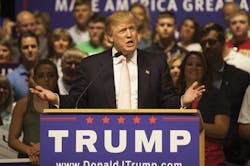
THE INCOMING PRESIDENT FAVORS ENHANCED E&P OF OIL AND GAS AS A TENET OF ENERGY, ECONOMIC, AND NATIONAL SECURITY POLICY
JASON B. HUTT AND MICHAEL WELLER, BRACEWELL LLP, WASHINGTON, DC
ENERGY WAS NOT A CENTRAL ISSUE in the 2016 Presidential Election. Voters' widespread recognition of the climate change challenge lacked the priority given to issues like the economy and immigration. And, to the extent energy played a role in the "Rust Belt Revolution" and knocking down "The Blue Wall," it favored President-elect Trump with angst over jobs lost in the coal sector and unions let down by President Obama's rejection of the Keystone Pipeline.
Candidate Trump's position of minimal regulation and robust support for domestic energy development proved effective in states like Pennsylvania, Ohio, and Michigan. Candidate Trump stated that he wants to encourage domestic energy development to avoid dependence on importing energy from the OPEC cartel or any nations hostile to our interest. He also pointed to the need for a reduction in regulations, the opening of onshore and offshore leasing on federal lands, and rescinding of President Obama's executive actions on climate.
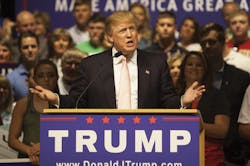
Without a robust campaign platform on energy and environmental matters, the task now is to develop a view into what President-elect Trump has in mind for the energy industry over the next four years. We are only few days past the election and no cabinet appointments have been made as we head to print, but below is an initial attempt to tease out what to look out for on a few key energy and environmental issues as the Trump administration takes shape.
CLIMATE POLICY
On climate, Candidate Trump expressed a degree of skepticism towards man-made climate change. He suggested that more investigation of the phenomenon is appropriate and that resources might be better directed towards addressing other global challenges first, like disease or hunger. The Trump campaign said that the candidate does believe global temperatures are rising, as did Vice Presidential nominee Mike Pence.
While some see the recent Paris Climate Agreement as a likely first target, that agreement is not binding and it comes with no true legal hooks to mandate implementation. It is questionable what actually would be gained from withdrawing, especially when weighed against the political capital President-elect Trump would stand to lose internationally.
With respect to domestic efforts to combat climate change, President-elect Trump has indicated that he is no fan of the US Environmental Protection Agency or its proposed regulation of greenhouse gases, including the Clean Power Plan. Legal challenges to the CPP will still be underway even as the new President is inaugurated.
The CPP is currently being considered in the DC Circuit. Four judges hearing that case are potential candidates for a future appointment to the US Supreme Court. Those judges may therefore delay a decision as long as possible to avoid any recusal arguments if they become a new member of the Supreme Court that hears the case at some point. If the DC Circuit strikes down the rule, it is likely that the Trump administration simply will not appeal. If there is not a ruling soon enough or if the court upholds the rule, the Trump administration may seek to revoke the rule through a notice-and-comment regulatory process.
OTHER EPA REGULATORY INITIATIVES
President-elect Trump has set his sights on rolling back more than just the CPP. During the campaign, his handful of forays into environmental matters called out EPA regulations for damaging jobs and the economy. This past September, in Pennsylvania, he addressed a shale industry audience, stating "I'm going to lift the restrictions on American energy and allow this wealth to pour into our communities."
Candidate Trump specifically mentioned eliminating the EPA's new source standards for power plants, the Clean Water Act "waters of the United States" rule, and the Bureau of Land Management's Hydraulic Fracturing rule. Each of these rules is bound-up in litigation at the moment. Candidate Trump also said he would "revoke policies that impose unwarranted restrictions on new drilling technologies," which may be an oblique reference to new restrictions proposed on methane emissions from oil and gas production.
EPA transition chief Myron Ebell is viewed as intelligent and well-versed in EPA matters with a strong preference for a free-market approach. Candidate Trump has said he opposes "unnecessary" regulations of the energy industry and would support a moratorium on regulations not yet operational. Such a moratorium is not unusual when Presidential succession occurs across party lines. That said, the length and applicability of such moratoria can vary. An administration can have wide discretion in interpreting statutes, provided that the necessary notice and comment processes are followed under the Administrative Procedures Act. Organized and well-funded challenges to these changes will be mounted in the court system. It is not as simple as a stroke of the pen. And environmentalists have already promised to wage a strong fight.
While it may be counterintuitive to some, simply reducing the EPA's budget might not be the best approach to reaching President-elect Trump's goal of deregulation. To rollback regulations requires significant regulatory resources and a reduction in budget could make that a slower process. Likewise, reduced resources can threaten an agency's ability to process the permits and authorizations that industry needs to do business. The next EPA Administrator may seek to reorganize the agency, which often yields a prolonged period of reduced efficiency as the organization reshapes itself.
ENERGY PROJECT DEVELOPMENT
A Trump administration is clearly in favor of enhanced exploration and production of oil and gas as a tenet of energy, economic and national security policy. Some of President-elect Trump's key advisors – from Oklahoma oil producer Harold Hamm to North Dakota Congressman Kevin Cramer – have espoused a bullish posture on oil and gas and shale development in particular. Candidate Trump has said he would approve Keystone XL–for a share of the profits. TransCanada said it remains fully committed to building the pipeline and is looking at ways to engage a future Trump administration on the project's benefits. The market sees potential here as shares of TransCanada rallied the Wednesday after the election in response to Trump's win.
Between the Keystone XL pipeline and the Dakota Access pipeline, the environmental left has spent the past four years building up pipeline protests as ground-zero in the fight against fossil fuels. In many cases, these fights pitted the Democrat's environmental and union bases against each other and may have contributed to union defections to Republicans in the 2016 election. For this reason, expect President-elect Trump's domestic policy team to quickly make it clear that they intend to expedite approval of energy infrastructure such as pipelines. With a Republican Congress, bills that aim to do just that, like the Federal Land Freedom Act, might have a chance.
President-elect Trump plans to open onshore and offshore leasing on federal lands and waters. He also pledges an easier permitting process and to retract Obama policies that he says stalled such projects. Trump's transition website explains, "We will streamline the permitting process for all energy projects, including the billions of dollars in projects held up by President Obama, and rescind the job-destroying executive actions under his administration."
CONCLUSION
If we learned anything from the 2016 election cycle, it is to expect the unexpected, and that a Trump administration's approach will be unconventional. While he is a political outsider, at least in these early stages of transition, it appears President-elect Trump is seeking experienced professionals to be a part of his administration, those that know energy, know the environmental issues, and know how to manage. The regulations that swept over the US domestic energy industry during the Obama administration will subside, but how quickly and effectively depends on the sophistication of those Trump taps to lead and the success of his opponents in using the judiciary to slow things down.
ABOUT THE AUTHORS

Jason Hutt ([email protected]) is the head of Bracewell's Environmental Strategies Group. He advises and defends clients in administrative, civil, and criminal enforcement actions (and internal investigations) related to the federal and state agencies, including EPA, DOI, DOE, CFPB, and DOJ. He counsels energy companies, manufacturers, project developers, investor groups, and financial institutions about current and upcoming regulatory and policy developments at the nexus of environment and energy policy.

Michael Weller ([email protected]) advises clients in the context of government investigations and enforcement actions, regulatory compliance and advocacy, litigation, permitting, and in quantifying and allocating liabilities during business transactions. He represents clients in the energy sector, including upstream oil and gas companies and pipelines, as well as industry trade associations, manufacturers, importers, and financial institutions in a wide range of environmental law and business matters.