BOLIVIA EXPLORATION-2 Eastern Madre de Dios Devonian generated large volumes of oil

Ken E. Peters, John B. Wagner
Mobil Technology Co.
DallasDaniel G. Carpenter
Mobil New Business Development, Americas
DallasKeith T. Conrad
Mobil Exploration Norway
Stavanger
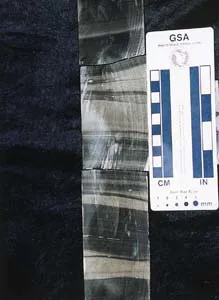
Core from the basal Upper Devonian unit at 1540.77 m in the Pando X-1 well contains oil-stained sandstones interbedded with laminated, organic-rich marine shale source rock. These shelf sandstones are composed of laminated and ripple bedded shaly, medium to fine-grained sands with horizontal to cross-bedded sedimentary structures.This is the second part of an article giving details of a Mobil Corp. regional geological, geophysical, and geochemical study of the Madre de Dios basin.
The assessment covered the distribution, richness, depositional environment, and thermal maturity of Devonian source rocks.
Paleodeposition
The Upper Devonian-Tournaisian was a time of major source rock deposition that accounts for about 8% of the world's discovered original reserves of oil and gas.6 The Frasnian Stage in particular was characterized by oxygen-deficient (anoxic) marine bottom waters and sediments associated with a global rise in sea level. In anoxic sediments, bioturbation does not occur because of the absence of burrowing organisms (megafauna). Lack of bioturbation enhances organic matter preservation and allows the development of fine laminations that record depositional cycles. Evidence suggests that anoxic conditions favor preservation of hydrogen-rich, oxygen-poor organic matter and vice versa.7
Like many effective petroleum source rocks, Upper Devonian shales in the Madre de Dios basin are commonly laminated and contain abundant, oil-prone organic matter with high hydrogen indices and low oxygen indices.
Anoxic depositional conditions played a key role in preservation of Devonian organic matter in the Madre de Dios basin. Organic matter in the entire Lower, Middle, and Upper Devonian interval in the Pando X-1 well shows an inverse correlation between hydrogen index and oxygen index (Fig. 8 [106372 bytes]). For example, oil-prone Upper Devonian source rocks in the Pando X-1 well are best developed in the interval from 1,350 to 1,590 m where hydrogen indices commonly exceed 400 mg hydrocarbon/g TOC (Type I/II). The basal portion (1,527-90 m) of these marine shales contains crude oil in thin sandstone beds up to 5 m thick (see photo). The best source rocks at the base of the shaly interval were deposited under restricted marine conditions where water level was rapidly deepening (i.e., base of marine transgression). These shaly prodelta and marine shelf rocks are laminated and lack megafauna, consistent with anoxia. The shales coarsen upward from 1,510 m and show a parallel trend of decreasing total organic carbon and hydrogen index (Fig. 6, part 1 of article).
Our paleoreconstruction shows that Upper Devonian source rocks in South America were deposited in a restricted marine seaway around a central cratonic region (Brazilian Shield; Fig. 9 [75592 bytes]). The seaway was largely isolated from open marine conditions by surrounding highlands, similar to modern fjords but on a much larger scale. Paleolatitude studies suggest that the climate throughout much of South America at this time must have been cool.8-9 Glacially striated quartzitic dropstones are common in Upper Devonian outcrops at Calamarca, Bolivia, about 700 km south of the Pando X-1 well. The Upper Devonian source rocks were deposited during an interglacial period when glacial ice was retreating and sea level was rising. The Pando X-1 and other Mobil Bolivian wells record a change from a cooler, wetter climate in the Late Devonian to a warmer, dryer climate in the Late Carboniferous to Early Permian. Continental translation is interpreted to account for this climate change and is expressed as an unconformity that represents nearly 50 Ma of missing section (Fig. 2).
Silled marine cratonic basins with positive water balance tend to have a strong salinity contrast between the fresher outflowing surface water and deeper ingoing, more saline, nutrient-rich ocean water. Permanent or intermittent anoxia in such basins is common. Basins with positive water balance also tend to act as nutrient traps, thus enhancing organic matter productivity and preservation.
Modern examples of anoxic landlocked basins include the Black Sea, the Baltic Sea, Lake Maracaibo, and Saanich Inlet.10 Possible ancient analogs to the Upper Devonian source-rock interval in northern Bolivia include the Upper Devonian Woodford, Antrim, Bakken, Chattanooga, New Albany, and Ohio Shales. These basins were characterized by a wide extent, shallow water (< 200 m), persistent water stratification, humid climate, influx of fresh water that enhanced stratification, oxygen-deficient bottom water, and slow sedimentation of terrigenous and biogenic clay.
Maturity, basin modeling
Regional thermal maturity data indicate that the Upper Devonian source rocks must be buried to ~1,600 m or more for significant oil generation to occur. The source rocks range from immature for oil generation near the northeast basin margin (Ro < 0.5%) to postmature (ro > 1.2%) toward the southwest Andean thrust belt (Fig. 10 [86140 bytes]). This maturity trend is typical of asymmetric foreland basins worldwide, and represents the response of the organic matter to Tertiary burial associated with the Andean foreland basin. Basin modeling indicates that the timing of oil generation for these rocks is Miocene to present and that trap formation was pre-Miocene (Fig. 11 [42380 bytes]).
Various biomarker ratios show that the Pando X-1 oil from 1,266 m is more mature than the associated source-rock samples. The oil is mature and has reached a vitrinite reflectance equivalent of about 0.7% based on the methylphenanthrene index.11 Simple calculations indicate that the oil was generated down dip and migrated up dip about 50 km to its current position.
Organic-rich source rocks are a critical element in all petroleum provinces. Foreland basins, such as the Madre de Dios, Western Canada, North Slope, and Western Interior basins are characterized by rich, thermally mature source rocks. Many of these basins have giant petroleum accumulations. We estimate that the total generative capacity of the Upper Devonian source rocks within the Madre de Dios basin is between 250 and 1,000 billion bbl of oil equivalent.
Conclusions
The principal conclusions related to Upper Devonian source rocks in the Madre de Dios basin are as follows:
Mobil has relinquished its holdings in the Madre de Dios basin in Bolivia, mainly due to the lack of structural traps and the large number of wells anticipated to find commercial reserves. However, Mobil has increased exploration activities in the Peruvian portion of the basin.
Key strengths of the basin include the worldclass Upper Devonian source rocks with a proven relationship to discovered crude oil, and trap formation which pre-dates hydrocarbon generation and migration. Key risks include difficulties related to exploration for stratigraphic and subtle structural traps and the potential for gas rather than oil in the deep basin. The Madre de Dios basin remains one of the most underexplored areas in the world (~10 wells/16 million hectares; 1 well/4 million acres).
The perplexing question remains: Where is the oil that was generated during maturation of the world class Upper Devonian source rocks?
Acknowledgments
The authors thank Mobil Corp. for permission to publish this article and J.C. Cooke, R.J. Enrico, L.B. Fearn, M.M. Laughland, J.A. Quirein, C.C. Walters (Mo- bil), J.M. Moldowan (Stanford University), and P.E. Isaacson (University of Idaho) for their contributions to the work. We also thank J. Etherington, R.J. Moiola, and N.J. Housefinch for critical reviews of the draft.
References
1. Wagner, J.B., Moiola, R.J., Fearn, L.B., and Rodgers, K., Madre de Dios basin, Bolivia: An example of the complex interplay between tectonics, eustacy, climate, sediment supply, and basin configuration in a foreland basin (abs.), AAPG annual meeting, San Diego, 1996, p. A145.
2. Peters, K.E., and Cassa, M.R., Applied source rock geochemistry, in Magoon, L.B., and Dow, W.G., eds., The petroleum system from source to trap, AAPG Memoir 60, 1994, pp. 93-120.
3. Peters, K.E., and Moldowan, J.M., The biomarker guide, interpreting molecular fossils in petroleum and ancient sediments, Prentice Hall, Englewood Cliffs, N.J., 1993, 363 p.
4. Aquino Neto, F.R., Triguis, J., Azevedo, D.A., Rodrigues, R., and Simoneit, B.R.T., Organic geochemistry of geographically related Tasmanites, Organic Geochemistry, Vol. 18, No. 6, 1992, pp. 791-803.
5. Demaison, G.J., and Huizinga, B.J., Genetic classification of petroleum systems, AAPG Bull., Vol. 75, No. 10, 1991, pp. 1,626-43.
6. Klemme, H.D., and Ulmishek, G.F., Effective petroleum source rocks of the world: Stratigraphic distribution and controlling depositional factors, AAPG Bull., Vol. 75, No. 12, 1991, pp. 1,809-51.
7. Peters, K.E., and Simoneit, B.R.T., Rock-Eval pyrolysis of Quaternary sediments from Leg 64, Sites 479 and 480, Gulf of California, Initial reports of the Deep Sea Drilling Project, Vol. 64, 1982, pp. 925-931.
8. Golanka, J., Ross, M.I., and Scotese, C.R., Phanerozoic paleogeographic and paleoclimatic modeling maps, in Embry, A.G., Beauchamp, B., and Glass, D.J., eds., Pangea: Global environments and resources, CSPG Memoir, Vol. 71, 1994, pp. 1-47.
9. Isaacson, P.E., and Diaz Martinez, E., Evidence for a Middle-Late Paleozoic foreland basin and significant paleolatitudinal shift, Central Andes, in Tankard, A.J., Suzrez, S., and Welsink, H.J., Petroleum basins of South America, AAPG Memoir, Vol. 62, 1995, pp. 231-249.
10. Demaison, G.J., and Moore, G.T., Anoxic environments and oil source bed genesis, AAPG Bull., Vol. 64, No. 8, 1980, pp. 1,179-1,209.
11. Boreham, C.J., Crick, I.H., and Powell, T.G., Alternative calibration of the methylphenanthrene index against vitrinite reflectance: Application to maturity measurements on oils and sediments, Organic Geochemistry, Vol. 12, No. 3, 1988, pp. 289-294.
The Authors
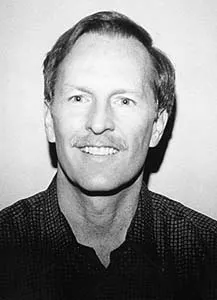
Ken E. Peters has over 18 years' experience in worldwide E&D and is currently senior geochemical research advisor at Mobil Exploration & Producing Technical Center (Mobil) in Dallas. He has taught petroleum geochemistry at Mobil, Chevron, and the graduate divisions at Stanford University, the University of California at Berkeley, and California State University at Long Beach. He teaches a 1 week public or in-house course for OGCI Training Inc. titled "Modern Geochemical Tools for Efficient Exploitation and Development." He holds BS and MS degrees in geology from the University of California at Santa Barbara and a PhD in geochemistry from UCLA.

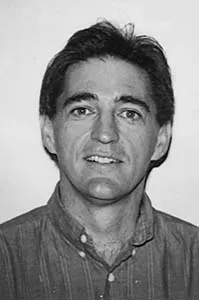
John B. Wagner has over 10 years' experience in E&D and is presently senior staff geologist at Mobil in Dallas. He co-teaches a 2 week field course entitled "Sandstone Seminar" at Mobil and has lectured internationally on depositional systems analysis to worldwide Mobil affiliates. Before he joined Mobil, his work ranged from seismic crew manager to coastal geologist for the Louisiana Geological Survey, to scientist aboard the 1985 GLORIA oceanographic survey for the Mississippi Fan. The past 7 years he has worked in areas such as Australia, Canada, Russia, Bolivia, Viet Nam, and the Gulf of Mexico. He holds BS and MS degrees in geology from Louisiana State University in Baton Rouge and is a PhD candidate in geology at the University of Texas at Dallas.

Daniel G. Carpenter specializes in exploration geology and has more than 10 years' experience in the oil industry. He gained extensive exploration experience in the Sevier orogenic belt in the Basin and Range Province of North America and the Northwest Shelf of Australia before moving on to studies of the Andes of South America, all for Mobil. He is lead geologist in the Tambopata and Las Piedras exploration blocks of Peru and has worked as Mobil lead geologist in Camisea (Peru) and Madidi (Bolivia) blocks. Based in Dallas, he has a BS in geology and an MS in structural geology from Oregon State University.
![Fig. 8 [106372 bytes]](http://images.pennwellnet.com/ogj/images/ogj2/95088401.gif)
![Fig. 9 [75592 bytes]](http://images.pennwellnet.com/ogj/images/ogj2/95088501.gif)
![Fig. 10 [86140 bytes]](http://images.pennwellnet.com/ogj/images/ogj2/95088502.gif)
![Fig. 11 [42380 bytes]](http://images.pennwellnet.com/ogj/images/ogj2/95088601.gif)
Keith T. Conrad is a planning adviser for Mobil Exploration Norway Inc. in Stavanger. Before moving to Norway from Dallas, he led exploration projects on the Madre de Dios basin in Peru and Bolivia and a producing project in the Neuquen basin in Argentina. He also has wide experience in the Northwest German basin, the U.S. Gulf Coast, the Permian basin, and the Amadeus basin in Australia. He has a BS in geology from Fredonia State College in New York and an MS in geology from Utah State University.
Copyright 1997 Oil & Gas Journal. All Rights Reserved.