New Zealand's Canterbury basin prospects reviewed in a continental Gondwana setting

Tom Haskell
Haskell Exploration Services Ltd. Wellington
Ian Wylie
Pacrim Energy NL Brisbane
- Continental Setting of Canterbury Basin, Fig. 1 [100,714 bytes]
- Amplitude Domain Display Over Barque Structure, Fig. 7 [308,587 bytes]
In its initial work on this area, Pacrim recognized extensive geological section beneath the seismic reflectors previously mapped as basement over the southern and central basin area.1 This led to the company extending PEP 38254 to the south where like section was also developed in the adjacent segment of the Great South basin (Fig. 1 [100,714 bytes]).
The Canterbury basin, a small element of the abducting Pacific plate, lies across the central coast of the South Island between Haumuri Bluff and Dunedin (Fig. 1& Fig. 2 [155,870 bytes]). Its offshore definition is provided by over 10,000 km of excellent 1975 to 1984 vintage seismic data and four wells drilled in 1971-85: BP Shell Aquitaine Todd Endeavour-1, and BP Shell Todd Resolution-1, Clipper-1, and Galleon-1.
There are some shallow onshore wells and an excellent outcrop pattern but no modern seismic grid (Fig. 2). BP's early work was very encouraging. Clipper-1 had extensive oil shows in Santonian beds but was not flow tested. Galleon-1 produced 10 MMcfd of gas and 2,240 b/d of condensate on short-term test of Maastrichtian coal measures.
The basin sedimentary sequence comprises four stratigraphic units (Fig. 3 [131,983 bytes ). The two oldest are early and mid Upper Cretaceous. They are predominantly contained offshore between the Chatham Rise and the coast and can be recognized in the adjacent Great South basin where like sequence is developed. The third, latest Cretaceous and Neogene, is also common to both basins but is most extensive in Canterbury, where its successive elements transgress in a northwest arc onto the rise and adjacent land to establish the basin's characteristic onshore outline (Figs. 1, 2). The fourth element comprises the presently active regressive erosion/deposition system relating to uplift on the Southern Alps. This ongoing activity commenced in the Miocene and is confined to Canterbury basin.2
The onshore sequence rests on a relatively mature Gondwana erosion surface cut across Triassic and Jurassic Haast schist terrane in the southwest and indurated Torless terrane basin floor sequence in the central northern and eastern areas. This surface was projected into an offshore seismic horizon by earlier workers apparently confirming their belief that "basement" had been intersected in Clipper-1 and Galleon-1, and supported by a like intersection in Takapu-1 to the south. We map the earlier Clipper-1 "basement" assignment as a near basement event.
More definitively, potassium-argon work by the New Zealand Institute of Geological and Nuclear Sciences (IGNS) on gabbroic "basement" overlain by late Campanian rocks in Galleon-1, shows the gabbro to be 61 Ma, Paleocene, in age and an intrusive. We map an extensive seismic sequence in sedimentary rocks below this level.1
Tectonic setting
Samford 3 and Anderton et al. 4 considered that the Great South basin was initially dominated by rifting tectonics and related sedimentation, based on inliers of similar aged rocks in major half-grabens at Kyeburn (Fig. 2). 5 Our ongoing work, supported by conclusions reached by Dr. Richard Cook of IGNS, who has worked extensively in the adjacent Great South basin, shows it to be a miogeosynclinal basin complex set within Gondwana.Discussions with Richard Cook have led to the conclusion that the early, Cretaceous and Paleocene, Canterbury basin sequence is the northern extension of the Great South basin. The southern basin's margin reflects development of late Albian-Cenomanian tilting, essentially radial to the present coast line as far as Stewart Island. The basin's margin then swings to follow a regional south-southwest strike (Fig. 1).
The early Canterbury basin margin was similarly oriented, though its margin stepped north and northwestwards through the first two sedimentary phases, topping the Chatham Rise in the Maastrichtian at the middle of the third phase. The Canterbury sequence remained epicontinental throughout its depositional history.
Our work1 has shown that the earlier Cenomanian to Santonian Canterbury basin sequence was jostled on a series of partly transcurrent faults into 5-10 km wide fault blocks prior to the Campanian, generating varying relief at and below BP's "basement" seismic mapping. This activity, along with the equivalent of rift and near rift unconformities, generated a series of sub-unconformity traps and contributed to the development of Tamahine, Cutter, Barque, and Clipper features and other leads discussed below.
Geological systems
The oldest unit, the Cenomanian-Santonian Kawau seismic interval,1 the lower part of Cook and Beggs'6 Hoiho Group, was drilled by Tara-1 well, 4,264-4,337 m, 190 km south-southwest of Otago Peninsula. It was also penetrated by Kawau-1, 3,217-3,672 m, a further 180 km south (Fig. 1).The Tara-1 interval is Santonian carbonaceous sandstone and conglomerate, and the Kawau-1 interval is Cenomanian to Santonian sandstone interbedded with locally carbonaceous sandstone, siltstone, and shale. Both intervals are nonmarine and rest on earlier sedimentary rocks also initially mapped as "basement."7
Onshore, the interval is represented by the Henley breccia, developed in a 40 km long strip southwest of Dunedin. It is a 900 m thick unit with a basal 600 m sequence of pebble conglomerates and breccias, interbedded with carbonaceous siltstone, and overlain by silty sandstone lenses in rounded conglomerate, grading up to a further 300 m of more angular conglomerate.
The Henley breccia rests on Haast schist basement. The basal unconformity to these sequences corresponds to the Albian initiation of rift tectonics in this part of Gondwana (Fig. 2).
The overlying Clipper seismic interval is the more distal equivalent of the Clipper formation Santonian-Campanian coal measures drilled at 4,205-4,684 m in Clipper-1. Both equate to the upper Hoiho Group.
The interval has an onshore equivalent in the Horse Range formation, a 300+ m thick coal measure sequence resting on basement at Shag Point (Fig. 2). Both sequences include thick sandstone intervals interbedded with conglomeratic sandstone, localized carbonaceous shales and coaly bands in the outcrop and, in more distal basin position, thick sandstones, carbonaceous shales and siltstones, and meter thick coals in the well.
The top of the interval was drilled by Endeavour-1, 2,633-2,743 m (TD), where it is shallow marine sandstone and siltstone. These coal measure intersections and related seismic data define the Clipper sub-basin margin north and west of Clipper-1 (Fig. 2).
As with the Kawau interval, the Clipper seismic interval has equivalents in Tara-1, where it is nonmarine and locally carbonaceous sandstone, siltstone, and mudstone. The adjacent Toroa-1 well drilled it near TD, 4,520 m, in similar, though placed in a more distal shallow marine environment. The base of the Clipper interval is a post-rift unconformity, and the top is the breakup unconformity in both basins (Fig. 3).
The younger sequences in the Canterbury basin were drilled by the four offshore wells and outcrop extensively onshore. The basal, terrestrial to inshore, element of the succeeding Campanian to Eocene sequence, the Endeavour coal measures, is developed as a finite unit to the south of Cutter prospect, centered on Endeavour-1, and extending to Tamahine prospect and to the immediate east of Galleon South prospect.
In both Endeavour-1, 2,071-2,633 m, and Galleon-1, 2,748-3,026 m, the interval comprises irregular conglomerate/sandstone, coal, and shale cycles. In the late Maastrichtian, this gave way to marine sediments. However, coal measure deposition shifted to the north to form a second basin centered west of Cutter prospect as part of the Papakaio formation, which is well known onshore. It was also succeeded by a marine sequence deposited as part of the transgression characterizing the basin until the Oligocene.
The subsequent late Oligocene and younger regression sequences principal impact on the system is its provision of overburden (Fig. 3) in the form of giant forset beds reflecting shelf and slope out-building.
Galleon South prospect
This is a southern culmination on Galleon high, 15 km south of Galleon structure and 28 km offshore in 110 m of water.It is structurally higher and larger than the northern culmination tested by Galleon-1 (Fig. 4 [100,714 bytes]). BP,8 based on its perception of basement at 3,026 m in Galleon-1, considered that there was a high risk in both quantities of source rock, and maturation parameters in the Galleon area.
Reservoir and seal: The Endeavour coal measures are mappable through both Galleon-1 and Galleon South culminations. The formation, including the hydrocarbon-bearing sandstone units that produced at Galleon-1, laps out against the breakup unconformity developed on Clipper seismic interval in the southeastern face of the Galleon high. It is successively replaced by similar onlapping units which maintain the thickness of the reservoir system across the top of the structure.
Galleon-1 produced from 18 m of a 25 m sandstone, 2,752-75 m, with consistent porosities of 15-17% and permeability of 20-45 md. This reservoir interval is covered by seal comprising marine Katiki formation siltstones and mudstones as they are in the Galleon-1 model.
Source rocks and maturation: The top of the oil generation and expulsion zone here is at 3,200 m.9 Within closure the older Endeavour coal-measures are mature for oil generation. The complete coal-measure section becomes progressively mature within the surrounding 140 sq km drainage area.
Both Kawau and Clipper interval rocks are mapped beneath the drainage area, including the high, where they occupy the remainder of the oil window, and extend to the wet gas window.1 BP's work also shows that the Endeavour and Clipper formation coal measures on- and offshore have high total organic carbon (TOC) and are generally hydrogen-rich.
Anderton et al.4 show that equivalent Great South basin rocks average 2% TOC, without including coals that have a TOC of over 19%.
Galleon South has a resource potential of 104 million bbl oil using traditional parameters and up to 280 million bbl using our structural analysis. As a gas and condensate field equivalent figures are 800 bscf of gas and 80 million bbl of condensate, and up to 1.69 tscf of gas and 192 million bbl of condensate.
Cutter prospect
Cutter is 23 km offshore from Oamaru in 50 m of water. It is a dip-closed feature generated across the faulted eastern side of a localized Paleocene uplift developed in Hoiho Group sequence (Fig. 5 [79,092 bytes]).Reservoir and seal: The anticline is developed in a combined 150 m of Endeavour and 450 m of Papakaio formation coal-measures, and was initially uplifted in the Paleocene at around the rate of deposition of the enclosing Moeraki formation mudstones. The Papakaio formation, which is well exposed onshore, is the third successive coal-measure system in the basin and has reservoir and source potential similar to the earlier Endeavour and Clipper coal-measures.
The Moeraki formation mudstone eventually overlapped the anticline, presently at 2,800 m subsea, providing seal (Fig. 5).
Source and maturation: Again BP8 believed the major risk here to be the availability and maturation of source rocks. The bases of the Endeavour and Papakaio intervals are at generation and expulsion levels at about 3,400 m immediately east of the structure. The combined interval progressively passes down dip into the oil window to be completely within it 10 km to the southeast. More significantly, Hoiho Group beds occur within the uplift and a major fault block on its downdip side. These beds have not been drilled here, but their paleogeographic position in the basin, and the equivalent sequence in Great South basin, suggests they would be good oil source and reservoir. These rocks are also in a structural position to source hydrocarbons to Cutter structure.
Resource potential: The Cutter structure has a resource potential of 50 million bbl of oil and 500 bscf of natural gas or 410 bscf of gas and 41 million bbl of condensate, using traditional parameters, in the upper coal measures. There is also potential for multiple reservoirs within the coal-measure column, as occur in Taranaki's Kapuni and Maui fields, as well as below the breakup unconformity in the thin Clipper and thick Kawau sequence beds. Using multiple reservoir configuration the resource potential of the structure could be as high as 200 million bbl of oil or 1.6 tscf of gas and 160 million bbl of condensate.
Tamahine structure
This is a pop-out or flower structure typical of several developed on a basin margin fault trend some 10 km offshore from Moeraki (Fig. 2). The diapiric origin we originally proposed has been revised based on better seismic processing and display.Reservoir and seal: The Endeavour coal measures form a high amplitude closed anticline over the feature (Fig. 6 [87,261 bytes]). These are successively cored by Clipper and some Kawau beds, with the latter closing to a deeper axially faulted anticline. Moeraki formation mudstone is folded over the structure in succession with the Endeavour coal-measures. The top of this reservoir system is 600 m subsea, but the core of the anticline extends to 4,000+ m.
Source and maturation: The Endeavour coal measures dip rapidly southeast and are fully mature 10 km away. The Clipper follows, though the base of the interval, and the underlying Kawau interval, are fully mature within the faulted anticlinal core directly below the structure.
Resource potential: The resource potential of Tamahine structure is 24 million bbl of oil. Further seismic is needed to provide structural details of this and adjacent closures, such as Veto lead (Fig. 4).
Barque structure
Barque is 45 km offshore in 200-1,600 m of water. It is very large, some 15 km long and 8-13 km wide, topping at 3,388 m subsea.Reservoir and seal: The structure is developed over a 1,000 m thick lensoidal Clipper seismic interval. This seismic zone lacks the definitive coal-measure signature of the adjacent Clipper structure but is in a shore to neritic and inner shelf paleogeographic position. This carries the potential for equivalent sandstone reservoir development, as was drilled in the southern Tara-1 and Toroa-1 wells. The sequence passes up to Katiki formation mudstone deposited in the Campanian transgression and provides the same type of seal as drilled by the adjacent Clipper-1 well. Hoiho seismic interval sequence underlies the Clipper and, as shown by Kawau-1 drilling, has both reservoir and source potential.
Source and maturation: The Clipper interval provides an internal source, as does the underlying Kawau interval, though at this depth, gas-condensate is the likely resource. The feature has a 1.157 billion bbl recoverable oil resource potential calculated here, equating to 10.8 tscf of natural gas potential with some 1 billion bbl of condensate.
The Barque structure is adequately mapped on existing seismic data but may also require further seismic evaluation. This is one of the largest prospect leads ever mapped in New Zealand.
Monowai structure
This feature is typical of the style of sub-unconformity traps which are becoming evident in Clipper and, particularly, Kawau interval sequence.The Monowai structure is 28 km offshore in 84 m of water and is developed in Kawau seismic interval. On line CB-82-62 the feature is one of several generated by relatively minor up-to-the-west and down-to-the-east rotation on north-northeast trending boundary faults (Fig. 8 [333,201 bytes]). It has a similar profile on CB-82-25, creating a closure some 9 x 9 km with an amplitude of 300 m.
Reservoir and seal: The Kawau interval is terrestrial sequence where drilled, and on paleogeographic Canterbury basin reconstruction it lies within the proximal part of the basin system. It would rely on channel sandstones deposited within a lower coastal plain environment to provide reservoir, and either internal seals with terrestrial mudstones or overlying compacted, poorly sorted basal Clipper interval as seal.
Source and maturation: Source beds for the lead would be entirely internal to the Kawau sequence. Maturation is assured as the sequence extends from the unconformity at 3,400-4,200 m and beyond within the containing block, covering both oil and wet gas windows.
Other features
The Schooner structure and Ketch lead are very large stratigraphic features developed where Clipper coal measures lap out at the top of the Clipper basin. The coal measures are topped by Katiki mudstone deposited in the succeeding marine transgression. The structural detail of both is well established, though there is a much denser seismic grid on the former.The new work effects neither, but the resource potential of these structures is very high. Schooner has a resource potential of 503 million bbl of oil, and Ketch has an equivalent of 331 million bbl.10
Conclusion
Recognition of the Canterbury basin as part of the continental Great South basin Gondwana sequence changes the basin's economic geology considerably and positively. It provides additional mature source-rock potential where structures were previously considered to be remote from source of any type, it opens the possibility of a new trap style at and below the several rift to break-up unconformities and the probability of Hoiho Group reservoir sequences based on Great South basin models.Pacrim's exploration program will continue definition of existing and new structures with seismic, and to work through the development of lithological concepts within the whole Upper Cretaceous sequence. The present objective is to drill either Cutter or Galleon South as Paleocene or Maastrichtian reservoir systems but to continue drilling to investigate pre-unconformity sequence. The data obtained will be used to further develop models of the sequences in what presently appears to be a new hydrocarbon province.
Acknowledgement
We acknowledge the work of Debbie Cowman in the development and presentation of these conceptsReferences
- Wylie, I.C., and Haskell, T.R., Recognition of continental sequence beneath the Canterbury basin, New Zealand, and its effect on the basin's prospectivity, Petroleum Exploration in New Zealand News, Vol. 49, 1997, pp. 10-20.
- Harmsen, F.J.M., Haskell, T.R., and Perry, S.M., The Canterbury basin, New Zealand, a geological and seismic evaluation of the basin's hydrocarbon potential, Haskell Exploration Services Ltd. Monograph 4, 1989.
- Samford, R.M., Exploration results off S. New Zealand, OGJ, Feb. 4, 1980, pp. 83-90.
- Anderton, P.W., Holloway, N.H., Engstrom, J.C., Ahmad, H.M., and Chung, P., Great South and Campbell basins, New Zealand, evaluation of geology and hydrocarbon potential, New Zealand Geological Survey unpublished open-file Petroleum Report 828, 1982.
- Hawkes, P.W., Mound, D.G., and Spicer, P.J., Evaluation of Clipper-1, New Zealand Geological Survey unpublished open-file Petroleum Report 1078, 1985.
- Cook, R.A., and Beggs, J.M., The exploration potential of the Great South basin, Proceedings of the 1989 New Zealand Oil Exploration Conference.
- Dr. Richard Cook, IGNS, personal communication, 1997.
- Spicer, P.J., A review of remaining prospectivity and recommendations for relinquishments, PPL 38202 and 38203, BP Shell Todd, New Zealand Geological Survey unpublished open-file Petroleum Report 1199, 1986.
- Field, B.D., and Browne, G.H., Cretaceous and Cainozoic sedimentary basins and geological evaluation of the Canterbury region, South Island, N.Z., New Zealand Geological Survey Basin Studies 2, 1989.
- McManamon, D., and Bennett, C.T., Aspects of petroleum geology of the Canterbury basin, Petroleum Exploration in New Zealand News, Vol. 30, 1993.
The Authors

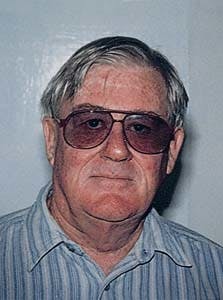
Tom Haskell has worked with Pacrim Energy on its New Zealand acquisition and evaluation projects since 1994. He has worked extensively in New Zealand and managed Petrocorp (Exploration) when McKee field was discovered and the prolific Terata thrust belt was defined. He has a PhD from the University of Queensland and is president of NZAPG.
![Continental Setting of Canterbury Basin, Fig. 1 [100,714 bytes]](http://images.pennwellnet.com/ogj/images/ogj2/9550jha01.gif)
![Amplitude Domain Display Over Barque Structure, Fig. 7 [308,587 bytes]](http://images.pennwellnet.com/ogj/images/ogj2/9550jha07.gif)
![Fig. 2 [155,870 bytes])](http://images.pennwellnet.com/ogj/images/ogj2/9550jha02.gif)

![(Fig. 4 [100,714 bytes])](http://images.pennwellnet.com/ogj/images/ogj2/9550jha04.gif)
![(Fig. 5 [79,092 bytes])](http://images.pennwellnet.com/ogj/images/ogj2/9550jha05.gif)
![(Fig. 6 [87,261 bytes])](http://images.pennwellnet.com/ogj/images/ogj2/9550jha06.gif)
![(Fig. 8 [333,201 bytes])](http://images.pennwellnet.com/ogj/images/ogj2/9550jha08.gif)
Ian Wylie is Pacrim's geophysical consultant, utilizing its work station on several major projects. His work on Canterbury basin follows his specialization in frontier operations and interpretation in Australia, Papua New Guinea, North Sea, Indonesia, Thailand, and North Africa, working for Shell-BP, Unocal, Tenneco, and Petrocorp (Exploration). His tertiary education to a geology major was undertaken in New Zealand and Queensland.
Copyright 1997 Oil & Gas Journal. All Rights Reserved.