Dynamic simulation model aids Mensa development
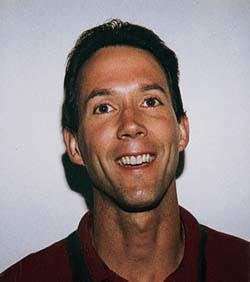
Matthew F. Lamey
Shell Deepwater Production Inc.
New Orleans
Fred WasdenFor its record-setting Mensa gas field development in the U.S. Gulf of Mexico, Shell Deepwater Development Inc., New Orleans, developed a dynamic simulation model for deepwater production and subsea tiebacks that revealed several transient conditions not readily apparent from earlier work or development tools.
Shell E&P Technology
Houston
Changes to the start-up plan and normal operating guidelines resulted.
The model was also used to train operating personnel in the dynamic response of the system, which is significantly different from conventional offshore systems.
Shell further developed a data-collection plan to compare actual and predicted operating conditions. Results and recommendation for future developments are presented here.
The Mensa project set world records for water depth and pipeline length.
Models' roles
Dynamic simulators for pipelines have generally been the domain of pipeline specialists, with use generally targeted only for design. The unique features of deepwater subsea pipelines (depth, temperature, profile, liquid inventory), along with the higher associated capital costs, merit dynamic analysis based on design decisions alone.The models may be developed by consultants (in-house or contract) and are kept by the developer which will conduct investigations or scenario planning if requested. The growing use of subsea pipelines to develop deepwater oil and gas fields has sparked interest in widespread use of this tool.
User interface, hardware and software requirements, choice of calculation method, and ability to use purpose-developed physical property data have typically kept traditional dynamic models from being deployed in this fashion. Recent advances in computer hardware (mostly speed), communications, and widespread use of PC networks generated internal interest at Shell to develop a model that would address needs for engineering design, operator training, on-site start-up diagnostics, and ongoing surveillance.
Because of both the significant investment for the Mensa subsea development and uncertainties regarding its unique design features, funding for a "whole system" dynamic simulator was approved. The model building, operator interface, pre start-up investigations, site licensing, communication for access via an existing PC-based network, and post start-up investigations were completed for a cost well below initial expectations.
The model can and has been used by operators, team leaders, and unit engineers to monitor facility performance.
Justification
The Mensa gas field was discovered by Shell Offshore Inc. in 1987 in 5,300 ft of water in Mississippi Canyon Block 774. The development option selected was to drill three wells that produce through 5-mile, 6-in. flow lines to a subsea manifold (Fig. 1 [90,239 bytes]).Combined production flows through a 12-in. OD pipeline approximately 63 miles to a shelf platform (West Delta 143). Both water depth and tie back length set world records for subsea developments. The first well began flowing in July 1997.
Production was expected to be 99.5 mole % methane, with the remainder being CO2 or heavier hydrocarbons. At pipeline conditions, no hydrocarbon liquids were expected, although significant water production occurs from condensation of equilibrium water in the cold flow lines.
Glycol injection is used to inhibit hydrates, with the "wet" glycol being regenerated at facilities on WD143 and returned via high-pressure glycol pumps to the wellhead. Field production is expected to peak at 300 MMscfd.
Optimizing system configuration to reduce uncertainties in design and operation was the primary justification for building a "whole system" dynamic model for Mensa. Specialists had worked on various pieces of the system (well performance, gas lines, glycol lines, topsides, etc.), but all the models and work had not been integrated into a common analysis tool.
Project engineers were concerned in applying standard design techniques to a system that would break previous world records for subsea tie back length and water depth for offshore production by almost a factor of two. The dynamic model was justified as a means of "testing" the system components before installation.
Project personnel hoped to confirm assumptions regarding governing design criteria, better understand the largely unknown system dynamics, better quantify the glycol storage/handling requirements, and estimate impact that system disturbances would have on other high-rate fields that were producing to WD143.
Based on the general concerns outlined above, a work scope for the modeling effort was developed. The objectives were as follows:
- Confirm prior steady-state modeling work
- Evaluate commissioning and operating procedures
- Evaluate system performance during system shocks (platform shut-in, well trips)
- Recommend initial control-point settings and pressure-relief valve settings
- Use as an operator training tool
- Use as a surveillance and optimization tool.
Requirements
A simple statement of model requirements included the following:- Incorporate a preferred wet-gas pipeline simulator package (Traflow).
- Incorporate proven simulator package for topsides equipment and glycol-return line.
- Incorporate purpose-developed physical property package for glycol-water mixtures.
- Allow "seamless" boundary data passing from the simulator package to selected topsides package.
- Provide data-manipulation points for well inflow performance and pipe roughness.
- Provide easy-to-understand graphic user interface.
- Provide multiple entry points for operation of valves, pumps, etc.
- Run on standard computing systems at greater-than-real-time speed.
- Rapidly develop and test the model (less than 6 months until start-up).
In late 1996, discussions began with the licensor for this package, Special Analysis & Simulation Technology Ltd., London. Model building began in early 1997. AspenTech, Cambridge, Mass., has since purchased SAST.
Model development
Model building commenced once typical data necessary for this effort were exchanged. The data were readily available from other design efforts and included system schematics, piping and instrumentation diagrams, equipment performance curves, choke performance characteristics, commissioning and operating procedures, pipeline-profile maps, pipeline materials and thickness, gas composition, preferred heat capacities, pipeline burial fractions, preferred pipe roughness data, boundary condition, and purpose-built physical property tables for glycol-water mixtures.The first task was to integrate the simulator package to the designated Sun Solaris 2.5 operating system. This enabled the simulator-package calculations to be integrated seamlessly with the standard OTISS models, as specified by the statement of requirements.
Once the code was successfully integrated, the model configuration was determined. A total of four simulator-package units were used, one for each of the 6-in. flow lines from the three wells and one for the main 12-in. pipeline. The remaining scope was modeled with standard OTISS blocks.
Subsea equipment included the glycol-injection pipeline, manifold, 1-in. umbilical and valves used to deliver glycol to the wells and the wellhead choke, and production orifice valves (POVs). Well-performance characteristics were also incorporated into the model.
The scope of the topsides modeling on West Delta 143 included the inlet separator, glycol-slug retention and associated vessels, and glycol-injection pumps.
The glycol-regeneration facilities were not modeled in detail; rather a user-input weight percent glycol fraction could be entered for the injection glycol. Regeneration capacity based upon volume and concentration of returned glycol and injected glycol could be tracked.
Required control systems included gas-product flow and pressure controls, glycol-pump discharge pressure and flow cascaded to pump speed, and vessel level controls. Control set points and tuning parameters were available to the operator via the model interface.
Once the model was built and several cases run, a factory acceptance test took approximately 1 week and was conducted 6 weeks after project kick off.
The integrity of the model was checked first against steady-state work for production under one, two, and three-well scenarios. The converged dynamic models were matched against the pressure, temperature, and flow rates from the steady-state work.
Steady-state baseline results were provided by a two-phase mechanistic multiphase simulation package. Matching the dynamic model against separate single phase, steady-state laminar flow calculations also checked assumptions regarding glycol delivery to the wellhead.
Corrections and adjustments were made to each of the models until results matched. During this effort, inconsistencies among the various interface screens were identified, and suggestions for improvements to user friendliness and functionality were made.
These amendments and other additions to the user interface prepared the model for transfer to Shell's computing system and use by project personnel for continuing design efforts as well as operator training.
Investigations
The primary concern justifying the capital expenditure for the Mensa dynamic simulator was the behavior of glycol in the gas-production header: uncertainties regarding hold-up volumes, return volumes, return rates, and flow regimes needed to be reduced.Commissioning was carried out with a significant volume of glycol in the subsea jumpers from the wellhead to the production manifold (about 700 bbl each header) and the 12-in. combined production pipeline (another 600 bbl). A special concern was the glycol/water return rates during initial start-up at low gas rates.
Given fixed glycol inventory storage and supplies, operational trials involving well ramp-up rate, platform facility operation, and glycol pumping rates were necessary. System constraints included pipeline sizes, pipeline design pressures, and delivery pressure to the trunkline gas system.
The 12-in. main flow line design working pressure rating is 6,000 psig, while the wellhead shut-in pressure is 8,000-9,000 psig. Results from modeling efforts were used not only to assist in start-up procedures, but also in subsequent discussion with the U.S. Minerals Management Service regarding pressure shut-in settings, valve shut-in sequencing, and relief valve settings.
Studies, modifications
Using three steady-state conditions built by SAST, the project team investigated system response under various conditions. Scenario investigation and operator training were primarily developed in house, with the base model and tool provided by SAST.First was to determine the pressure safety valve (PSV) and pressure safety high (PSH) switch settings. To do so required varying the platform arrival pressure at full production until the pressure at the manifold was 6,000 psig, the maximum pressure of the system. A variety of production rates were used to arrive at this setting.
The model was also used to determine the sensitivity of glycol-system delivery to the wellhead as a function of production rate, platform pressure, and concentration of the glycol. A significant result of this investigation, combined with other parallel work efforts, was changing the desired glycol concentration to 96 wt % from 98 wt %.
The model predicted that reducing the glycol-regeneration requirement to 96 wt % would allow reduction of the platform discharge pressure from 9,500 to 8,000 psig, thereby reducing wear and duty on the pumps.
In addition, the 96 wt % requirement would still allow for hydrate inhibition, and also meet the minimum 80 wt % glycol-return criterion for corrosion inhibition. Injection requirements could then be met with one pump, allowing the other to operate as stand by.
Hold-up volumes and liquid-slug arrival times vs. flow rates and arrival pressure were also documented with the model. Cases were run to anticipate system behavior under first-well start up, second-well start-up, closure of the platform-arrival valve, system restart after shut-in.
Start-up, operating procedures
Significant findings from these investigations were divided into two main categories, initial start-up and restart after shutdown. For the initial start-up, the 3-in. glycol-injection line was found to be more "elastic" than previously thought.To build operating pressure in the system from atmospheric pressure would take approximately 220 bbl of glycol (about 4 hr, assuming a pump capacity of 600 b/d). Given the well ramp-up plan required, an estimated 36 hr of glycol would need to be on hand for the first well start-up until returns were received at the platform.
After system commissioning, 1,500 bbl of glycol remained in the 12 and 6-in. flow lines. Out of this 1,500 bbl in the 12-in. gas pipeline, about 1,300 bbl would remain in the pipeline until the gas rate exceeded 135 MMscfd at an arrival pressure of 1,600 psig.
The glycol slug was predicted to move fairly rapidly to the platform once the threshold (breakaway) gas-production rate was obtained. Trimming back at the boarding valve simply dropped the glycol slug back down the riser and eventually ended up increasing the rate at which the 1,200-bbl slug would be removed.
Lower arrival pressures would reduce the breakaway gas rate requirement, while higher pressures would increase the gas rate required to purge the start-up liquids from the pipeline. At 2,000 psi arrival pressure, the model predicted a required 180 MMscfd to clear the glycol slug.
The glycol-pump operational philosophy was changed after review of model results. According to the model, the system took almost 24 hr to return to equilibrium after a flow change was initiated. The operating procedures were therefore changed to recommend running the pumps at a fixed pressure rather than flow control.
Transient time from opening a wellhead distribution valve until the system returned to equilibrium was predicted to be 1-2 hr. Several cases were built to demonstrate the time response of this system for the operators.
The initial (start-up) slugs of glycol were predicted to clear after the threshold gas velocity had been obtained and sustained for several days. Approximately 300 bbl of glycol were predicted to remain in the pipeline as liquid inventory thereafter.
Several cases were built for operator training to demonstrate the relationship between platform arrival pressure and minimum rate needed to prevent accumulating further liquid volume in the pipeline.
Still other work focused on system response to arrival-valve closure. Assuming simultaneous closing of the platform and subsea valves, the system took approximately 1 hr to stabilize to a constant pressure.
Modeling was also done to estimate time available from process upset (other than ESD) to pipeline pressure trip. Data were used to set delay timers for closing the wellhead valves.
Operators have used this time on several occasions to clear platform upsets and avoid a wellhead shut-in. Minimizing well shut-in reduces likelihood of well bore or completion problems, thereby maximizing time between workover.
Modeling also indicated that insufficient glycol would be delivered to Wells 2 and 3 during commissioning if other wells were flowing. A recommendation was made to stop production at other wells until new wells are started.
Operator training
In addition to the clear need for a dynamic simulator for design purposes, operators would also need training in the gas pipeline and glycol-injection line operation.Visual illustration of "whole system" responses to control-point changes and, more importantly, an indication of the time-dependent interaction of these variables were necessary, given that no other Shell Gulf of Mexico subsea development had a glycol-injection system for hydrates.
Operators were trained in setting chokes, back pressure-control valves, glycol-pump pressure and rates, glycol concentration, and wellhead glycol-injection valves to respond to changes in system constraints. Commissioning scenarios as well as one, two, and three-well operations were modeled and used.
Operators were allowed to change set points, view system response, and interact via the user interface to respond to system changes. The system speed (about five times real speed) allowed rapid analysis of results.
Models could be saved "with history" to allow viewing of time-dependent variables in different scenarios on screens similar to those viewed on the platform distributed control system. Fig. 2 [111,976 bytes], Fig. 3 [72,261 bytes], Fig. 4 [40,311 bytes] show typical user screens for the topsides, wellhead, and main pipelines.
The visual displays of the entire system, the wellhead components, and the glycol hold up in the pipelines were especially beneficial in demonstrating the interaction of different system elements and familiarizing operators with the equipment that was being installed.
All personnel were trained in 2-day sessions just before start-up of the first well. After the training, several returned to work on the simulator on their own time. Of those that returned, none required additional help in making the model operational or manipulating system variables.
User network
Given the benefit already derived from the dynamic model, efforts began to make it available to offshore personnel and other interested users via an existing PC network. To do so required use of a standard software package (PC-Xware), the existing communication (data) link to Shell's offshore facilities, and an existing PC network.Soon after the first well start-up, the Mensa model, training cases, and OTISS/Xeng program were available to all interested users. A multi-user license agreement was negotiated with SAST and the model files were collected and loaded onto a dedicated Sun Ultra workstation.
The OTISS/Xeng program files reside on the existing UNIX system. Users may access the system either through a UNIX system workstation or the PC network, using the PC-Xware program. Because the graphics are not coupled to the calculation files, models run equally fast on either PCs or UNIX stations (about five times real time).
The dedicated workstation shares model storage with other projects. Total cost for the workstation is approximately $20,000 and was not included in the project costs because it is shared equipment and may not be necessary in the future.
With the experience gained on this project, it is unlikely that a workstation must be dedicated for this purpose in the future. Model storage can be done on UNIX servers, and this workstation could be deployed for use elsewhere. The multi-user license from SAST is renewable annually.
The model has been accessed and used via PC on the platform for the second well start-up. Because the data link was not fully established for the first well start-up, model access was accomplished via modem on a laptop computer. Both methods were successful.
Findings
One final consideration included the possibility that all three wells and subsea jumpers may not behave identically. The readout and calculations in the master control station for gas rate and glycol injection by well assumed identical behavior.If, however, the combined glycol injection umbilicals and/or production jumpers did not act identically for each of the three wells, the dynamic simulator could be used to estimate rates to and from each wellhead. A model "tuning" feature was added-an ability to vary the pipe roughness for each segment of gas pipeline and glycol-injection line.
The need for this feature is best illustrated by Fig. 5 [49,350 bytes] for the 6-in. and 12-in. line segments under first-well operation.
The 12-in. line steady-state hydraulics mimic predictions (that is, pressure drop varying nonlinearly as a function of gas rate), but the 6-in. segment exhibits rather odd behavior, showing pressure drop to be almost independent of gas rate.
Since these data are over a limited time (1 day), an analysis of long-term trends was necessary to point toward the cause of these anomalies.
Data match to single well
The model matched the vapor-liquid behavior of the pipeline satisfactorily. As predicted, the first fluid returns were not seen until a few days after start-up. The fluid was mostly hydrocarbon condensate, however, which was unexpected.Glycol returns were seen at the platform in the third day of start-up, and the fluid return rate increased as predicted once the breakaway gas velocity was exceeded. Total volume removed matched the model predictions.
Once the commissioning fluid cleared the line, steady-state operations began. A significantly higher-than-expected pressure drop in the 6-in. flow line was observed. Improper valve alignment or debris in the line was initially suspected.
The 12-in. pipeline also had a slightly higher-than-expected pressure drop, but originally this was thought to be within error that might be expected due to measuring difficulties. Changing the pipe roughness entry in the model to a value much higher than the design roughness resulted in a good pressure profile match for both segments.
This revelation, in addition to the abnormal 6-in. pressure drop vs. gas-rate behavior, led to an early indication of either physical property anomalies or pipeline-deposition problems. Laboratory work has since indicated that fluid incompatibilities between the glycol-water mix, condensate, and completion fluids may have caused the initial problems.
This data check provided additional confidence in the ability of the model to predict system behavior under a variety of operating conditions.
The long-term production data (Fig. 6 [79,198 bytes]) demonstrate the need for manipulation of a system variable (pipe roughness). The data were grouped into three separate steady state conditions, for which each required a separate set of pipe roughness input.
As mentioned previously, fluid incompatibilities causing deposition or precipitation are the suspect cause of this behavior. It is likely that some mitigation may be necessary to return the system to optimum capability.
In its current state, production from the total system may be less than the original design 300 MMscfd. Capacity calculations were made with the dynamic model, basing future well, jumper, pipeline, and injection-line performance on actual data from the first well.
Data match to second well start-up
A further complication included formation impairment of the first well. The impairment, coupled with the higher-than-expected system pressure drop, resulted in a predicted inability to keep the production rate above the minimum gas threshold velocity.The model predicted approximately 1,400 bbl of fluid inventory would be accumulated in the 12-in. pipeline. The 6-in. jumper for the second well also had about 700 bbl of glycol, so that the total volume expected for the second well start-up was 2,100 bbl.
Approximately 2,000 bbl of fluid were removed during the second well start-up. The model predicted few returns until after 16 hr of operation. The predicted rate would pick up to peak after approximately 1.5 days' operation.
The model predicted the slug would clear, and liquid rates return to normal after approximately 2.5 days' operation. The model matched actual performance for both liquid volumes and rates.
The pre-event information allowed logistics planning to prevent shutdown during the commissioning period. Both wells were on production for a total of approximately 200 MMscfd as of late December 1997.
Acknowledgments
The authors wish to acknowledge the contributions of Mike Rainey, Dennis McLaughlin, Jack Bennett, Charlie Wallace, all with Shell Deepwater, New Orleans; Kenneth Brown and Ricardo Gonzalez, Shell Offshore, New Orleans; Peter Lang, Intec Engineering, Houston; and Steve Turner, AspenTech, Denver.The Authors
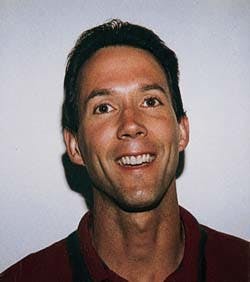
Matthew F. Lamey is a staff facilities engineer for Shell USA's deepwater production division based in New Orleans. He worked for Shell and affiliates, 1982-1989, then rejoined the company in 1996, working for engineering and consulting firms in the interim.
Lamey holds a BS (1982) in chemical engineering from Montana State University, Bozeman.
![(Fig. 1 [90,239 bytes])](http://images.pennwellnet.com/ogj/images/ogj2/9632jla01.gif)
![Fig. 2 [111,976 bytes]](http://images.pennwellnet.com/ogj/images/ogj2/9632jla02.gif)
![Fig. 3 [72,261 bytes]](http://images.pennwellnet.com/ogj/images/ogj2/9632jla03.gif)
![Fig. 4 [40,311 bytes]](http://images.pennwellnet.com/ogj/images/ogj2/9632jla04.gif)
![Fig. 5 [49,350 bytes]](http://images.pennwellnet.com/ogj/images/ogj2/9632jla05.gif)
![(Fig. 6 [79,198 bytes])](http://images.pennwellnet.com/ogj/images/ogj2/9632jla06.gif)
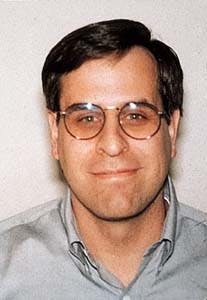
Fred. K. Wasden is manager of oil-shale technology for Shell E&P Technology Co. in Houston. He has 8 years' experience as a research engineer for Shell. He is a registered professional engineer in Texas and holds a PhD in chemical engineering from the University of Houston. Wasden is a member of AIChE and is a founding member of the Institute for Multifluid Science & Technology.
Copyright 1998 Oil & Gas Journal. All Rights Reserved.