India Offers Ideal Fit For Refinery-Generated Electricity
James S. Falsetti, Richard Weissman
Texaco Inc.
White Plains, N.Y.Douglas M. Todd
General Electric Co.
Schenectady, N.Y.
About this report...
India, the world's largest and most complex democracy, has been long on promise, but short on progress in the energy and petrochemical sectors. Economic reforms in the early 1990s are apparently taking hold and moving this slumbering giant forward. Articles in this report describe how the refining industry there can help cut the country's major electricity deficit, while meeting environmental and fuel needs. Also covered are the prospects for the development of coal bed methane, a much needed new energy resource, and the conditions required for meeting the demands of a huge, latent petrochemical market.The integrated gasification combined cycle (IGCC) increases the value of high-sulfur refinery bottoms in Indian refineries by improving transportation-fuel yields and producing clean electric power.
India represents an ideal fit for refinery-based power projects. It has large shortfalls of electric-power generation, shortages of usable indigenous fuels, and transportation bottlenecks for those fuels. These problems are compounded by pressing environmental concerns.
Matching anticipated refinery-residue production with the anticipated electrical needs of the regions identifies potential sites for IGCC. Building the electric-power-generating facilities close to the demand reduces transmission and distribution losses, which are significant in India. The resulting transportation efficiency provides a cost-effective power distribution plan for India. Refinery-based IGCC will also meet environmental goals.
Several forward-thinking refineries have already announced plans to install residual conversion IGCC projects.
India's background
India, the world's largest democracy, has the second largest population (about 970 million) and the seventh largest land area (3.29 million sq km) in the world. The country has the fifth largest gross domestic product (GDP) ($360 billion for 1996-1997), and annual GDP growth rates have averaged over 6% for the past several years (Fig. 1 [42,042 bytes]).Manufacturing/construction/utilities and agriculture/forestry/fishing/mining each accounts for about 29% of the GDP. Transportation/communication/trade accounts for 20% of the GDP, and the service industries (including finance and real estate) account for the rest. Three-quarters of the GDP is generated by the private sector.
Since 1991, the Indian government has undertaken a series of economic reforms to stimulate the economy and spur private investment. Included in these were tariff reductions, liberalization of the import-licensing system, devaluation and the increased convertibility of the local currency, reduced-government borrowings, and encouragement of foreign investment.
The impact of the newly elected Bhartiya Janta Party (BJP)-led coalition government on economic policies has yet to be determined. Early indications show that the market reforms initiated in India during 1991 will continue without significant changes, especially those dealing with the infrastructure. The BJP's National Agenda for Governance promises to give major thrust to infrastructure developments, particularly in the energy and power sectors. The new government has acknowledged the need to eliminate or to simplify all laws and regulations to relieve industries from bureaucratic control, which has been primarily responsible for the lackluster performance of the power sector to date.
Electric power
Currently, India has about 85,000 mw of installed power capacity, of which 70% is thermal (primarily coal based), 27% is hydro, and the rest mostly nuclear. About 65% of the power plants are owned and operated by the regional State Electricity Boards (SEBs), and 29% are owned by corporations set up by the central government.While India has experienced a sixty-fold increase in its generating capacity in the past 50 years, the country has not kept up with its growing demand in the past 20 years. India went from a position of having a surplus of power in the late 1970s to the current situation, which is characterized by peak-demand shortages estimated at about 20% on average. The peak shortages affect all regions of the country to varying degrees (Fig. 2 [81,133 bytes]).
Although annual per-capita electric-power consumption has grown significantly over the past 5 decades (from 15.6 kw-hr in 1950 to 314 kw-hr today), India still lags most of the world and has significant potential for expanded-power usage (Fig. 3 [75,501 bytes]). Demand is projected to rise 7.5%/year; needed capacity additions over the next 10 years are estimated to be over 83,000 mw. The new capacity, including the accompanying transmission and distribution infrastructure, will cost more than $140 billion. Large participation by the private sector (both domestic and foreign) will be needed to fund this expansion.
To encourage the development of private power production, the Indian government has taken a number of steps since 1991 to liberalize the power sector:
- Permitting private sector companies to engage in power generation
- Allowing foreign investment of up to 100% in power projects
- Empowering state governments to approve power projects up to Rs. 10 billion (approximately $250 million) without clearance from the Central Electricity Authority (CEA)
- Establishing tariff mechanisms for sales to the SEBs which allow a base rate of return on equity (16%) and for incentives for exceeding plant load availability factor (PLF) levels of 68.5%
- Allowing tax concessions, including 5-year tax holidays.
- Financially strapped SEBs, which purchase and distribute power from IPPs
- Subsidized power tariffs, particularly to the agricultural sector
- Large transmission and distribution losses (over 20%, compared to the international average of under 10%)
- Deficiencies in procuring indigenous fuel supplies, particularly coal, which currently account for 65% of India's power generation. Coal supply suffers from poor quality with high-ash content, inefficient mining practices, and transportation constraints.
All SEBs are attempting to restructure their operations and finances to improve their ability to support IPP projects. To date, only the Orissa SEB has actually restructured itself, splitting into three separate functional entities: power generation, transmission/distribution, and a regulatory-tariff board.
In light of the above issues facing the development of IPPs in India, refinery-based IGCC projects potentially offer a number of inherent advantages:
- Increased availability of a reliable indigenous fuel source (i.e., refinery bottoms)
- Enhanced bankability of power contracts by having the potential to minimize sales to SEBs (by captive use or direct sales to large industrial customers)
- Reduced potential for transmission/distribution losses (by captive use or direct sales to large industrial customers)
- Potential to sell electric power at a higher load factor than might be available from SEBs (by captive use or direct sales to large industrial customers)
- Expedited permitting as a result of superior environmental performance (particularly with respect to coal based plants or other refinery power-generating options).
Refining
The national oil companies of India have operated the refining industry since India's independence in 1948, but accelerating demand for refined products has caused the government to encourage private investment since 1991.Support for these investments is stated in India's Ninth 5-Year Plan (1997-2002), which also proposes to dismantle the present administered pricing regime (APR) to allow world-market prices for refined products to be applied in India. As evidence of this commitment to change, the government has rescinded APR from some products. As product prices change, the refineries will be faced with the need to improve allocation of their capital expenses and optimize crude oil selection strategies.
There are currently 12 operating refineries; 2 more are under construction, and 5 more are planned to start up by the year 2002. If all these refineries are built, the total capacity will grow from 1.1 million b/d to over 2.2 million b/d-still just balancing expected demand for the year 2005.
The products most in demand will be transportation fuels-diesel and motor gasoline. The refinery complexity will most likely increase to meet this need. This capacity increase will require an investment of $7-14 billion. An encouraging business climate will be necessary to justify investments of this size. Also, inclusion of an IGCC in a refinery can help ensure a stable revenue stream.
Existing Indian refineries are running at full capacity and producing a significant amount of fuel oil (FO) or low-sulfur heavy stock (LSHS). To meet regulatory requirements, valuable light products are typically downgraded into the FO/LSHS pool to limit the sulfur content and viscosity of the FO/LSHS. Table 1 [18,840 bytes] shows the FO/LSHS production by region. Overlaying this production with the regional electrical needs provides a starting point for the bridging of the electrical and refining sectors.
Refinery electricity-generation options
The primary goal of an Indian refinery is to upgrade as much crude oil as possible into salable products while maximizing overall profitability. These salable products are generally liquid fuels that must meet ever-increasing stringent specifications.Most crude oils contain only a small portion of these desirable liquid fuels. Sophisticated refineries often use heavy-oil upgrading to process the most cost-effective crude oils and maximize profitability.
Several upgrading configurations are available with varying degrees of complexity, investment, and operating cost requirements. Selection of the optimum upgrading strategy is a complicated decision typically involving rigorous analyses of every conceivable processing option combination. The decision-maker must weigh many factors, including the environmental, efficiency, and economic aspects of the bottom-of-the-barrel residue utilization.
Upgrading routes for the bottom-of-the-barrel can be broadly divided into carbon rejection (coking and deasphalting) and hydrogen addition (resid hydroprocessing). When designing and operating a bottom-of-the-barrel upgrading plant, the refiner is eventually faced with an undesirable hydrogen-deficient material that is solid at room temperature and is rich in carbon, sulfur, vanadium, and nickel.
The ability to convert this unmarketable material into electricity permits the refinery to increase its profitability by:
- Allowing more extensive upgrading of heavy materials to produce higher yields of lighter products
- Providing greater flexibility in selecting crude slates
- Increasing the value of the resulting bottom fraction.
When choosing among the CFB, FGD, and IGCC electrical plants, the refiner must balance environmental, efficiency, and economic issues to obtain a result that will maximize profitability while preserving strategic options for future investments. It is particularly challenging to anticipate future environmental changes and position the refinery to meet those needs.
In examining the environmental characteristics of the three technologies, all the technologies may be capable of removing 98% of the sulfur. In the CFB and the FGD cases, the sulfur is captured after direct combustion to sulfur dioxide (SO2). In the case of the CFB, the SO2 is removed by using specially prepared limestone to capture the SO2 in the form of a solid material, which is a mixture of everything that did not combust well and are gypsum-like solids.
A significant portion of this solid material has undesirable environmental characteristics (high pH and high metals content), which present a disposal issue. In addition, the limestone/SO2 capture reaction liberates carbon dioxide (CO2), thus increasing the total CFB CO2 profile.
In commercial practice, CFB and FGD achieve about 95% sulfur removal. Proposed designs to achieve 98% sulfur removal require additional processing complexity, capital cost, and incrementally more byproduct disposal/handling issues.
The IGCC, however, can readily achieve 98% sulfur reduction (60% lower SO2 emissions than the 95% cases) in the base design. Fig. 4 [47,483 bytes] illustrates the quantities of solids produced per metric ton of feed from the three technologies. The results shown in Fig. 4 were obtained by processing a high-sulfur feed into a 7% sulfur petroleum coke (95% sulfur removal).
The value of a solid material is based on its market value, transportation cost, and specific handling fees. A low-density material presents additional handling difficulties. Both the CFB and FGD generate large quantities of low-bulk-density solids, but the IGCC generates high-density elemental sulfur or sulfuric acid. Fig. 5 [48,909 bytes]contrasts the same case (7% sulfur petroleum coke, 95% sulfur removal) on a volume basis.
The elemental sulfur or sulfuric acid produced from IGCC plants can be readily converted to fertilizer products for use in the agricultural industry. Thus, the IGCC presents an environmentally benign solution with superior environmental characteristics for the foreseeable future.
The second important parameter is efficiency. Both the CFB and FGD directly combust the solid fuel with air in a relatively efficient manner. In the case of the IGCC, the residues are converted first into carbon monoxide (CO), hydrogen, and a small amount of CO2 by mixing the fuel with high-purity oxygen in the gasification process.
These gases are in turn combusted in a high-efficiency gas turbine where the high-temperature exhaust heat generates steam in the familiar combined-cycle mode. The combined cycle is highly efficient and can readily achieve efficiencies in excess of 55% for power production and approach 75% in cogeneration applications.
The IGCC provides a highly efficient solution with typical overall efficiencies of well over 40%, including the energy required to operate the air separation unit (ASU). If byproduct hydrogen or steam is also produced, overall thermal efficiency is even higher. Fig. 6 [113,570 bytes] illustrates the overall IGCC process flow.
Highly efficient ASUs available today can provide benefits in a cost-effective fashion with a minimal electrical load. If the refiner wishes, an industrial gas company can build, own, and operate the ASU to benefit the refinery. The air-separation plant provides several benefits to the refinery:
- Availability of low-cost nitrogen
- Low-cost oxygen for expanding sulfur unit capacity
- Low-cost oxygen for expanding a carbon-burning, constrained fluid-catalytic cracking unit
- Recovery of rare gases, such as argon, to improve profitability.
Some examples
Gasification has been available for many years, and refiners have successfully applied this technology since 1967 (Table 3 [24,737 bytes]).A more recent phenomenon is the use of IGCC by the refiner to improve profitability. Table 4 [38,363 bytes] lists those projects that are currently in construction or engineering. The details of these projects can be found in the literature so only a summary is presented here.
Several forward-looking refiners in India have announced plans to consider IGCC in their upgrading configurations:
- Indian Oil Corp. Ltd./Kuwait National Petroleum Co.-East India Refinery project
- Essar Refining-Jamnagar project
- Cochin Refineries Ltd.-Cochin project
- Hindustan Petroleum Corp. Ltd./Andhra Pradesh State Electricity Board-Visakh power project.
As a result of the high cost of alternative energy sources, bottom-of-the-barrel IGCC (making use of indigenous energy sources) should be the preferred electrical-generation option for all sites with available refinery bottoms. IGCC can also reduce the 20% forecasted electrical deficit to India. In addition, if desired, incremental hydrogen, steam, and other products can be readily produced for a small investment.
Bibliography
Quintana, Manuel E., and Falsetti, James S., "Heavy Oil Upgrading Using an Integrated Gasification Process" presented at the Sixth Unitar International Conference on Heavy Crude and Tar Sands, Houston, Feb. 12-17, 1995.
Falsetti, James S., Wilson, R. Fred, and Waquespack, Kevin G., "Hydrogen Coproduction With Gasification From Heavy Feeds (Pitch and Coke)," presented at the National Petroleum Refiners Association Annual Meeting, Mar. 20-22, 1994, San Antonio.
"India Means Business-Investment Opportunities in Infrastructure," Ministry of External Affairs/Government of India and Arthur Andersen, 1997.
India Economic Update, Indian Chamber of Commerce, 1997.
The Economist Intelligence Unit Ltd., EIU Country Profile 1997-1998 EIU Country Report, 1st Quarter 1998. SFA Pacific Inc., Mountain View, Calif., Direct communications.
The Authors
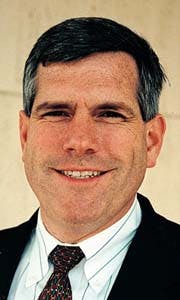
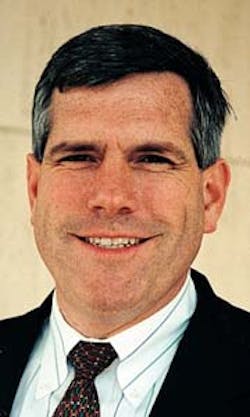
James S. Falsetti is a vice-president of Texaco Inc.'s global gas and power division. Since joining Texaco in 1978, he has worked in refinery technical support and operations, process plant design, technology licensing, and gasification-project development. Falsetti holds a BS in chemical engineering from the State University of New York, Buffalo, and an MBA from Columbia University, New York.
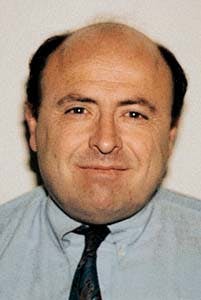
Richard Weissman is a project director for Texaco's global gas and power division. His primary responsibility is the development of chemical and power gasification opportunities in Europe and India. He has over 18 years of experience in the chemical and process industries in job functions that have included process research and development, strategic planning and analysis, and business development. Weissman holds a BS and a PhD in chemical engineering and an MBA in finance.
![(Fig. 1 [42,042 bytes]).](http://images.pennwellnet.com/ogj/images/ogj2/9621jfa01.gif)
![(Fig. 2 [81,133 bytes])](http://images.pennwellnet.com/ogj/images/ogj2/9621jfa02.gif)
![(Fig. 3 [75,501 bytes])](http://images.pennwellnet.com/ogj/images/ogj2/9621jfa03.gif)
![Table 1 [18,840 bytes]](http://images.pennwellnet.com/ogj/images/ogj2/96213401.gif)
![Table 2 [19,335 bytes]](http://images.pennwellnet.com/ogj/images/ogj2/96213402.gif)
![Fig. 4 [47,483 bytes]](http://images.pennwellnet.com/ogj/images/ogj2/9621jfa04.gif)
![Fig. 5 [48,909 bytes]](http://images.pennwellnet.com/ogj/images/ogj2/9621jfa05.gif)
![Fig. 6 [113,570 bytes]](http://images.pennwellnet.com/ogj/images/ogj2/9621jfa06.gif)
![(Table 3 [24,737 bytes]).](http://images.pennwellnet.com/ogj/images/ogj2/96213403.gif)
![Table 4 [38,363 bytes]](http://images.pennwellnet.com/ogj/images/ogj2/96213404.gif)
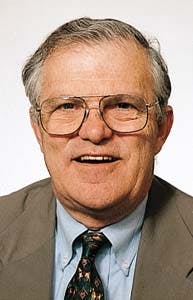
Douglas M. Todd is manager of IGCC programs at General Electric Co. He has previously held positions in engineering, marketing, and sales and was responsible for introducing the GE combined cycle technology worldwide. GE's efforts to introduce IGCC started in 1978 when Todd participated in the development of the Cool Water IGCC project with Texaco, Southern California Edison Corp., and EPRI. Since then, he has been involved in 15 such projects that are either under contract or in commercial operation. Todd holds a BS from Worcester Polytechnic Institute, Worcester, Mass., in chemical engineering.
Copyright 1998 Oil & Gas Journal. All Rights Reserved.