Integrated reservoir studies enhance well completions
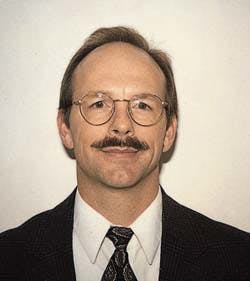
Jeff S. Jordan,Integrated reservoir studies, together with modern completion and stimulation techniques, enhance well productivity while lowering completion costs.
W.W. Aud Integrated Petroleum Technologies Inc.
DenverRichard BurnsUMC Petroleum Corp.
Denver
Results from different areas show that this approach increased productivity from 40% to 100% over previous applied methods.
These approaches incorporate detailed production response characterization with a technical examination of past completion and stimulation practices to:
- Quantify the effectiveness of prior completion methods
- Customize completions by specifically tailoring stimulation procedures to match the individual reservoir with its specific producing and fracturing idiosyncrasies.
Prior methods
The initial phase of an integrated reservoir study analyzes prior completion practices. Advanced engineering tools such as reservoir simulators and 3D fracturing models are used. However, one should have a practical as well as theoretical background to do the analysis. It is also essential to follow a precise methodology.A base line must be developed not only for comparison purposes but to understand the reservoir in terms of its response to the employed completion techniques.
This entails examining the details of daily completion reports, modeling the pressure responses of the stimulation treatments, and history matching of post-treatment production and pressure buildup responses.
The analysis technique establishes the credibility of different completion and stimulation methods, from a production response perspective. It therefore eliminates the ambiguity of different completion and stimulation philosophies and allows one to make logical decisions for optimizing the recovery from a reservoir.
Reservoir characterization
A reservoir must be characterized for the optimization process. Individual well production is analyzed and reservoir parameters are bracketed so that the completion and stimulation can be tailored to a specific reservoir.To characterize the reservoir and fracture dimensions, the production and pressure histories of selected wells are modeled using a finite-difference reservoir simulation along with analytical analysis methods. The finite-difference reservoir simulator couples material balance and fluid-flow equations to describe reservoir fluid flow.
The results from the observed production and pressure histories match provides a description of the material balance and pressure distribution for any point in time over the producing life of the reservoir. Such a model, as shown by the following case histories, is an essential part of developing a reservoir description.
Coupling the analysis of producing rates and pressures with observed pressure build-up data helps to define unique values in an interpretation, especially with regard to establishing fracture length and conductivity.
Finally, to complete the analysis and enhance the entire approach, one needs to incorporate analytical techniques that help identify flow regimes and reservoir drainage character.
Provided that a consistent pattern develops, the reservoir character and completion/stimulation effectiveness can be defined by analyzing a limited number of wells in a field.
Completion design
The completion/stimulation design can be optimized once reservoir characteristics are verified by the reservoir and completion analyses. For example, to mitigate fracture complexity, different perforation and/or breakdown schemes are possible. For instance:- Different tubular design and stimulation fluid may be warranted if fracture cleanup and well unloading is a problem.
- Different cement techniques and/or slurries may avoid formation damage caused by cementing operations.
- Staged fracture treatments may be needed if simultaneously treating of multiple intervals is ineffective.
Fracturing design
By analyzing prior treatments, one can design a completion and fracture stimulation that obtains better vertical and lateral proppant distribution and placement. This will result in increased fracture length and conductivity and thus increase production.The optimum completion and fracture treatment for the minimal cost can be determined by using an economic optimization process that relates actual reservoir properties to completion and treatment design parameters.
Consideration must be given to the fluid system. The fluid system must retain the quality and stability necessary to carry the proppant into the far-field (farthest regions) of the fracture. It also needs to break effectively to facilitate load cleanup.
If a low pressured or low-flow capacity reservoir requires energized fluids, these fluids must be tailored to provide sufficient proppant carrying capabilities. In the same way, the proppant selected for the fracture treatment must be optimized.
The proppant must provide crush resistance and sufficient conductivity during the production period.
Fracturing treatment
Properly executed fracturing treatments are critical for successful projects. Pretreatment fracturing diagnostics must be done to determine how a specific well and formation are fracturing.These approaches are essential when modifying a completion method and inducing a change in fracturing character. Diagnostic injection costs are minor but these injections are essential because it is virtually impossible to predict how a rock will fracture without pumping into it.1
This is true even in developed reservoirs, because large variations in leakoff coefficients, stress and pressure gradients, and fracture complexity have been observed. In addition, relationships have been observed between the leakoff coefficient modeled during pump-in/shut-ins, reservoir permeability, and the associated production response.2
From this pretreatment diagnostic approach, the expected rock fracturing characteristics can be delineated within an expected range. A real-time hydraulic fracture simulator is needed to forward model and show the expected response based on the critical fracture parameters identified during the diagnostic injection stages.
The treatment design can be modified, if needed, to reduce premature screenout possibilities and ensure effective stimulation of the productive interval.
The main fracture treatment is then also monitored in real time, and treatment modifications can be made on the fly based on the net pressure response of the treatment. Additionally, real-time analysis of treatment pressure allows for diagnosing fluid-related problems3 and serves as an excellent fluid and equipment quality control tool.
Post-stimulation analysis
After completing and stimulating a well, one can analyze the production response by analytical methods and/or a reservoir simulation to determine the effective propped fracture length.Pressure buildup tests help provide unique solutions. Based on the results, the completion design and stimulation treatment can be adjusted to further improve the production response. In this way, the optimization process continues to evolve as the reservoir is developed.
Case studies
Two case histories illustrate how an integrated reservoir study combined with modern stimulation methodologies can increase the economic attractiveness of a producing property.These techniques are being used in many areas and formations (Table 1 [90,710 bytes]).
Deep Red Fork
The first example is from the Deep Red Fork formation, Caddo/Canadian Counties, Oklahoma.The Red Fork produces gas with very little condensate from a sandstone reservoir at ±12,250 ft in the Southwest Canyon City field, on the northeastern shelf of the Anadarko basin. Net pay ranges from 26 to 104 ft, with 50 ft being the average. The producing interval is bounded above and below by shales.
The field was first drilled in the 1970s and the wells were fracture stimulated using water-based, zirconate crosslinked fluids with sand and glass beads as the proppant. Some infill drilling took place between 1982 and 1997 and those wells were fractured using CO2 or binary foam fluids with high-strength proppant.
Infill well production performance was less than anticipated and a study was made to identify methods for improving overall economics of the infill program.
The study separated completion techniques into two groups. The first group included the 1970s approach and the second group was for the later wells that were foam fractured. Both approaches pumped the fracture treatment down 41/2-in. casing.
The 1970s approach typically averaged 110,000 lb of proppant and 77,000 gal of zirconate crosslinked fluid and achieved an effective propped fracture half-length of 300-350 ft, based on post-treatment production and pressure analyses. However, the dimensionless fracture conductivity was only 0.2-3.0. The fracture treatment analyses showed that the proppant was distributed effectively in the fracture, however, the sand had low conductivity.
The CO2/binary foam treatments included about 309,000 lb of intermediate-strength proppant and 167,000 gal of foam and achieved 250-ft effective proppant fracture half-lengths, based on post-treatment production and pressure buildup analyses. The dimensionless fracture conductivity was 50+.
The analyses showed that the fluid system and level of proppant concentration was adversely affecting proppant transport into the farthest reaches of the fracture.
Reservoir and hydraulic fracture stimulation models, calibrated from the previous analyses, were used to determine the optimum fracture length for the maximum economical return. Once this was determined, attention could be turned to the design and execution of the fracture treatment.
First, the fluid system and proppant concentration were designed to improve transport beyond 250 ft. A borate crosslinked fluid system was selected because of its excellent fracture dimension development and proppant carrying capabilities. Precured resin-coated sand was included as the proppant, based on its sufficient crush resistance and economical cost.
Prior foam treatments used intermediate-strength proppant that provided excessive conductivity that resulted in excessive cost. For the optimized approach, the proppant concentration was kept at a level such that the proppant would not bridge off in the fracture, allowing better distribution at distance.
Next, the perforating scheme was redesigned to help reduce the complexity of the created fracture geometry. Minimizing the number of perforations and the length of the perforated interval (pseudo point source perforating) reduces the complexity of the created fracture geometry, while the ability to effectively stimulate the entire interval is not hindered.
With an average pay thickness of 50 ft, typically an 8-ft interval was perforated at 3 shots/ft, 60° phased. However, when multiple Red Fork lenses were encountered, the perforating strategy was adjusted to ensure sufficient perforation friction pressure would be encountered to divert fluid into all intervals.
This redesigned perforating strategy cost less than prior schemes that perforated the entire interval.
The tubulars were then optimized. The casing size was increased to 51/2 in. from 41/2. This allowed 21/2-in. tubing to be the fracture/production string. This had several advantages over treating down the casing, such as:
- The critical flow rate was sufficiently high so that the well could unload effectively as opposed to the 41/2-in. casing that required 3-3.2 MMscfd to unload. This production rate was difficult to achieve during flowback operations.
- The 21/2-in. by 51/2-in. annulus could serve as a dead string to monitor the bottom hole pressure response of the treatments.
- The production tubing string could be set without having to kill or snub into the well. This allowed for better fracture cleanup, no remedial damage to the fracture or formation, and lowered completion costs.
During one treatment, pipe friction analysis derived from the annulus dead-string pressure averted a pending screenout from a bad batch of crosslinker solution. Also during the treatments, chemical additive rates were monitored and maintained.
The approach quickly diagnosed fluid quality variations and associated fluctuations in pipe friction and net pressure response.
Table 2 [71,582 bytes] compares the previous and new completion approaches.
This integrated reservoir study combined with modern stimulation methods increased average production by 75% and reduced completion costs by $150,000/well (Fig. 1) [91,385 bytes]).
In Fig. 1, note that five wells are included in the optimized completion approach average. Also, when integrating the flowing pressure into the historical well comparison, the optimized completion approach is nearly six times better than previous methods. Fig. 2 [95,684 bytes] compares production by using the normalized productivity to account for variations in flowing pressure and net pay.
Haynesville formation
The second example is from the Haynesville formation, Columbia County, Arkansas, and Webster Parish, Louisiana.The Haynesville produces gas from over-pressured, tight sandstone intervals at ±10,500 ft in the North Shongaloo Red Rock field, on the Arkansas/Louisiana border. The Haynesville formation's fluvial sand-shale sequence is 500-1,500 ft thick.
Commercial production was established in 1988 with 12 wells. An additional 15 development wells were drilled after February 1995. The wells initially produced 2-7 MMscfd.
The first step in the integrated reservoir study analyzed the previous completions and the production response.
The initial completions included two to five multiple-stage treatments and cost $90,000-420,000/stage, depending upon the length of the treated interval. Interval length ranged from 150 to 520 gross ft in the Haynesville.
Reservoir depletion in certain intervals was the main reason for stimulating zones separately. Pretreatment diagnostic injections had been used to analyze closure stress and leakoff rate for adjusting pad volumes. The proppant concentration was typically ramped to 5 ppg and held during the treatment.
The 2D simulators used with these previous completions predicted about a 700-ft fracture half-length. However, post-treatment production responses indicated only 200-300 ft fracture half-lengths.
The fracture treatment study showed that the Haynesville may have been predisposed by the completion design to develop a complex fracture geometry with multiple fractures. The generation of multiple far-field hydraulic fractures during a fracture treatment reduces overall effective fracture length and conductivity. This causes higher treating pressures, which relate directly to higher treatment costs.
With this knowledge, an improved completion and stimulation approach was developed to enhance production while significantly reducing completion costs.
The approach included:
- Complete more pay intervals with fewer stage treatments.
- Mitigate complicated fracture geometry and improve far-field proppant placement by using a pseudo point source entry perforating strategy and modifying the borate fluid chemistry.
- Increase fracture conductivity by better proppant distribution in the far-field through the shaly intervals.
Diagnostic injection stages facilitated real-time evaluation and design optimization. Based on the diagnostics, it was possible to enhance treatment execution and optimize far-field proppant placement by adjusting the treatment pad volume and proppant concentration schedule.
Quality assurance/quality control procedures were implemented in the lab and on location to ensure adequate fluid properties to optimize proppant transport.
Application of the integrated reservoir study and modern stimulation methods achieved longer propped fracture half-lengths and better proppant distribution. Initial production response increased by 50% over previous completion approaches (Fig. 3 [67,140 bytes]). Note that the average includes 20 wells from the previous approach average and only three wells from the optimized approach.
In addition to the improved production results, total completion costs were decreased by 33% ($200,000/per well). The limited thickness, 2-4 ft, of the pseudopoint perforating strategy effectively communicated the well bore to the propped fracture in the larger sand bodies without perforating the entire interval and it significantly reduced the development of multiple fractures in the near well bore and far-field regions.
Screenouts have been virtually eliminated in subsequent wells through a combination of perforating techniques designed to minimize multiple fracture development and more effective use of fluid technology. These techniques provide a basis for further commercial development at the North Shongaloo/Red Rock and Springhill fields and other fields with similar pay character.
References
- Aud, W.W., Skees, J.L., Middlebrook, M.L, "Methodology for Real-Time Evaluation and Execution of Hydraulic Fracture Treatments," Paper No. SPE 37402, Production Operations Symposium, Oklahoma City, Mar. 9-11, 1997.
- Harkrider, J.D., Aud, W.W., Whittington, J.O., "The Relationship Between Fracture Treatment Shut-ins, Reservoir Permeability and Production Responses," Paper No. SPE 39948, Gas Technology Symposium, Calgary, Mar. 15-18, 1998.
- Aud, W.W., Harkrider, J.D., Hansen, J.D., "Better Frac Jobs With Careful Fluid Design," Petroleum Engineer International, January 1997.
The Authors
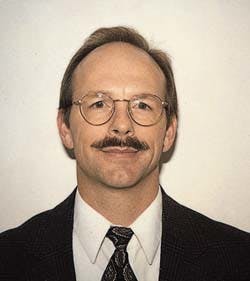
Jeff S. Jordan is senior petroleum engineer for Integrated Petroleum Technologies Inc. in Golden, Colo. He has over 18 years of experience in the oil and gas sector. Jordan holds a BS in petroleum engineering from the University of Oklahoma. He is a registered professional engineer in Colorado, California, and Texas.
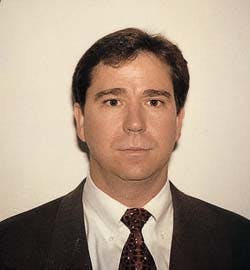
William W. Aud is president of Integrated Petroleum Technologies Inc., a petroleum engineering consulting firm specializing in completion and stimulation optimization. He previously worked as the division reservoir specialist for Bass Enterprises Production Co. Aud holds a BS in petroleum engineering from Texas A&M University. He is a registered professional engineer in Colorado, California, and Texas.
![(Table 1 [90,710 bytes]).](http://images.pennwellnet.com/ogj/images/ogj2/96117201.gif)
![Table 2 [71,582 bytes]](http://images.pennwellnet.com/ogj/images/ogj2/96117202.gif)
![(Fig. 1) [91,385 bytes]).](http://images.pennwellnet.com/ogj/images/ogj2/9611jjo01.gif)
![Fig. 2 [95,684 bytes]](http://images.pennwellnet.com/ogj/images/ogj2/9611jjo02.gif)
![Table 3 [71,095 bytes]](http://images.pennwellnet.com/ogj/images/ogj2/96117203.gif)
![(Fig. 3 [67,140 bytes])](http://images.pennwellnet.com/ogj/images/ogj2/9611jjo03.gif)
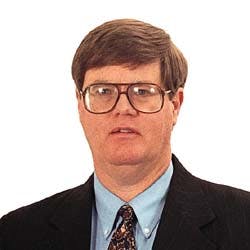
Richard A. Burns is the Midcontinent operations manager for UMC Petroleum Corp. in Denver. He previously worked in reservoir and operations engineering for Union Oil Co. of California, and Mobil Exploration & Producing Co. Burns holds a BS in petroleum engineering from the University of Oklahoma. He is a member of SPE and is a registered professional engineer in Utah, Wyoming, and Louisiana.
Copyright 1998 Oil & Gas Journal. All Rights Reserved.