Venezuela signs agreements with international operators under new hydrocarbon law

These international partnerships aim to unlock Venezuela's vast hydrocarbon resources, including natural gas and heavy oil, with companies investing in exploration, production, and infrastructure projects, amid a changing legal landscape that favors joint ventures and direct management.
May 1, 2026
2 min read

Key Highlights

  • Major oil and gas operators have signed deals with the Venezuelan government aimed at increasing exploration, production under reformed hydrocarbon law.
  • bp, Eni, Repsol, Chevron, and Shell have all signed deals to expand exploration and production in the country.

bp, Eni, Repsol, Chevron, and Shell have signed deals with the government of Venezuela to increase exploration and production under the reformed hydrocarbon law, local media reported

Under the new law, minority partners can directly manage oilfield operations and sales. The prior arrangement left those matters exclusively to PDVSA.

bp signed a memorandum of understanding (MoU) to develop Cocuina-Manakin offshore gas field and explore joint opportunities in Loran offshore gas field. Cocuina-Manakin field crosses the border between Trinidad and Tobago and Venezuela. Cocuina is on the Venezuelan side of the field. Manakin is operated by a bp subsidiary on the Trinidadian side.

Both Cocuina and Loran are part of Venezuela’s Deltana Platform, a largely unexplored gas deposit on the country’s eastern maritime border.

bp said in February it was seeking a license from the US government to develop Manakin-Cocuina and bring gas to Trinidad to convert into liquefied natural gas for export. The field holds an estimated 1 tcf of natural gas, split 34/66 between Caracas and Port of Spain.

98979978 © Marko Bukorovic | Dreamstime.com
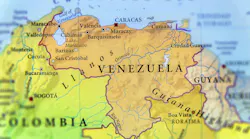
Map of Venezuela

During the signing ceremony Venezuela’s interim President Delcy Rodriguez also signed deals with other international producers, including Italy’s Eni and Spain’s Repsol.

The contract with Eni establishes conditions to relaunch the exploration of the 425 sq km Junín-5 block of Venezuela’s Orinoco Oil Belt. The block was assigned in the late 2000s to Petrojunín, a joint venture between PDVSA (60%) and Eni (40%).

Junín-5 is estimated to contain 35 billion bbl of extra-heavy oil in place, though only a fraction is recoverable. Eni expects to finalize its investment plan by the end of the year.

Eni and Repsol signed a deal to further develop the Cardón IV offshore natural gas project. Each company owns a 50% stake and expects to increase output by about 10%. 

Agreements with Chevron have led to an increased stake in the Petroindependencia joint venture, while its Petropiar project with PDVSA was assigned a new drilling block in the Orinoco Belt.

Shell will take over light and medium crude projects in Eastern Venezuela and several offshore natural gas initiatives. The company has also expressed interest in Loran, which is estimated to hold 7.3 tcf of gas.

About the Author

Alex Procyk

Upstream Editor

Alex Procyk is Upstream Editor at Oil & Gas Journal. He has also served as a principal technical professional at Halliburton and as a completion engineer at ConocoPhillips. He holds a BS in chemistry (1987) from Kent State University and a PhD in chemistry (1992) from Carnegie Mellon University. He is a member of the Society of Petroleum Engineers (SPE).

Sign up for our eNewsletters
Get the latest news and updates