Petrobras authorized to import Vaca Muerta gas as Brazil pivots from Bolivian supply
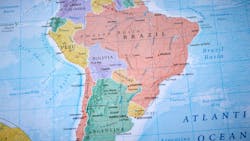
Brazil’s National Agency of Petroleum, Natural Gas and Biofuels (ANP) has authorized Petrobras to import natural gas from Argentina, marking an early step in the integration of Vaca Muerta shale production into the Southern Cone gas market.
Under Resolution SIM-ANP No. 737/2025, Petrobras may import up to 180 million cu m/year, with peak contractual deliveries of up to 2 MMcmd. The measure follows a bilateral energy framework signed by Argentina and Brazil in late 2024 that aims to scale pipeline exports to as much as 30 MMcmd by 2030.
The gas originates in the Neuquén basin’s Vaca Muerta formation, where unconventional production has expanded rapidly through horizontal drilling and multi-stage hydraulic fracturing.
Brazil currently consumes about 65–70 MMcmd of natural gas and has been seeking lower-cost regional pipeline supply to reduce exposure to LNG imports. Brazil’s Ten-Year Energy Expansion Plan identifies pipeline gas from neighboring countries as a strategic source to supply industrial demand in southeastern Brazil.
The emerging supply route also reflects the structural decline of Bolivia’s gas production. Output has fallen from about 61 MMcmd in 2014 to below 30 MMcmd in 2025, limiting the country’s ability to sustain long-term export commitments.
Under the current configuration, Argentine gas flows north through Argentina’s transmission system, crosses into Bolivia, and enters the Gasbol pipeline, historically used to transport Bolivian gas to Brazil. Bolivia is expected to collect a transport tariff for the transit volumes.
The shift has been enabled by Argentina’s Gasoducto Norte reversal project, completed during 2024–25, which allows gas from Vaca Muerta to supply northern Argentina and move toward export markets.
For Argentina, pipeline exports represent a key opportunity to monetize its rapidly expanding unconventional gas resource base. For Brazil, Vaca Muerta offers a potential long-term source of competitively priced gas for its industrial sector.
About the Author
Camilo Ciruzzi
South America Correspondent
Ciruzzi is a journalist based in the Argentine province of Río Negro. He has over 30 years of experience in radio and print media. Ciruzzi studied Communication Sciences at the University of Buenos Aires and specialized in energy, political economy, and finance.