Kimmeridge: US shale oil reserve replacement weakens as gas remains abundant
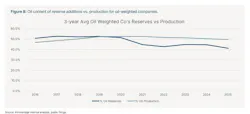
US shale oil producers are finding it increasingly difficult to replace reserves even as operating efficiency improves, while natural gas resources remain comparatively abundant, Kimmeridge, an alternative asset manager focused on the energy sector, said in a new report.
In the report titled “Shale’s Golden Years, Part II: The Cost of Aging," Kimmeridge said cumulative oil reserve replacement since 2019 has averaged about 95%, compared with 126% for natural gas. Well-level data show a similar split, with oil recovery per foot generally declining over the past decade while gas productivity has remained broadly flat to improving.
The deterioration comes despite majort cost and efficiency gains. Since 2018, SG&A expense per barrel of oil equivalent (boe) has fallen about 48%, interest expense 46%, and exploration expense 71%. Operators also have drilled longer laterals and increased drilling speeds.
Even so, Kimmeridge’s 3-year, value-weighted recycle ratio for the US E&P sector fell to 167% in 2025 from 184% in 2019, despite higher revenue per boe. Oil-weighted producers generated a 164% recycle ratio in 2025 versus 186% in 2019, while gas-weighted producers improved to 179% from 165%.
Reserve additions at oil-focused companies also are becoming gassier. Oil represented 41% of their reserve additions in 2025, compared with about 50% of current production. Kimmeridge said the conventional 6 Mcf-to-1 boe conversion can obscure that shift by giving lower-value gas the same energy-equivalent replacement credit as oil.
Kimmeridge said weaker oil reserve replacement could reduce the responsiveness of US shale supply to higher prices over time, providing structural support for WTI and strengthening the case for renewed oil exploration.
Natural gas faces the opposite backdrop. Efficient gas reserve replacement and rising associated-gas output point to continued supply abundance, potentially weighing on Henry Hub and increasing the value of LNG-linked sales, transportation, and other downstream exposure.