OTC speakers say Venezuela reopening hinges on stability, legal clarity
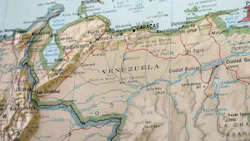
Venezuela’s reopening to the US energy sector presents significant long-term potential, but large-scale investment will depend on political stability, legal certainty, and the country’s broader geopolitical risk profile, warned speakers during at the 2026 Offshore Technology Conference (OTC) in Houston.
The discussion took place during the Executive Dialogue session, “How US Energy Companies Are Sizing Up Venezuela’s Revival,” moderated by Barbara Thompson, Project Director at Baker Hughes, and featuring Maria Angela Capello, president of Red Tree Consulting LLC, and Ted Borrego, energy law professor at the University of Houston Law Center.
The conversation comes as the Trump administration continues easing sanctions and encouraging American operators to re-engage with Venezuela’s oil and gas sector. Signs are growing that major international energy companies are reassessing opportunities in the country. ExxonMobil and ConocoPhillips have recently dispatched technical teams to evaluate oilfield infrastructure and upstream prospects, while Gulf Coast refiners have already increased imports of Venezuelan heavy crude.
Panelists said the central question facing US energy companies is no longer whether Venezuela will reopen, but whether the conditions, pace, and overall risk profile of that reopening are sufficient to support large-scale, long-term capital investment. Speakers noted that Venezuela’s appeal extends far beyond short-term political change. The country holds one of the world’s largest and most diverse hydrocarbon resource bases, including extra-heavy crude in the Orinoco Belt, conventional light and medium oil, and significant offshore natural gas resources.
The opportunity lies not only in the size of the resource base, but also in the long-term development potential, the panelists said. However, years of underinvestment, deteriorating infrastructure, and labor losses mean rebuilding the sector will require significant technical expertise and sustained capital commitments.
Oilfield service companies are expected to play an important role if activity accelerates, particularly in offshore gas, heavy oil upgrading, drilling services, and infrastructure rehabilitation. Recent reports indicate service providers have already begun reactivating rigs and equipment stored in Venezuela in anticipation of renewed activity.
Speakers emphasized that investors are seeking stable policies and durable legal frameworks before committing capital at scale. Trust in Venezuela’s legal and regulatory system remains weak following years of expropriations and contract disputes.
Companies must evaluate not only Venezuela’s domestic political outlook, but also the broader geopolitical dynamics involving the US and China, Borrego noted. China’s long-standing investments and influence in Venezuela’s energy sector were referenced as an important factor.
Panelists added that oil and gas investment could play a major role in rebuilding Venezuela’s economy and restoring its middle class, but stressed that companies intending to enter the country must be prepared to establish long-term partnerships and navigate potentially lengthy investment payback periods.
About the Author
 Conglin Xu
Conglin Xu
Managing Editor-Economics
Conglin Xu, Managing Editor-Economics, covers worldwide oil and gas market developments and macroeconomic factors, conducts analytical economic and financial research, generates estimates and forecasts, and compiles production and reserves statistics for Oil & Gas Journal. She joined OGJ in 2012 as Senior Economics Editor.
Xu holds a PhD in International Economics from the University of California at Santa Cruz. She was a Short-term Consultant at the World Bank and Summer Intern at the International Monetary Fund.