NEWS Deadline looming for California refiners to supply Phase II RFG
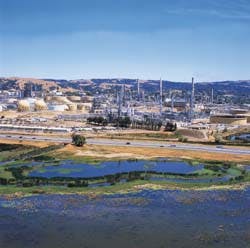
Less than 4 months remain for California refiners to produce the worlds cleanest reformulated gasoline (RFG).
For the first time next year, the state with the most motor vehiclesand the most pressing air pollution problemswill be using a gasoline thats not commercially available elsewhere.
The new gasoline will be manufactured to stringent specifications of the California Air Resources Board (CARB) under Phase II of the states far reaching RFG program. CARB considers Phase II RFG critical to its clean air goals for California.
Phase II gasoline is expected to remove about 1 billion lb of pollutants from the air during the first year alone. Thats the equivalent of taking about 3.5 million automobiles off the states congested roadways.
Success of the Phase II gasoline program is all the more critical in light of pressure the agency has come under to rethink its rule to require a minimum number of zero emission vehiclesin effect, electric autosto be available for sale in California starting with the 1998 model year.
Regardless of what happens with the electric vehicle program, state air quality regulators contend the much cleaner gasoline is the fastest, most certain way to make significant near term reductions in air pollution.
Californias experience with the transition to CARB spec gasoline may prove to be a dress rehearsal for other U.S. states facing increasingly stringent federal Environmental Protection Agency RFG specs under the Clean Air Act amendments (CAAA) the next 5 years.
Thirteen other states have decided to adopt CARB style specs, instead of federal standards, although under less demanding timetables.
Construction crunch
With production slated to be under way no later than Mar. 1, 1996, the push is on in California to complete major refinery upgrades needed to produce Phase II RFG.
There has been considerable progress on construction projects since Oil & Gas Journal last updated this effort (OGJ, Oct. 1, 1994, p. 23).
At that time, a few refiners were bogged down in permitting. Now, all refiners participating in the CARB program report they are on schedule to meet the Mar. 1 deadline.
While some were later than others in getting to the starting gate, it appears all have caught up and can finish construction in time to produce the new gasoline. Construction is only now wrapping up on several projects that got under way as long ago as 1992.
Environmental approvals and permits were a lengthy part of the process, with some challenged and needing revision before work could be completed.
I dont think construction is the critical path, said Lynn Westfall, planning director for Ultramar Inc., Long Beach, Calif. People are throwing money at the problem.
CARBs requirements have triggered an unprecedented wave of capital spending on Californias refineries and spawned a continuing shakeout in the number of refiners able to compete. An estimated $5 billion has been spent on upgrades by the 13 refineries that remain in the market.
The high cost of regulatory compliance in Californiaand not just with CARB specshas shrunk the number of refiners able to compete in the market in recent years.
Two smaller independents who had once looked into producing CARB fuelPowerine Oil Co. and Pacific Refining Co.closed their doors during the past year after finding they would be unable to compete. Two others, Golden West Refining Co. and Fletcher Oil & Refining Co., ceased refinery operations earlier in the 1990s, although Golden West retains a products terminal.
Surviving refiners have spent a great deal of money to stay in the market. Eleven refiners at 13 plants now plan to produce CARB fuel. The cost and complexity of required refinery upgrades vary greatly.
A few of the refinery projects approach the $1 billion mark that classes new construction as a megaproject. A number of others cost about half that sum.
Some refiners, such as Ultramar, which spent about $113 million meeting EPA and CARB specs, were able to hold down costs due to extensive modernization projects in the late 1980s. Others, such as Shell Oil Co. and Chevron Corp., each spending about $1 billion, are tackling modernization of refineries that in fact exceed CARB specs but would enable them to produce the fuel more economically.
Refiners concerns
Competitive concerns have mounted as Californias refiners rush to meet CARBs ambitious specs.
For the most part, refiners are reluctant to disclose exactly when they target the start of full production, saying only that it will be in time to meet the Mar. 1 deadline. Several refiners plan to begin full production at or near yearend.
Some admit, however, they got such a late start on construction that full output will occur very close to the CARB deadline. This increases prospects for operating problems with new equipment at the most critical time. In the meantime, CARB and refiners are cooperating closely on preparations needed to minimize disruptions in the new market.
Industry officials concurred that construction delays are not a critical concern at present.
Operating failures of new equipment could become a concern in months ahead, if one or more participating refiners experience extended problems getting units up and running properly. That happened when low sulfur diesel was introduced in California 2 years ago, helping to cause temporary shortages and price spikes (OGJ, Oct. 18, 1993, p. 32). This time around, CARB has engaged the support of refiners to take steps that both sides hope will avoid a repeat of the brief but very real panic that surrounded the debut of low-sulfur diesel in the state.
Transition safeguards
To ease the transition this time, CARB has stepped up advance oversight on several fronts.
Getting an extra long jump start on the oversight process, CARB last year established a three tiered panel that studies potential supply, demand, and price issues, as well as performance-related questions.
Another subcommittee focuses on public relations needs to help foster acceptance of a fuel thats certain to be more costly. The public will be prepared to expect price increases estimated at 8/gal, but consumers also will be informed of the fuels projected air emission reductions.
In addition, CARB will be ready with data on how RFG affects engine performance, although preliminary studies have shown no adverse effect. CARB also has information on hand on studies showing no correlation between oxygenates in RFG and human respiratory problems.
Those concerns reached a fever pitch last year in Wisconsin and New Jersey after an outbreak of flu-like symptoms coincided with introduction of EPA spec fuel. Some advocacy groups linked the two occurrences to oxygenates in the fuel.
It pays to be prepared, said a refinery official in New Jersey.
Last year, all it took was one radio talk show to get millions of people frantic about their health if they filled their tanks with a less-polluting fuel. A lot of this was media hype, it turned out, but you have to take it seriously. You cant take chances that there might be something to it.
In an effort to quell the potential for price and supply shocks, CARB is scheduling a more gradual transition to the new gasoline than it did with low sulfur diesel. Then, many refiners were just beginning production close to the time the fuel was supposed to be at the pumps, one official said.

Still another step thats been taken by the states legislature is the institution of a fast track process for granting variances that will allow refiners to produce noncomplying gasoline in an emergency.
Refiners not in compliance would have to pay the state a 15/gal fee if granted such a variance. This will help ensure the market is supplied with gasoline, even if it doesnt meet CARB specs. But refiners must have a good reason for the variance and not simply pay the fee to avoid compliance.
The new variance process essentially presumes a good reason exists for a refiner to fall out of compliance and grants a waiver temporarily. In most cases, CARB says, it should not take long to correct the problem.
How CARB gasoline differs
Despite efforts to minimize uncertainty, the challenges California refiners face considerably outstrip those other U.S. refiners face. They must do more than their counterparts elsewhere, years sooner.
The CARB specs that take effect in March far exceed those that came into play earlier this year under the first CAAA phase. Californias specs also are more severe than the federal specs that will come into play in 1998 and beyond.

Small California refiners must meet the same compliance schedule for only four of the specsaromatics, oxygen, benzene and Rvpnext March but have until Mar. 1, 1998, to meet the remaining four specs. Only two refiners planning to comply with CARB specs, Kern Oil & Refining Co. and Paramount Petroleum Corp., fit this category.
By contrast, CAAA rules that took effect early in 1995 set precise specs for only three gasoline characteristics: oxygen, benzene, and Rvp.
While four more parameters will be used to judge compliance of refiners subject to CAAA rules starting in 1998, those refiners will have much wider latitude on how to meet performance standards within the parameters than is to be allowed in California.
Process approaches
Each refiner will have its plan to meet CARB specs but all have the same basic set of process options to formulate the gasoline, notes analyst Mike Hileman. A study by his consulting firm, M.H. Associates, lays out these generic steps the typical refinery will follow to meet the CARB specs:
- Oxygenates. methyl tertiary butyl ether (MTBE) will be the most commonly used oxygenate and typically be blended 11 wt %. In addition to meeting oxygenate requirements, MTBE will be used to blend down aromatics, olefins, and sulfur levels.
- Benzene. Removal of benzene precursors from the reformer feed is necessary to meet this CARB spec.
- Alkylates. Increasing C5 alkylation capacity will deliver a triple benefit of reducing olefins and Rvp while increasing the volume of ideal CARB blendstock.
- Isomerization. Naphtha removed in the course of cutting benzene content will be isomerized to achieve further reductions in benzene and increase octane.
- Reformates. To meet CARBs aromatics spec, refiners will have to reduce reformate capacity. Cutting the heavy end of the reformer feed into the distillate pool also helps meet CARBs T90 distillation spec.
- Hydrotreating. The severity of hydrotreater operations will be increased. Modifying hydrotreater operation produces more gasoline at the expense of distillate production. Swing hydrocracker capacity may become a key factor in balancing supply and demand for CARB RFG.
- Butane. All C4s will be removed to meet the summertime 7 psi Rvp spec.
Operating challenges
At present, many refiners are making test batches of CARB gasoline and using the agencys predictive model to customize their blends within allowed limits.
Its possible to make test batches prior to the completion of refinery revamps, officials say, because almost any modern refinery can produce CARB spec fuel in small volumes.
The challenge will come in making enough volumes to meet the market, some refining officials contend.
CARB allows much less customizing than will EPA, and refiners say CARBs predictive model came along relatively late in the process. Too, experience in meeting so many specs at once for large volumes of gasoline is next to zero.
California refineries will use, on average, 85-90% of their gasoline capacity to produce CARB spec fuel. Using much more refinery capacity to produce the new fuel would either be difficult to achieve or uneconomic.
Remaining gasoline producing capacity will be set aside for continued supply of markets in Arizona and Nevada with conventional gasoline.
Its going to be extremely difficult for refineries to make 90% of their gasoline to CARB standards day in and day out, predicts John Dosher, executive vice-president of Pace Consultants, Houston.
Supply/demand projections (20043 bytes)

As is often the case when a new product is about to hit the market, expectations differ greatly.
Dosher, for instance, predicts California will experience a chaotic 1 or 2 months until refiners gain experience in supplying the market.
He believes the market at first will be short of CARB spec fuel by about 150,000 b/d, with sustainable early supply of only 750,000 b/d. The remainder will have to be met either by variances or imports, Dosher contends, but hes not sure sufficient import arrangements are in place.
Once refiners get to a steady slate, they will produce exactly whats being consumed.
Few, including Dosher, predict a shortage of gasoline in California when CARB spec fuel hits the market. This is because the variance process should ensure that gasoline supplies will be ample in any event, even if all of the gasoline in use does not comply with CARBs standards.
Nevertheless, most analysts believe the 1996 market will be short of CARB spec fuel without some imports. The problem isnt a lack of available refining capacity, they say, but the likely inability of refiners to sustain production at levels needed to meet demand.
Predicting any new market is a dicey proposition, and CARBs assessments of how the market will look are updated continually.
In October, CARB was confident that little or no imports of blendstocks would be tapped to meet supply needs during 1996. By November, polls of refiners by the California Energy Commission (CEC), which monitors market issues for CARB, showed that arrangements were indeed under way to ship blendstock and some unfinished product for the coming year. Still another update is expected to be complete in January.
Its going to come down to economics, noted Gordon Shremp, a CEC energy specialist conducting refiner surveys and monitoring compliance plans. If its cheaper to use out of state blendstocks or alkylateor an extended outage at one or more refineries requires thisimport patterns will shift accordingly.
The import projections do not include oxygenates. California is expected to obtain about 85% of its oxygenates from suppliers in other states or overseas, Shremp says. At present, CEC anticipates no imports of finished CARB spec gasoline.
For 1996, CEC predicts supply and demand will be in near perfect balance. CECs projections are based on output levels the refiners estimate, barring unforeseen complications. The estimates also factor in import and exchange arrangements known to date.
Specifically, CECs most likely case scenario estimates demand of 890,00 b/d against sustainable CARB spec supply of 915,000 b/d. The demand projection, based on historical patterns and gasoline sales figures in the state for the first 8 months of 1995, assumes real demand growth of about 1%.
To be on the safe side, CEC also prepared a worst case scenario based on demand growth of 2%, a level that most analysts agree is higher than likely unless the economy picks up considerably.
In this scenario, demand would fall slightly short of expected sustainable supply, at 917,000 b/d vs. 915,000 b/d. However, CEC compares this with a potential maximum supply capability of 962,000 b/d. Just as CEC does not expect demand to grow at a rate of 2% in 1996, the commission does not expect refiners to sustain production at 962,000 b/d.
Private analysts generally differ with CECs sustainable production figure of 915,000 b/d. Other estimates of sustainable instate production range from a low of 750,000 b/d (Pace), to a high of 890,000 b/d (Ultramar). Demand estimates show remarkable consistency at 900,000 b/d, very close to CECs most likely scenario of 890,000 b/d.
An analysis by Houston consultant Wright-Killen shows one companys projection of how the California market likely will be supplied during 1996. It projects 805,000 b/d of finished gasoline from California refineries, 18,000 b/d of finished and unfinished gasoline from Washington refineries, 39,000 b/d of finished gasoline, blendstocks, and oxygenates from Gulf Coast refineries, and 53,000 b/d of oxygenates from non-U.S. sources.
Imports role
While the numbers of different analysts vary, Wright Killens view is consistent with other private analysts in that the market will be in balance once imports are factored into the equation.
CARB gasoline is expected to be in seasonably tight supply, but no shortfalls or supply disruptions are expected during the introduction period or the summer of 1996, Wright Killen said.
According to several industry observers, preliminary arrangements are in the works by some refiners to import clean blendstocks, oxygenates, some finished product, and some unfinished product. Some say such imports will be essential to meet supply needs. Others say its a fallback, or a sort of hedge, to allow flexibility in finding the most economically sensible approach to meeting the market at a given time.
Nobody wants to be caught short, said one official. And nobody has to be. There are plenty of ways to meet this market. Its just going to take time to determine the best way to do it. Refiners who can meet all their needs internally may not, if it makes more economic sense to import.
The import market will be affected by price spreads between EPA and CARB gasoline. If spreads are wide enough, a higher volume of imports will be justified. Should one or more refiners require a variance and have to pay the state a 15/gal fee, this will tend to justify the higher cost of importing blendstock or other components.
Economics, politics
With huge capital outlays required to produce CARB gasoline, refiners cost recovery likely will take quite some time. Chances are, refiners will be restrained from realizing significant profit margins on CARB spec RFG by a variety of factorsincluding election year politics, one source notes.
Oil companies often invite a tremendous outcry if gasoline prices soarespecially in an election yeareven if theres a valid economic reason for price hikes.
As a result, some believe that California refiners will be under pressure to pass through only modest costs to consumersespecially next year. Unless there are significant and extended refinery outagesan event nobody anticipates at this timehuge price spikes seem unlikely.
Nevertheless, the higher cost of making CARB spec fuel will mean upward pressure on pump prices.
Incremental CARB spec fuel manufacturing costs range among refiners from an estimated low of 4-5/gal to a high of about 7/gal. Winter spot price spreads over conventional gasoline are expected to track these incremental costs, but summer spreads could jump to as much as 10/gal, estimates Wright Killen, and as much as 12/gal, according to another analysis.
Others predict that if variances are required, with refiners paying a 15/gal fee to the state, spot price spreads over conventional gasoline could jump to as much as 20/gal. Its simply not possible yet to predict prices with any certainty and wont be until the market settles and refiners learn the best means for maintaining steady supply.
Ripple effects
No matter how smoothly the transition to CARB Phase II RFG proceeds, some ripple effects in Californias fuel market are certain.
For example, changes in refining processes to manufacture CARB Phase II gasoline are expected to increase supplies of jet fuel. As a result, when the price of gasoline faces upward pressure, the price of jet fuel may well be dampened.
Because California will become an isolated gasoline market, some traders are preparing to shut down their spot gasoline trading operations.
In the past, there was a ready market in California. You could bring in finished material and sell it, said one market watcher. Now, there is no other state or even foreign supplier that will be producing a comparable product in significant volumes.
As a result of Californias isolated gasoline market, long term contracts to meet supply needs will become more prevalent, some predict. Another possibility is a new specialty in spot trading of the components for CARB gasoline, including oxygenates, blendstocks, and alkylate.
Yet despite some pressure to bring in components from elsewhere, CEC expects California to remain a net exporter of gasoline.
While CEC is optimistic about the overall supply of CARB gasoline being in balance, the agency admits there may be some glitches in portions of the market. One area under close watch is Northeast California, which faces rearrangement of traditional supply networks because of the likelihood a Sparks, Nev., terminal will not be handling CARB gasoline.
Theres not enough demand east of the Sierras to ship through Sparks then back to California, said one CEC official. Were concerned about this. Whats a small amount to refiners is big in rural areas.
Distributors will have to look for new supply networks, such as Sacramento, causing realignment in traditional supply arrangements. However, the anticipation of such glitches early in the game, CARB hopes, will allow enough planning to prevent spot shortages after the new gasoline reaches the market.
Orderly transition?
All in all, despite uncertainties that surround introduction of any new fuel, transition to CARB II gasoline shows potential to be a reasonably orderly one if all goes according to plan. And theres certainly been no lack of planning for introduction of this fuel.
What remains to be seen is how reliably refiners can meet the specs and how they prepare to keep the market supplied in any event. Significant efforts under way to coordinate the transition show how everyone involved hopes to avoid shortages and price spikes that would trigger public outcries and dampen acceptance of the least polluting gasoline.
In some ways, the experience with low sulfur diesel fuel was a blessing in disguise, said one source. It was a strong lesson in how not to bring a new fuel to market. n
Copyright 1995 Oil & Gas Journal. All Rights Reserved.