OPERATING SUCCESSFULLY IN BIG EMERGING MARKETS OF THE WORLD
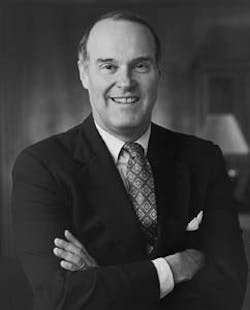
Peter I. Bijur
Senior Vice President
Texaco Inc.
White Plains, N.Y.
From an address to a U.S. Department of Commerce seminar in New York.
One of the most challenging, exciting opportunities for American companies today is doing business in the world's big emerging markets.
Those are the markets with the brightest future for us.
The Pacific Rim is the fastest growing economic area of the world, and Latin America is No. 2. In 1994, the gross domestic product of China grew 12%, South Korea 8%, Indonesia and Argentina more than 6%, and Brazil 5%.
Contrast that with the more developed regions of the world. European economies grew only 2.7% last year and Japan just 0.5%.
Furthermore, the expansion of free trade and free market principles into many formerly protectionist and Communist nations promises even greater opportunities.
International operations have been a big part of Texaco's business for many years. We started selling oil for lamps in Europe in 1905 and kerosine in China in 1913. We now operate in more than 150 countries around the world. Last year, international operations accounted for half our revenues and earnings.
RISKS AND REWARDS
Given the forecasts of growth, the potential for reward in international operations is great.
So are the risks. They can range from radical currency devaluations and rampant inflation to political unrest and outright expropriation of property, from inconsistencies in laws and regulations to favoritism involving local companies, and from lack of infrastructure to often perplexing traditions.
Here are some of the things my company has learned about the risks and rewards of operating internationally:
- If you're considering going into an emerging country, carefully weigh the risks and rewards before investing. 0 If you do go in, take prudent steps to minimize risks.
- Be aggressive in demonstrating to the host country the benefits of working with your company,
- Emphasize and be sensitive to the human aspects of your relationship with the host country, particularly the local culture.
- Be flexible and resourceful. Be prepared to work under conditions that are quite different from what you're used to.
- Be patient.
- Take advantage of the assistance offered by our government where it's available.
MINIMIZE EXPOSURE
At Texaco, we use internal expertise and external sources to analyze risks.
External sources include our partners in international ventures, including some of our competitors, as well as international consultants.
Then, if we do go into a country, we take steps to minimize our exposure. One of the most common approaches is to set up joint ventures and partnerships. This is standard practice in the oil business, with its many uncertainties.
For example, in our oil production operations in the South China Sea, Texaco is a partner in the ACT Operators Group, along with Chevron and the Italian company Agip. In turn, the Chinese government's offshore oil company is a partner with ACT, sharing the produced oil.
This spreads the risk and multiplies the technical, financial, and management resources available to the joint operation. In addition, having the national oil company as a financial partner helps assure a commonality of interests.
For every project we undertake, we have the choice of funding it internally or externally If we do it externally, we consider taking a nonrecourse loan, which is tied to the success of the project. This limits Texaco's exposure and permits maximum balance sheet flexibility.
We also write our contracts to provide maximum protection. For example, in one of our projects in Russia, our proposed work agreement calls for phased development with four "back-away" points to control financial exposure and establish economic potential before we commit to major expenditures. Further, payment to Texaco will be in the form of oil, which we insist on having the right to export.
To minimize our exposure to currency swings, we make appropriate use of currency hedges.
In spite of those efforts, there will always be some unfavorable conditions that are unavoidable. In many countries, American firms have to compete with companies that are at least partially owned by the host government or by its close associates. These local companies are often awarded the most promising prospects, with the less desirable ones given to outside companies.
Local companies also benefit from other aid, such as subsidies or "soft loans," with very favorable conditions.
It's often difficult to compete effectively in situations like this. This is an area where we could look to our government to help create a more competitive environment.
ASSIST HOST COUNTRIES
At Texaco, we believe one of the best ways to protect our interests abroad is to continue to demonstrate how we are helping host countries develop their resources and enrich their societies.
For example, our ACT Operators Group is China's biggest foreign offshore oil producer. This year, China's share of its production will exceed 50,000 b/d. ACT clearly benefits China.
In Indonesia, our joint venture with Chevron, Caltex Pacific Indonesia (CPI), is the largest producer of oil, at 750,000 b/d. That is half of the country's total production, another obvious plus for the host country.
In fact, as a direct result of our performance and excellent partnership, the Indonesian government recently extended CPI's production sharing contract to 2021, even though the current contract did not expire until 2001.
We also demonstrate our value to our host countries by bringing our best technology to the table. Our successful production in Indonesia is possible only because of advanced steamflooding technology, which was developed by Chevron and Texaco over many years here in the U.S.
TECHNOLOGY TRANSFER
An industry leader in technology transfer is our Caltex joint venture with Chevron. This is one of the world's largest refining and marketing companies, operating in 64 countries of Africa, the Middle East, and the Asia-Pacific region.
Caltex is building one of the world's most advanced oil refineries in Thailand, using technology developed in the U.S.
This $1.7 billion facility will incorporate world class standards in energy efficiency, operating run time, and environmental standards. It's also worth noting that this new refinery is one third owned by the Thai oil company.
Texaco technology also is helping China meet its great demand for clean fuels. Presently, two thirds of China's energy comes from coal, with all its environmental problems. To help solve this problem, Texaco has licensed 23 plants in China, using our advanced proprietary gasification technology that turns coal or heavy fuel oil into clean burning gas.
We also demonstrate our value by boosting the local economy. Where possible, we buy goods and services from local suppliers.
And we create jobs for the host country's citizens. A full 95% of ACT's workers are Chinese. All but 100 of CPI's 6,400 employees and 18,000 contract workers are Indonesians. And 98% of Caltex's 8,400 employees are. nationals of the countries where they work.
Another way to demonstrate our value to host countries is by building their infrastructure. In many developing countries in Africa, Asia, and Latin America, Texaco or its subsidiaries has helped fund schools, hospitals, housing, and other facilities to support our operations.
HUMAN RESOURCES
We also feel it's vital to demonstrate our commitment to protecting the environment, health, and safety of our host countries.
We have extensive training programs for employees in our host countries, and we're committed to high standards abroad, just as we are here in the U.S.
Human resource development is a key element of business success in international operations. In many emerging countries, business is based far more on human relationships than it is in western societies. Friendship and trust are vital to business success
For that reason, we take great care in assigning the right people to sensitive positions in host countries. We try to recruit talented, bilingual, internationally oriented Americans and natives of other countries to our overseas operations.
In China, our top two people are veteran Texaco engineers. One has more than a decade's experience in that country. The other is a native of China who is now an American citizen. Both are highly respected and trusted at the topmost levels of the Chinese government and oil industry.
We also realize that many employees from our host countries do not initially understand American business practices. Careful selection, cross training, and exposure to other cultures are important.
We routinely bring foreign employees to the U.S. to train for managerial and technical positions in their country. And we run scores of Texaco in-house and in-country training programs abroad.
This provides us with a pool of capable local professionals for our operations worldwide.
And there's no limit to the opportunities open to them. Almost 28 years ago, CPI named the first Indonesian chief executive officer of a major oil company. Today, another Indonesian occupies that position.
Such professionals bring a savvy and sophistication that's important to our success in many countries.
For example, we have a senior operations geologist in Thailand. He is not only a first rate geologist, he is a Thai national with many important connections in the Thai oil industry and government.
He also advises us on cultural sensitivities. When drilling is about to begin on an exploratory well in Thailand, he arranges a rig blessing ceremony at the site with Buddhist monks and government officials. That kind of gesture goes a long way in Thailand.
POLITICS, CIVIL UNREST
If you decide to operate in emerging countries, flexibility and resourcefulness will be vital to you. There simply is less predictability than you can expect in a developed country.
For one thing, governments can change overnight. It's important not to align yourselves or your company with a particular political party or faction. That group could be out tomorrow, and you could be alienated from their successors. Stay out of politics.
Civil unrest or war also can disrupt your plans. We found that out in Angola, where Texaco has been producing oil offshore since 1981. Even though a civil war has waxed and waned throughout that period, we've managed to maintain production by anticipating events and adapting to them quickly.
In 1993, for example, the conflict spread to the site of Texaco's onshore administration, storage, and supply facility. We responded quickly, evacuating our people and moving our operations to ships and platforms safely offshore, near our wells. Within 19 days, Texaco was back in production.
One resourceful employee even buried a Texaco payloader in his back yard so rebel troops wouldn't get it. When the fighting died down, he went back and dug it up.
BE PATIENT
Finally, a great deal of patience is also important in many countries, particularly those with strongly traditional societies. In some places, negotiations typically may drag on for a year or more. It's important to have the patience and temperament to operate under such conditions.
But patience has its rewards. Consider our history in Indonesia.
In 1924, the Dutch colonial government initially refused to grant us a concession after we had invested 2 years in exploration.
Production started on a small scale in the 1930s, but we had to evacuate when the Japanese invaded. And as soon as World War 11 was over, a war for independence started.
But we hung in there, and today Indonesia is one of Texaco's most important producing operations.
GOVERNMENT ASSISTANCE
There are many things we can do for ourselves to minimize the risks of operating in foreign countries. But we can also look to the U.S. government an international agencies for advice an other forms of help.
For example, it may be possible t obtain project insurance from OPIC, U.S. government agency that provide insurance coverage of political and currency risks on invested dollars.
World Bank also provides financial assistance to companies and countries for key investment projects. Texaco recently drilled some exploratory well off Bulgaria, which may lead to a ga production project.
To finance its share of the project Bulgaria has explored obtaining lo interest loans from World Bank.
Overall, the Department of Commerce and other federal agencies hay been very helpful to American companies, such as Texaco, investing overseas. That's why I was pleased to participate in this meeting today.
I urge federal policy makers to insure that our government continues to encourage and support U.S. companies' foreign investments.
In many industries, including my own, such projects tend to be large and very capital intensive with long lead times. Once we've made an investment, we cannot just pick up and move.
What is so very important is that U.S. companies be provided a level playing field as they attempt to compete for world markets.
In this regard, such things as unilateral sanctions and trade embargoes place U.S. companies in a position where others might look at us as unreliable partners because of the frequency with which our government imposes these trade barriers.
Consider those partners who must rely on us for spare parts or technology transfer when they have the option of trading with non-U.S. companies, where they do not face similar risks. We need to be assured that our government policies promote stability and permanence wherever possible.
SUMMING UP
To sum up: If you are considering expanding into big emerging markets overseas, carefully weigh the risks and rewards before you invest. Then minimize the risks.
Aggressively demonstrate the benefits of working with your company Be sensitive to the human side of your relationship. Be flexible and resourceful. Be patient. And seek our government's help where it's available.
Doing all this won't guarantee success. But it will improve your odds.
And if you do expand abroad, I hope you'll find, as we have, that the rewards of investing in these promising countries far outweigh the risks.
Copyright 1995 Oil & Gas Journal. All Rights Reserved.