Journally Speaking: Leasing and labor
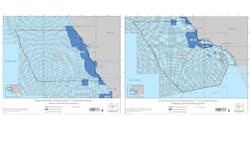
The US Interior Department has advanced plans to open the California coast to new offshore oil and gas drilling for the first time in decades, despite ongoing opposition from state officials. Leaders on both sides cite jobs—the creation of and the threats to—among position points.
On Jan. 26, the US Bureau of Ocean Energy Management (BOEM) announced the issuance of two Calls for Information and Nominations seeking industry input on potential lease areas offshore southern and central California, along with public, tribal, and stakeholder feedback on environmental, socioeconomic, and other considerations.
These initial steps, under President Trump’s 11th National Outer Continental Shelf Oil and Gas Program, are aimed at working toward “a stronger, more secure American energy future,” said BOEM Acting Director Matt Giacona. Part of that envisioned future, Giacona noted, is “US energy security, creating good-paying jobs, and reducing reliance on foreign energy,” echoing Interior Secretary Doug Burgum’s November 2025 description of leasing plans as a way to ensure “America’s offshore industry stays strong, our workers stay employed, and our nation remains energy dominant.”
Yet recent industry trends complicate assumptions about job growth. Since the mid-2010s, US oil production has climbed roughly 50% even as the workforce contracted. Bloomberg reported in mid-January that nearly 250,000 oil-industry jobs have disappeared since the 2014 employment peak, as mergers and advances in automation reshaped the sector.
Pres. Trump, widely viewed as a pro-oil and gas president, has pressed to relax regulations, ease permitting, and open additional waters and land to drilling, but some experts question whether such moves will significantly expand employment.
Ramanan Krishnamoorti, an energy professor at the University of Houston, pointed to the industry’s unmanned rigs as an example of a leaner future. More offshore rigs will be “entirely run by robots and automation, with much of it handled onshore,” he told Bloomberg. “We’re likely to see a very different oil and gas industry—far fewer jobs, and the remaining ones out of harm’s way.”
The oil and gas industry is ever evolving, but its cyclical nature has proved an underlying constant. The sector’s labor response now shows signs of a shift, Karr Ingham, president of the Texas Alliance of Energy Producers, told Bloomberg. “Even when prices recover, we don’t see the same hiring bounce we used to.”
How new leasing offshore California might affect production or employment is unclear. BOEM noted that issuing the call does not constitute a decision to hold a lease sale, nor does it preclude areas from being removed from consideration, and any final determinations must be made in compliance with applicable laws, regulations, and procedures. Tentative first sales—if pursued—are scheduled for 2027.
Opposition has formed among West Coast officials. In response to BOEM’s Jan. 26 move, a spokesperson for California Governor Gavin Newsom’s office told OGJ: “If new offshore drilling is too dangerous for Mar-a-Lago, it's too dangerous for California's communities and our $44 billion coastal economy,” and California will use every legal tool available to fight it, the spokesperson said.
The week prior, Newsom and Governors Tina Kotek of Oregon and Bob Ferguson of Washington submitted a joint letter to Interior Secretary Burgum and BOEM opposing inclusion of California waters, citing risks to coastal economies, marine ecosystems, and communities.
“By clinging to outdated offshore oil drilling instead of investing in the technologies that create good-paying local jobs, the Trump administration is ceding American leadership and prosperity to our competitors and adversaries,” the joint letter read.
Whether jobs will be created or threatened, however, is uncertain. Also unclear is how much industry appetite exists for new federal leases offshore California, as operational risks, legal hurdles, and alternative opportunities could temper interest.
About the Author
 Mikaila Adams
Mikaila Adams
Managing Editor, Content Strategist
Mikaila Adams has 20 years of experience as an editor, most of which has been centered on the oil and gas industry. She enjoyed 12 years focused on the business/finance side of the industry as an editor for Oil & Gas Journal's sister publication, Oil & Gas Financial Journal (OGFJ). After OGFJ ceased publication in 2017, she joined Oil & Gas Journal and was later named Managing Editor - News. Her role has expanded into content strategy. She holds a degree from Texas Tech University.