CERAWeek: Global exploration revival takes shape
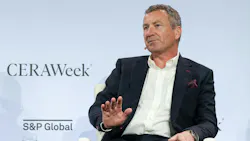
Global oil and gas exploration is showing signs of renewed momentum, but industry leaders at CERAWeek by S&P Global said the playbook has changed fundamentally from past decades, with a sharper focus on capital discipline, faster monetization, technology, and risk management.
Speaking at an industry panel, executives from major international oil companies said exploration is no longer driven by volume growth alone, but by its ability to deliver resilient cash flow and manage risk in an increasingly volatile geopolitical environment.
John Ardill, vice-president of global exploration and new ventures at ExxonMobil, noted that while exploration spending today is significantly lower than it was 30 years ago, expectations have evolved.
“Exploration metrics have changed quite a bit,” Ardill said, noting that today it’s about cash flow, capital efficiency, discipline, and understanding risk.
Despite tighter spending, companies continue to pursue exploration as a long-term value driver. Nicolas Terraz, president of exploration and production at TotalEnergies SE, said the company has maintained a consistent exploration strategy, often in partnership with national oil companies, particularly in parts of Africa.
“We continue to explore steadily,” Terraz said, highlighting collaboration as a key enabler of access and success in frontier regions.
At Italy’s Eni, exploration remains central to growth strategy, according to Guido Brusco, chief operating officer for global natural resources.
“Exploration is a real growth engine for us,” Brusco said. He noted that the company takes calculated risks when it identifies opportunities that can be rapidly monetized, and consistently evaluates projects comprehensively across the entire value chain.
He added that Eni’s approach combines technical capability, workforce expertise, and a willingness to act quickly when viable discoveries emerge.
New technology
Executives agreed that advances in computing power and artificial intelligence (AI) are transforming how exploration is conducted, significantly shortening timelines and improving accuracy.
Ardill pointed to the impact of high-performance computing and 4D seismic technologies, which now allow geoscientists to identify prospective assets in months rather than years.
“Things we couldn’t see five or ten years ago are now visible,” he said. “AI is touching every aspect of upstream.”
Terraz said AI is increasingly embedded in decision-making processes, improving data interpretation and reducing uncertainty in exploration outcomes.
Brusco emphasized that new geological modeling tools and supercomputing capabilities are enabling companies to analyze more complex subsurface environments, while early-stage production data can further refine reservoir understanding.
Colette Hirstius, president of Shell USA, said AI is also improving operational safety, underscoring the broader role digital tools are beginning to play across upstream activities.
Geopolitical risks
While technology is accelerating exploration, geopolitical uncertainty remains a defining challenge. Executives stressed that long-term partnerships and portfolio diversification are essential to navigating volatility.
Ardill underscored the importance of trust in selecting partners, particularly as supply disruptions and geopolitical tensions reshape global energy markets. In a volatile world, reliability of supply depends on strong, trusted partnerships built over many years, he said.
Companies are closely monitoring developments in the Middle East while maintaining diversified portfolios to manage risk, Brusco added. Despite current instability, he expressed confidence in the region’s long-term prospects. “In the long term, the Gulf will be a safe investment destination again,” he said.
About the Author
 Conglin Xu
Conglin Xu
Managing Editor-Economics
Conglin Xu, Managing Editor-Economics, covers worldwide oil and gas market developments and macroeconomic factors, conducts analytical economic and financial research, generates estimates and forecasts, and compiles production and reserves statistics for Oil & Gas Journal. She joined OGJ in 2012 as Senior Economics Editor.
Xu holds a PhD in International Economics from the University of California at Santa Cruz. She was a Short-term Consultant at the World Bank and Summer Intern at the International Monetary Fund.