McKinsey & Company: LNG buyers prioritize flexibility to manage risk
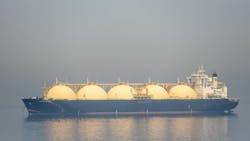
LNG buyers are adapting procurement strategies in response to shifting global energy dynamics, according to a new study by McKinsey & Company. The 2025 LNG Buyers’ Survey, the biennial survey of 41 companies across 17 countries, reveals that flexibility, supply diversification, and balanced contract structures are now top priorities as the LNG market evolves from a period of sharp price spikes to one of relative balance.
Over thirty questions were asked on demand expectations, contract preferences, risk management, supplier choice, and pricing outlook.
The LNG sector saw extraordinary volatility in the early 2020s, with post-pandemic recovery and drastic cuts in Russian pipeline gas pushing spot prices to record highs. By 2023 and 2024, increased liquefaction capacity—especially from the US—softened tight conditions and tempered price swings. However, geopolitical tensions and shifting trade flows continue to influence buyer expectations and strategies.
Regional divergence
Survey respondents broadly expect global LNG demand to grow further, particularly in Asia, fueled by economic expansion and urbanization. In contrast, many European buyers anticipate a long-term decline in LNG imports as renewable energy capacity expands and displaces gas in power generation.
Buyers also project a more stable pricing environment toward the end of the decade: roughly 60% expect LNG prices to settle between $7 and $10/MMbtu by 2030, a range that would unlock “latent demand,” especially in Asia’s large consumption hubs.
Supply diversification
Diversification of suppliers tops the risk-management agenda, with buyers aiming to cap dependency on any single source and prioritize suppliers from geographies with stable shipping and political landscapes. Notably, European buyers express a stronger preference for this strategy than others do: 30% prioritize lower-risk sources, compared with the global average of 25%.
Consistent with the 2023 survey results, one-fifth of global LNG buyers prioritize contracts that include clauses for revising or terminating LNG agreements. European buyers show a higher preference for such clauses compared to Chinese buyers. Furthermore, while only 15% of LNG buyers mitigate risk by switching to new suppliers, Chinese buyers are more inclined to use this method. Among the respondents, only Asian buyers indicated using other strategies to manage geopolitical risk, including sourcing from trusted, integrated suppliers and using high-risk suppliers only for small spot purchases.
Flexible procurement
Contract flexibility is increasingly important; buyers are blending short-, medium-, and long-term agreements rather than relying solely on traditional multi-decade contracts. While long-term deals remain foundational for security of supply, short-term and spot markets are gaining appeal for buyers seeking optionality in an uncertain geopolitical environment.
About 70% of global LNG buyers intend to secure both short- and long-term contracts within the next 2-3 years. Interest in short-term contracts has risen by around 20 percentage points since 2023. Asia Pacific leads in intent for short-term deals while China shows the strongest inclination for long-term commitments.
Compared with 2 years ago, European LNG buyers in 2025 are placing less emphasis on sustainability factors, including low-emission LNG, decarbonization solutions (such as using clean energy in natural gas production), transparency of emissions data, and certified low-emission natural gas. However, their preference for investment partnerships has increased since 2023. This could create opportunities for suppliers to establish joint ventures and equity partnerships with buyers across the LNG value chain, thereby strengthening long-term relationships and ensuring stable supply.
According to McKinsey & Company, the findings underscore a pivotal transition: after years of supply tightness and price spikes, LNG procurement is becoming more strategic, with an emphasis on agility and portfolio management to navigate a market shaped by new production capacity, evolving demand patterns, and geopolitical risk.