IPAA still leading the charge against policies harmful to oil and gas interests


With the arrival of the Obama administration, a solid and somewhat hostile Democratic majority in Congress, and low commodity prices, US oil and gas producers have entered a challenging period.
Barry Russell, IPAA, Washington, DC
This July, the Independent Petroleum Association of America will begin its 80th year of work in support of America’s independent oil and natural gas producers. Over the years, the industry has grown and adapted, evolving into the proud backbone of America’s energy supply. But success has not come without a fight. The industry has faced and survived countless legislative and regulatory attacks; to this day IPAA remains on the front lines. This year it faces some heavy challenges.
The national economic crisis, including the swift decline in oil and natural gas prices, over the final months of 2008 and into 2009, combined with the arrival of the Obama administration and more powerful Democrat control of Congress have significantly altered the scope of challenges to industry interests. That said, much of the political writing has been on the wall and while opposition to the industry has gained strength in some corners, IPAA has prepared accordingly. What follows is a look at some of the challenges at hand and current efforts to navigate both a recession and new political landscapes.
Though the economic crisis that unfolded last fall moved the public’s attention away from the energy discussion that made so many headlines throughout 2008, the debate continued on Capitol Hill. Legislative efforts on energy, access and regulatory issues were immediately resumed with the start of the 111th Congress in January. In fact, as much as the economy will remain a major political factor, we can expect to see energy, environment, and climate change issues as a significant part of both Congress’ and the administration’s agendas moving forward.
The circumstances that have wed economic interests to energy issues in Washington stem from a combination of the realities of our infrastructure and the aspirations of President Obama. The reality is simple enough; the impact American energy supply has on driving economic engines almost requires that energy issues relating to access, research, regulation, and taxation be reviewed in creating economic policy, let alone a national energy plan. The Obama administration has acknowledged this fact, at least in part, as energy policy has long been one of the cornerstones of its economic agenda.
As the President prepares to wrap up his “first 100 days” a quick look back at his early energy positions shows a mix of common sense and idealism, a combination that should be expected over the next four years.
While on the campaign trail, candidate Obama promised to reinstate a Windfall Profits Tax and deliver “five million new, high—wage jobs by investing in renewable sources of energy.” With the everyday economic concerns over fuel and potential heating costs, these policies might have made political sense at the time, but only one of them would make it to inauguration day.
In the first week of December, just a month after the election, President—elect Obama dropped the call for a Windfall Profits Tax from his agenda. The about face was a promising display of pragmatism as oil prices were slipping even faster than they had risen over the summer. That same week, IPAA leadership was invited to discuss energy issues and brief Obama’s transition team on the importance of American oil and natural gas production.
Encouraging signs from the new administration has not changed its ultimate pursuit of an aggressive agenda that focuses primarily on the renewable energy industry. While the nation must embrace and expand all sources of American grown energy, some of those supporting renewable energy are also in favor of actions that can do serious harm to the American oil and natural gas industry. It will require a vigilant education effort on the part of IPAA and its industry allies to ensure that common misunderstandings about oil and natural gas production do not find their way into the administration’s policies.
Beyond merely the energy legislation that President Obama will continue to consider over the course of his presidency, his administration has also delivered significantly more regulatory power to federal agencies like the Environmental Protection Agency. As nearly all of the regulations that oversee oil and natural gas development are now subject to scrutiny, particularly the work done on federal lands, the expediency with which these agencies can address and work to change regulatory procedures will continue to be an attractive way to tackle climate change and other environmental policies. One of IPAA’s major campaigns will now be ensuring that such regulatory changes do not result in redundant and prohibitive measures against American oil and natural gas production.
Even if the Obama administration sustains policies friendly to American oil and natural gas production, the industry can expect no shortage of threats to its interests. Regardless of the origin, attacks on the industry will likely be aggressive and wide ranging, including familiar legislative hurdles in Congress.
To date, taxes and federal land access issues have demanded a great deal of the attention in dealing with Congress. This does not figure to be any different in the future, though just as environmental interests and alternative fuel development are heavily valued by the administration, they are also issues now well entrenched in the Congress. This is perhaps best exemplified by the ascension of staunch environmentalist Rep. Henry Waxman (D—CA) to chairmanship of the House Energy and Commerce Committee. It is a powerful position and one that now allows environmental interests a great deal of control over legislation affecting not only energy issues, but every sector of the American economy.
Unconventional resource development, now an important part of the nation’s energy supply, has also drawn the attention of Congress and naturally it is keeping an eye on industry progress in this area. This has been made most clear with the progress made on shale play production and how processes like hydraulic fracturing are treated under the law.

In truth, over the next few years nearly all of the critical industry positions we have enacted over the past three decades will come back under fire. With this, whether prices are high or low there will no doubt be an abundance of oversight hearings held by key congressional committees. Much of the language and visuals that surround these proceedings will be familiar, though as seen recently, opposition to the industry has grown stronger and now requires additional protective efforts. In preparation, IPAA, led by the government relations team has established a comprehensive set of programs and activities designed to enhance the industry’s standing with the new government in Washington.
Much of this preparation has been done through legwork on Capitol Hill. Included with efforts that began early last year to address the rising Democrat majority has been a major drive to acquire intelligence on Democratic energy and tax strategies. At the same time IPAA expanded the presentation of its messages to a wider network of Democrat members while aggressively pursuing a closer relationship with the Democratic leadership.
One of the strongest initiatives has also grown to include the partnership of more than a dozen state and national cooperating associations. Having identified early some of the industry’s toughest challenges for 2009, IPAA began to develop an aggressive campaign specifically to prevent bad regulations. The campaign, Project BRIEF (Bringing Real Information on Energy Forward), is a response to the aggressive anti—development attacks on the regulation of oil and natural gas exploration and production activities. The most recent target for these attacks has been hydraulic fracturing regulation, and a broader and more pervasive agenda against hydraulic fracturing has required a comparable response.
With analyses completed of both state and federal environmental laws and regulations and the potential negative threat of more restrictive advances on oil and natural gas production, IPAA and its cooperating associations have begun to create an education program to deliver the findings. Through a thorough communications campaign, Project BRIEF promises to become one of the most aggressive advocacy efforts on behalf of the oil and natural gas industry.
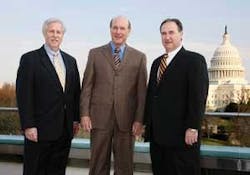
In 2008, IPAA developed and launched a successful new grassroots initiative called the Relationships in Government (RIG) program. Utilizing the power of constituency, RIG has targeted members of Congress in their own backyards and brought them face to face with IPAA members and industry professionals to discuss the nature and importance of oil and natural gas production. These industry meetings, held in Representatives’ hometown districts, have proven to be successful with both Republican and Democrat members. A part of the greater effort to further the education of policymakers and promote balanced energy policy, IPAA will continue to build on its success with the RIG program and establish sustained, one—on—one relationships between IPAA members and their elected officials.
In support of our government relations work and as a continuation of advocacy on behalf of the industry, IPAA has also beefed up its public relations efforts and has established a steady media presence, delivering and responding to coverage and commentary on oil and natural gas issues.
In 2008, while media and public attention enhanced the profile of the oil and natural gas industry, efforts made through the IPAA public affairs team were a significant part of the change in public perception, particularly regarding access issues. Ultimately, polling done in 2008 showed 76% of Americans supported immediately increasing oil drilling in the United States (FOX); and 57% of Americans supported drilling in US coastal and wilderness areas now off limits (Gallup).
Such numbers held throughout the year and showed up on Election Day as exit polling done on behalf of major news organizations revealed that almost 50% of those who voted for President Obama favored “drilling for oil offshore in US waters where it is currently not allowed.” President Obama also won the support of 62% of voters who said they were “somewhat in favor” of expanded drilling.
The truth is that producers still face an unfriendly media. It will require non—stop efforts to keep the public calling for more access for exploration and production. The voice of radical environmental groups will continue to grow louder and more emboldened pushing Congress to punish the industry and restrict the development of American oil and natural gas.
Yes, these continue to be busy and interesting times for the oil and natural gas industry. And IPAA is fortunate to be supported by an engaged and enthusiastic membership, one that continues to make possible a robust, year—round schedule of programs. From the OGIS and Business Development Series, to NAPE® and semi—annual membership meetings, IPAA is proud of a membership participation that allows it to continue to offer the industry unparalleled opportunities for both networking and information.
In such eventful times it’s nearly impossible to look back at what has been an equally eventful eighty year history, and with so much to do, nostalgia would be unwise. Still, it is the lessons and preparation from recent history that will success in the future. And as the landscape of American energy policy continues to change, IPAA will do all it can to encourage national leaders and remind the public to embrace conservation, efficiency and all forms of American energy for the future.
The American independent oil and natural gas producer has a long history leading and as the foundation of America’s energy industry; as always, IPAA remains prepared on their behalf to engage in the tough legislative and media battles on the horizon.
About the author

Barry Russell is president and CEO of the Independent Petroleum Association of America. He previously served as executive vice president, general counsel, and corporate secretary. In this role he focused on legislative policy development as well as the legal and financial administration of the association. Russell received his law degree with honors from George Washington University Law School and graduated with distinction and honors from Penn State University with a BS in psychology and a BA in economics. He has also completed courses in environmental mediation and negotiation at Harvard University and MIT.