Financing in the wake of SemGroup

Josiah M. Daniel IV, Meyers-Reynolds & Associates, Oklahoma City
Introduction
SemGroup LP, a highly-leveraged oil and gas transporter and marketer that purchased oil and gas at the wellhead (a First Purchaser), was the 18th largest private company in the nation when it filed for bankruptcy in 2008. Since then, the availability of cost-effective, asset-based financing for other First Purchasers has become increasingly limited.
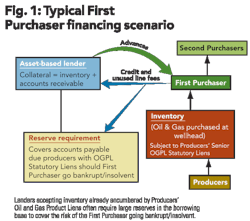
The SemGroup bankruptcy was a stern reminder that states such as Oklahoma, Texas, and Kansas have unique Oil & Gas Product Lien Statutes (OGPL Statutes) that in effect give exploration and production companies (Producers) an automatically perfected purchase money security interest in the oil and gas they sell at the wellhead. In other words, a lender's Uniform Commercial Code Article 9 security interest in a First Purchaser's inventory, accounts receivable, and bank deposits is subordinated to Producers' purchase money security interest in those same assets.
While lenders have found methods to continue lending to First Purchasers, the additional security measures required often kill new lending transactions or prove too costly for prospective borrowers to take on. Fortunately, tailored insurance products are now available that can give lenders the security they need to comfortably increase lending to First Purchasers.
Background
The bankruptcies of several large crude oil purchasers in the 1980s led many states to enact OGPL statutes that protect Producers. While these statutes were intended to secure payment obligations owed to Producers for oil and gas bought by First Purchasers, they have had the unintended consequence of diminishing the ability of First Purchasers to obtain financing, since at any given time the purchaser's inventory, accounts receivable, and a portion of its bank deposits are generally encumbered by the purchase money security interest of Producers.
When SemGroup filed for bankruptcy, its lenders fought the effect and applicability of Texas, Kansas, and Oklahoma's OGPL statutes in Delaware bankruptcy court. The Court ruled in favor of the lenders and gave their Article 9 security interests the traditional treatment received in the UCC. While this was an unpleasant surprise for Producers in that case, the ruling is not binding precedent in states with OGPL Statutes. Lenders' attorneys remain concerned that their clients may not be so lucky if First Purchasers file for bankruptcy, or become enmeshed in lien-priority litigation, in states with OGPL Statutes.

Legal developments in states with OGPL laws have only intensified lenders' concerns. Following SemGroup's collapse and the subsequent bankruptcy court ruling in Delaware, Oklahoma revised its OGPL Statute in a further attempt to ensure that the Producers' liens on sold production and its proceeds have priority over the UCC Article 9 security interests granted by First Purchasers to their lenders. In addition, Producers may push to enact new OGPL statutes (and/or to strengthen existing statutes) in other oil and gas producing states in the wake of SemGroup.
The status quo
As a result of OGPL Statutes and the uncertainty created by the SemGroup decision, lenders have less confidence that their UCC Article 9 security interests in First Purchaser's inventory, receivables, and bank deposits are senior to oil and gas product liens created by OGPL Statutes. Lenders who continue to provide financing in the sector usually require a combination of the following additional security measures:
- increased reserves against availability in the borrowing base
- increased collateral for reduced amounts of advances
- increased interest rates
- increased borrowing costs
Under the status quo, lenders, First Purchasers, and Producers all fail to maximize their interests due to the risk associated with a First Purchaser's bankruptcy or insolvency. Certain specialized insurance markets have significant experience dealing with such risk. Insurers regularly insure against the bankruptcy of counterparties with business credit insurance policies (essentially ensuring the collection of accounts receivable) and the uncertainty created by regulatory statutes with political risk insurance policies (mitigating the risk of unfavorable political or legal outcomes). Using these proven insurance products as guides, lenders can now secure credit risk insurance policies from A-rated carriers that will ensure against the insolvency of a First Purchaser. This will allow a lender to offer more competitive terms regardless of the impact of OGPL statutes on their collateral.
First purchaser credit insurance
The mechanics of these insurance products are straightforward: in the event of a First Purchaser's bankruptcy or insolvency, the policy will cover the amount necessary, up to the limits purchased, to pay Producers' OGPL statutory liens encumbering the First Purchaser's assets. As a result, a lender's Article 9 security interest in a First Purchaser's inventory will retain its traditional senior lien position over Producers' OGPL security interests. The insurer also agrees to subordinate its subrogation rights to the Lender via an intercreditor agreement.
Some lenders have asked why the policy is structured this way instead of just providing lenders with the cash proceeds from the insurance policy. The answer is that many First Purchasers also own or utilize some oil and gas processing equipment. In many cases, a small amount of processing can significantly increase the value of the oil or gas purchased at the wellhead. So retaining the first-priority rights to processed oil and gas will be more valuable to lenders than the mere receipt of the purchase price of the raw material at the wellhead.
Conclusion
Insurance products can facilitate the completion of otherwise difficult financing arrangements. By transferring the risk of loss of senior rights in collateral associated with a borrower's bankruptcy from the Lender to a third party insurer, the Lender can (1) attain greater security in collateral, (2) increase the competitiveness of loan terms, and (3) complete more deals in the midstream sector. Likewise, First Purchasers can have more flexibility in fashioning their capital structure and can avoid the necessity for posting letters of credit with Producers.
About the author

More Oil & Gas Financial Journal Current Issue Articles
More Oil & Gas Financial Journal Archives Issue Articles
View Oil and Gas Articles on PennEnergy.com