Equations determine reasonable rod pump submergence depth
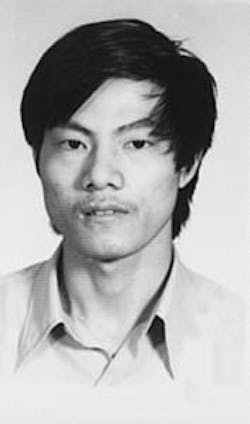
Hu Yongquan, Cai WizhongA reasonable rod pump submergence depth can be calculated by combining fluid level changes with piston travel.
Southwest Petroleum Institute
Nanchong, China
Submergence depth is affected by the pump fill factor, reservoir fluid viscosity, rod pump type, and pumping parameters such as pump diameter, polished-rod stroke length, and pumping speed.
Fluid level velocity can be obtained with an energy balance, and piston travel rate is based on the polished-rod travel.
Pump fill factor
The pump fill factor is defined as a ratio of fluid volume in the pump intake compared to the barrel volume during the plunger upstroke. The pump fill factor is one of the main factors affecting pumping unit efficiency.
To obtain a high fill factor, a proper submergence depth is required, but very few references discuss this problem.
One available analysis sorted measured data from U.S. fields to construct a curve relating the fill factor to pump submergence depth of a 2-in. pump. The analysis used a 940 kg/cu m density fluid with a 550 cSt viscosity.
However, this curve's usefulness is limited because it cannot directly include such effects as pump-type and fluid viscosity.
In another example from the former Soviet Union, an equation was derived to calculate the minimum submergence depth. The calculation assumed that the pump pressure is greater than the fluid bubblepoint pressure. The equation did not relate the piston motion with the rising fluid level in the pump.
Piston travel velocity
If the rod string is considered a rigid string, the pump piston motion is the same as that of the polished rod. Under nonstrict conditions, the polished rod motion can be described as simple harmonic motion. With this assumption, Equation 1 (see equation box) expresses the piston travel rate and Equation 2 gives the average velocity.
Fluid level rise
To calculate the rate that the fluid level rises, the following assumptions were made:
- Neglect compressibility and free gas in the fluid.
- Assume constant fluid level in the casing/tubing annulus.
Equation 3 expresses the energy balance as fluid head (Fig. 1 [16613 bytes]). If dh/dt is assumed to be the rising fluid velocity in the pump, then the head loss can be determined from hydraulic theory by Equation 4.
Equation 5 is derived by neglecting fluid level height because it is usually less than submergence depth.
Flow coefficient
Equation 6 calculates the Reynolds number for fluid flow through the standing valve (SV).
The flow coefficient can be determined by the relationships of NRE ~ C obtained
from the experimental data in Fig. 2 [10708 bytes].
Reasonable submergence depth
Equation 1 describes the piston motion as a sine curve, and from Equation 5 the rate of fluid level rise is approximately a straight line. Fig. 3 [7840 bytes] shows the three possible cases for the average velocity.
In Case 1 (dh/dt VRmax), the real fluid level rate is controlled by the piston because it restricts the fluid level rise. In fact, the fluid level is always in contact with the piston and the fill factor is always equal to one.
In Case 2 (dh/dt < vrmax), the level is in the same position as the pump plunger during the up-stroke and the fill factor is still equal to one.
In Case 3 (dh/dt < vrmax), the level is lower than the piston at the up-stroke, dead point, and the fill factor is less than one.
Obviously, if the submergence depth is determined according to Case 1, it will be on the high side. Thus, peak polished-rod load (PPRL) and the minimum polished-rod load (MPRL) will be increased. But with Case 2, the submergence depth will be on the low side. The lower pump efficiency results from a lower pump fill factor.
The fill factor is equal to one when the rising fluid level velocity equals the average plunger velocity, or dh/dt = VRavg and Equation 7 calculates the pump submergence depth.
Because the rate of level rise, flow coefficient, and submergence depth are interrelated, a correct submergence depth can only be calculated according to the following steps:
- Obtain input parameters.
- Calculate the piston average travel rate.
- Assume a submergence depth (Hs¢) as an initial value.
- Assume a velocity for the fluid level rise (Vo¢).
- Calculate NRE.
- Obtain the flow coefficient according to the NRE ~ C curve.
- Compute the fluid level velocity (dh/dt).
- Compare the initial value (Vo¢) with dh/dt. If dh/dt is about equal to the initial value, then continue with Step 9, otherwise return to Step 4.
- Determine submergence depth (Hs).
- Compare the Hs and Hs¢. If Hs approximately equals the initial value Hs¢, then go to Step 11, otherwise, return to Step 3.
- Output results.
Results
Equations 1-6 obtain the pump submergence depth for different parameters such as pump diameter, standing valve opening diameter, pump speed, polished-rod stroke, fluid density, and viscosity. Fig. 4 [14094 bytes] illustrates the resulting curves.
The diameter of the standing valve opening has an important effect on the submergence depth. The larger the opening, the less is the required depth.
The required depth will increase with the pumping rate. In shallow wells, there is a greater fluid load when a large pump is used, but the required depth is reduced because of a lower pumping velocity. Therefore, a large pump benefits the pumping unit efficiency.
In a deep well, the benefits of reducing the submergence depth is not enough to overcome the shortcoming of the additional fluid load by using a larger pump. Instead a smaller pump should be used.
The Author
![Equations [42258 bytes]](http://images.pennwellnet.com/ogj/images/ogj2/95126601.gif)
![Fig. 1 [16613 bytes]](http://images.pennwellnet.com/ogj/images/ogj2/9512jyo01.gif)
![Fig. 2 [10708 bytes]](http://images.pennwellnet.com/ogj/images/ogj2/9512jyo02.gif)
![Fig. 3 [7840 bytes]](http://images.pennwellnet.com/ogj/images/ogj2/9512jyo03.gif)
![Fig. 4 [14094 bytes]](http://images.pennwellnet.com/ogj/images/ogj2/9512jyo04.gif)
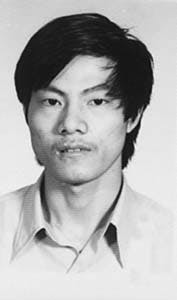
Hu Yongquan is a lecturer at the Southwest Petroleum Institute, Nanchong, China. He is involved in conducting research on production, stimulation, and completions. Hu Yongquan graduated from Southwest Petroleum Institute in 1985 with a BS and received an MS in petroleum engineering in 1988.
Copyright 1997 Oil & Gas Journal. All Rights Reserved.