EXPLORATION Managing overseas E&P in the age of the Internet
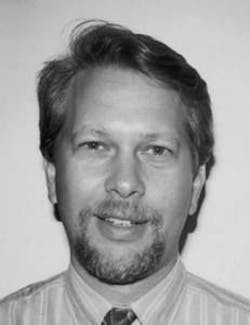
Steven M. Tobias
Pogo Producing Co.
Houston
Four trends are working to change the way independents conduct E&P operations.
First is the growing tendency to operate overseas. Second is the constant pressure to increase margins through cost cutting measures. These measures include among other things reduced failure rates through application of advanced seismic, drilling and completion technologies, reduced staffing levels (especially overseas) and growing reliance on a wide spectrum of outsourcing services.
The third trend is towards integration at all levels, particularly in data management/manipulation (i.e., integrated software platforms) and organizational processes (i.e., integrated project management).
The fourth trend is new, and helps make the first three attainable: the explosive use of the Internet. This brings communications home, projecting the home office overnight into the global "virtual" office.
For Pogo Producing Co., the four trends came together in a dramatic way in early 1995. It was then that Pogo took over operatorship of the Tantawan Production Area in Block B8/32 in the Gulf of Thailand. Pogo's partners include Rutherford/Moran Oil Corp., Houston, and The Sophonpanich Cos., Bangkok.
The area was the site of the Tantawan-1 discovery in 1992, which was followed in short order by a 3D survey and eight more successful exploration wells. A production license was applied for in April 1995 and granted in July. A gas contract was signed in November. Plans call for very rapid development, with first production due in fourth quarter 1996.
Thirty development wells are to be drilled. Plans call for wells to be completed in mid-1996 by a tender rig once the production and wellhead platforms are in place. Gas will be piped into the nearby 36 in. trunk line, while an FPSO will process, store, and offload liquids.
Logistical challenge
One challenge facing Pogo in May 1995 was this: the newly awarded Tantawan Production Area was 240 km off Thailand and 11,000 miles from the closest Pogo office, Houston.
With a highly aggressive development schedule, well placement in this remote and geologically complex area had to be accurate and successful. There was no room for dry holes and no time to install geological and geophysical infrastructure in Bangkok. Drilling would have to be guided by experienced 3D workstation seismic interpreters and reservoir engineers located in Houston.
This challenge was heightened by the fact that drilling rates in the Gulf of Thailand are among the fastest in the world, with rates through the reservoir section typically 1,200-2,200 ft/day. Thus the immediate challenge: how to coordinate drilling operations in Thailand with Pogo's Houston geological, geophysical, and reservoir engineering staff.
Operational jump start
Without a substantial presence in the country, Pogo elected to contract out all drilling, completion, and related services to Schlumberger Integrated Project Management (SIPM). The only logical choice, SIPM had the infrastructure necessary to provide all services for a quick start, from providing needed import visas to comprehensive drilling services.
Guided by one full time Pogo resident manager, Stephen Brunner, this group enabled Pogo to quickly become operational in Thailand. Coordination of SIPM operations with the Houston exploration and production staff became a top priority.
The Sedco Forex Trident 15 jackup arrived on location on July 16, 1995, after being retrofitted in Singapore. A Vsat satellite hook-up was installed, and shortly thereafter a Cisco router. The router enabled rig personnel to access the Internet, and thereby provided a link to the Houston office.
The inevitable startup problems arose. By the second development well they were mostly solved, and by the third well a solid communications routine had been established. This routine involved the transmission of digital drilling and log data three times during the course of drilling these highly deviated wells, namely at 6,500 ft (TVD), 8,000 ft, and TD.
Available deviation, gas chromatography, drilling, and wire line data were sent in encrypted form to Houston via the Internet. These data were immediately uploaded into the GeoQuest Stratlog package, where TVD logs and composite logs were created. These drilling and wireline logs were then transferred via Schlumberger's "Geoshare" software over the local area network to the 3D Charisma workstation, allowing immediate integration of drilling and seismic data.
These data were used to provide immediate feedback in several important areas. The first and most immediate application was to correlate the TVD corrected mudlog with nearby wells, thereby locating the bit within the geological column. The primary curves used for this are total gas, various gas ratio curves, and rate of penetration.
This "early warning" exercise provided advance notice of potential sidetrack situations in this highly faulted terrain by comparing show quality intervals with known pay. On three occasions this early tip-off initiated intensive sidetrack design some 36-48 hr before wire line data were available. While two of these wells logged out to be pipesetters, one resulted in a sidetrack into the adjoining fault block.
Because the necessary tools, materials and design were all in place, there was no downtime at the rig. The sidetrack was successful, and the perfect batting average was maintained.
Immediate attention is also necessary when the bit unexpectedly builds or drops angle. Before the costly decision is made to trip out of the hole and change/repair the bottom hole assembly, updated deviation data are "flashed" to Houston along with probable trajectories.
These data are then loaded onto the 3D workstation, where the seismically-guided decision is made as to whether or not to enlarge target allowances. On several occasions this has allowed the drillers to reach TD without a trip, saving considerable amounts of time and money. On other occasions it has raised warning flags quickly and noisily.
Once TD is reached and the wire line data are transmitted, they are immediately loaded into Stratlog, correlated and evaluated for formation properties. This permits quick-look water saturations, precise log correlation with nearby control, comparison of fluid levels in correlative sands, and better design of sample points for the Modular Dynamics Formation Tester (MDT).
The edited log data are then Geoshared over to the 3D workstation for map modification and reserves calculation. Within a few hours of logging, the geologist, geophysicist, and reservoir engineer in Houston get the well fully analyzed and integrated. Decisionmaking becomes a timely and robust team oriented experience.
Internet risk tradeoffs
Because of the highly deviated nature of the Tantawan trajectories, some of the longer reach wells planned for each of the 12 slot platforms are on the edge of the drilling envelope. Small changes in hole angle and turn radius translate into significant increases in torque and drag. Constant interplay between the Pogo geophysicist and the SIPM-Anadrill drilling engineer are essential in order to optimize geological and mechanical risk.
An initial "get acquainted" work session was held between the Anadrill directional driller, the Pogo 3D seismic interpreter, and the Pogo reservoir engineer, attended also by partner representatives. During this fruitful Houston session, the geophysicist presented a set of trajectories designed to optimally drain each fault block at a spacing optimized by the reservoir engineer.
The directional driller then loaded each trajectory onto his portable SparcStation and calculated torque and drag while pointing out potential trouble spots. The geophysicist then modified the trajectories, which in turn caused the reservoir engineer to re-space the wells. The iterative process continued for several runs and helped avoid mechanical and geological pitfalls in the platform design.
When the drilling engineer returned to Bangkok the next week, the actual office metamorphosed into a virtual one. Seismically determined trajectories were sent in numerical form over the net to Bangkok, where they were worked up and returned over night.
With trajectories finalized, a full scale seismic line was sent over the net (CGM via FTP), printed out, and brought out to the rig. For quicker graphics, screen capture software is used to copy maps/sections off the workstation for immediate Internet transmission. Using this approach, engineers in Bangkok can and do see proposed well trajectories in map and profile view on their PC screens within minutes of their creation.
Achieving goals
At Pogo, the constant drilling and small staff means that little time is available for sifting through mountains of paper in order to document year-end reserves additions. This lengthy process involves among other things updating cross sections, structural and isopach maps, and volumetric calculations.
With several dozen reservoirs correlated within the field, the amount of updating from even one new well can be a daunting task. Multiplied by 30 wells and saddled with inevitable backlogs, the routine can soon overwhelm a small staff. The obvious solution to this problem is to place all geological, geophysical, and engineering data in an integrated digital data base that can be continually updated.
This is known in the industry as an "evergreen" solution.
Pogo's evergreen ap- proach is in a state of continual improvement. It starts with the immediate injection of incoming well data through the system's main portal (Stratlog) and proceeds with a "data ripple," which updates the various data bases in geophysics, geology, and engineering. In order to accomplish this, the Internet-delivered log curves and tops are immediately correlated and overlain on seismic data so that structural maps are continually improved.
Faults and "bright spots" intersected by the new well bore are extracted from the seismic data and overlain on composite logs in order to aid in correlations and quantify amplitude-related pays. Pressure-gradient determined hydrocarbon column heights are integrated with isopach, amplitude and structural data to quickly update reserve calculations. Feedback loops criss-cross the various disciplines, adding robustness to the development project.
A "dynamic" montage is created for each reservoir for archival and presentation purposes. This montage consists of a net pay isopach and structural map that is placed on a digital "canvas," along with a type log, seismic section, and reserves spreadsheet. With each new well the various canvases are updated, resulting in "evergreen" final displays.
The obvious advantage to Internet-based data transfer is speed. The enduring contribution is efficiency.
The people factor
Besides the exploration and reservoir managers in Houston and Brunner in Bangkok, only a handful of professional Pogo people are dedicated to the Tantawan project.
Three are in Houston (geophysicist, geologist/geochemist, and reservoir engineer), and another geologist is in Thailand. The system works because these people are highly experienced, communicative, and self-starters. Most importantly, they develop the computer skills needed to get the job done, and then move onto the real work.
At all times, work flow is carefully integrated with the SIPM group. The virtual office works because the right people are in the right place. Virtually.
"People issues" unique to the global virtual office are numerous: new ones continually crop up.
For starters, Bangkok lies 12-13 time zones ahead of Houston, complicating interactive communications. It is easy to become drawn into a 24 hr work day, whereby evening overseas calls are followed by midnight and early morning calls. Jet-lag like symptoms (without the jet!) can develop before long, resulting in added stress at home.
Solutions are as numerous as they are imperfect. Relying heavily on E-mail instead of voice communication allows each professional to communicate in rhythm with his own time zone. During particularly trying times, either the Bangkok or Houston time zone temporarily becomes the "dominant" one with staggered office hours at the other end.
Other people issues needing creative solutions are performance evaluation and accessibility of appropriate personnel to E-mail traffic. Ironically, team building for globally dispersed personnel becomes a non-issue with daily written communications smoothing out many misunderstandings.
Summary
Global communications combined with a managed integrated project approach has allowed Pogo to mobilize decades of proven domestic know-how for overseas operations.
The approach is new, exciting and in a state of continual improvement. Pogo's Chairman Paul G. Van Wagenen put it succinctly: "Our long-term strategy calls for increased growth from overseas production. Leveraging our Houston-based technical knowhow through modern data and people management techniques allows us to keep overhead down while achieving these goals."
Pogo's Tantawan development experience shows that it is possible for a mid-sized independent to project expertise overseas in a timely and efficient manner. This can only be accomplished through the development of an integrated communications and database system.
The basic requirements for such a system are attainable by most companies: integrated software packages, Internet access, and appropriately trained and motivated in-house and contract personnel. Lean, mean, and evergreen: the work environment for Pogo's international E&P operations has changed forever.
Acknowledgments
The author thanks the following people for their help in putting this paper together: in Houston: R.P. Laney, vice-president international; David Beathard, manager of reservoir engineering; Les Maxwell, geology/geochemistry; Curtis Cohen, geophysics; and Mark Stouffer, reservoir engineering; in Bangkok, Stephen Brunner, resident manager, and Riley Bates, geologist.
Bibliography
Crow, Patrick, Information access quick, easy with Internet, bulletin boards, OGJ, Sept. 11, 1995, p. 33.
Guthery, Scott, Landgren, Ken, and Breedlove, Jim, Data exchange standard smooths E&P integration, OGJ, May 31, 1993, p. 36.
The Author
![Directing Thai Operations From Houston [118841 bytes]](http://images.pennwellnet.com/ogj/images/ogj/94107501.gif)
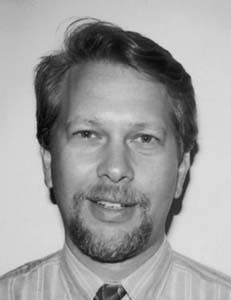
Steven Tobias joined Pogo Producing Co. in March 1993 as international exploration manager. He began with Mobil in 1977 and later worked for Tenneco and BHP. He has worked in a variety of countries, including Australia, Colombia, and Israel. His interests include sequence stratigraphy, production geophysics, and organizational dynamics. He has a BS in geology from Queens College and an MS in geophysics from Pennsylvania State University.
Copyright 1996 Oil & Gas Journal. All Rights Reserved.