NEWS Hungary pushes energy program in upstream, downstream sectors

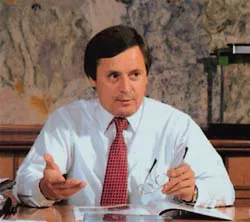
Mineralimpex CEO Tóth. He sees Russia as a prime area for opportunities.
![Hungary's strategic storage sites. [27801 bytes]](http://images.pennwellnet.com/ogj/images/ogj/622nld1.jpg)
![Existing, planned concessions in Hungary. [35266 bytes]](http://images.pennwellnet.com/ogj/images/ogj/622nld2.jpg)
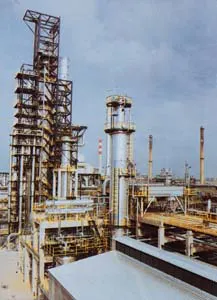
A portion of MOL's 161,000 b/d Danube refinery, Hungary's biggest.
Hungary's efforts to privatize industry, establish a market economy, and participate in European energy and economic cooperatives are advancing on several fronts.
It has not been easy. "Real" privatization is still hampered by attitudes and political turf battles held over from central planning days (OGJ, Sept. 11, 1995, p. 26). Cultures are still clashing.
But the steps being taken to participate in world markets-and world politics-appear fundamentally sound.
The strategy called for qualifying for membership in the Organisation for Economic Cooperation & Development (OECD). That has been accomplished, and the organization has granted membership.
Hungary sees OECD membership as the key to entering the European Union (EU). Petroleum product specifications are being tightened to meet EU environmental standards.
Also, construction is under way on a strategic storage system that will meet requirements of the International Energy Agency (IEA).
Hungary hopes a second round of acreage awards next year will attract more international bidding that will eventually add to its petroleum resources. And Hungarian energy companies are struggling to restructure so they can compete not only in the home market but outside Hungary, too. More crude from abroad will be needed to supplement domestic energy supplies.
Hungary is facing several challenges in addition to basic privatization issues. Although its oil and gas reserves are limited, consumption of petroleum products is expected to increase significantly.
The combination of growing demand and limited domestic reserves means imports will increase. And both oil and gas imports are in firm control-for now-of Russia.
Environmental improvements are also needed.
Other countries face similar challenges. Despite setbacks and changes, Hungary seems to be taking the right approach to these challenges, an approach that can serve as an example for other former Soviet regimes faced with competing in a brand new world.
Probably Hungary's most important early step was to quickly get a credible legal and tax framework in place. For the energy industry, a key feature of this framework is the Mining Law passed in 1993. Efforts to pass this law were pushed hard by the Hungarian petroleum industry.
Now the Hungarian energy industry continues to pursue its strategy to:
- Privatize large state petroleum and energy related companies.
- Let petroleum product and natural gas prices rise to world levels.
- Insure a competitive retail petroleum products market.
- Reduce lead and sulfur in gasoline and upgrade product quality.
- Develop a strategic storage plan that meets IEA requirements.
- Look abroad for equity crude to help meet future demand.
- Open more exploration areas to foreign companies.
- Use new technology such as 3D seismic to reevaluate domestic resources.
- Encourage contracting and service arms of newly privatized state companies to work abroad.
Privatization progress
By late February, 42% of shares of state owned oil company Magyar Olaj-és Gzipari Rt (MOL) had been sold to the public and to investors. It is planned to continue to sell shares.
Hungary's five regional natural gas distribution systems have been sold to foreign firms. In February, the Energy Office also granted the first license to an independent gas distributor.
Hungary's electricity business is due to be privatized this year.
Perhaps the biggest challenge-and a key to Hungary's ability to meet its energy demand-will be how effectively MOL restructures as it is privatized.
It has done some reorganizing but with modest effect. It still has about 16,000 employees, and personnel costs climbed 14% in 1995. MOL notes that is much less than the domestic inflation rate of 28%, but more staff cuts will likely be needed.
MOL has a large geologic staff, and its seismic division has world class equipment, according to one observer. But the capacity of these assets is much too large to be effectively deployed only in Hungary. Two solutions are obvious: Trim the capacity or use it to look for opportunities elsewhere.
Hungary will get help in developing foreign projects from Mineralimpex, the former state owned trading arm that was acquired by MOL last year and has now been made a part of MOL.
The shape of the combined entity is still not defined. In terms of staff and assets, Mineralimpex is dwarfed by MOL. But Mineralimpex, with its experience in international oil trading, brings a global perspective and a competitive culture to the new entity, observers say.
A large part of Mineralimpex's role in the new company will be to find and recommend major foreign investments to MOL, says Dr. J&oacuratezsef T&oacurateth, Mineralimpex CEO. Mineralimpex will help the new entity define and execute a strategy for exploiting foreign opportunities upstream and downstream.
"We will look at opportunities anywhere in the world," says T&oacurateth. "But Russia is obviously prime territory due, in part, to geography."
The move to join MOL was suggested by Mineralimpex executives as early as 1991. "We have wanted to become part of MOL, and now we are ready to help it compete in the global market," says T&oacurateth.
Andrea Kolozr, MOL's senior vice-president of communications, told the Journal recently in Budapest, "MOL would like to operate as a private company. MOL wants to be an integrated oil company."
The privatization that has begun will continue into 1997, she says. An organizational structure is being designed at the board level that could be ready soon.
MOL has a new "balance" of activities. It is interested in exploration abroad and will focus on opportunities in Romania, Slovakia, and other countries in Central Europe. It is retailing in Romania and building more outlets in Slovakia and Slovenia. It hopes to have 10 outlets in Ukraine by 1997.
"And we want to have the biggest market share in Hungary," Kolozr said.
MOL operations
Last year, MOL produced 4.8 billion cu m of natural gas and 1.6 million metric tons of crude. It processed 8.3 million metric tons of oil and other feedstock in its three refineries.
Domestic sales of oil products was 5.4 million metric tons, export sales 2.1 million metric tons. As Hungary's natural gas wholesaler, it sold 11.5 billion cu m of gas last year, up 10% from 1994.
MOL dominates the wholesale products market with 65% of wholesale gasoline sales and even higher shares of fuel oil, lubricants, and bitumens. Retail gasoline market share is 36% sold through 315 filling stations.
MOL's operating profit improved in 1995 by threefold over the previous year, reaching 9.6 billion forints ($71 million U.S.). Revenues grew 28% to 355 billion forints ($2.63 billion).
Natural gas
Natural gas distribution companies in Hungary were sold late last year to Germany's Ruhrgas, Gaz de France, and Italy's ENI (SNAM/Italgas). Thirty bidders bought data packages.
All gas for these systems must still be bought from MOL, which in turn buys it from Russia's Gazprom. Gazprom's hold on Hungary's natural gas supply is not likely to shrink any time soon. North Sea gas, for example, cannot compete with Russian gas because of logistics.
Hungary is not the only place in Europe where greater competition in gas transportation is unlikely in the near term. It is true, says T&oacurateth, that dramatic change is under way in the U.K. where an existing system is being broken up with little change in the size of the market.
But deregulation and competition have not gone far yet on the European continent. In Germany, a new market and the need for capital brought Gazprom and Wintershall together. Since then, however, there has been little movement toward deregulation and competition, says T&oacurateth.
Most homes in Hungary burn natural gas. Residential conversion is not rising significantly, however, despite a sizable tax on heating oil similar to that on transportation fuels. It is difficult to say what effect removing this tax will have. If it were removed, something oil marketers want to see, natural gas could have an even tougher time competing in the residential market.
The border price of natural gas entering Hungary is now about $90/1,000 cu m ($3.33/Mcf). The residential meter price is about $6/Mcf.
Another increase-25%- in natural gas prices occurred in March as part of the strategy to raise prices to market levels. Still another price hike is set for October.
Even though domestic natural gas production is only about 45% of consumption, imported natural gas supplies are considered much more reliable than imported crude supplies. Long term gas contracts with Russia for gas in the form of Yamburg and Orenburg agreements are in place, the former with a 10 year renewal option. Pipeline operation is deemed reliable.
Domestic prospects
Hungary's oil and gas resources are limited. That is why energy strategy includes offering licenses to foreign explorers, exploring abroad for equity crude, and using 3D seismic technology to take another look at mature regions at home.
Oil reserves as of last Jan. 1 are estimated at 129 million bbl, natural gas reserves at 3.3 tcf (OGJ, Dec. 25, 1995, p. 44).
Part of the effort to develop domestic oil and gas reserves is the offering of concessions to foreign operators. Exploration is under way on areas awarded in 1994 to Mobil Corp., Occidental of Hungary, Coastal Oil & Gas Corp., and Blue Star Corp. (OGJ, Aug. 29, 1994, p. 32).
Dr. Péter Eszt&oacurate, president of the Mining Bureau of Hungary, told the Journal in Budapest three areas are being considered for the second round in 1997:
- An area adjacent to the Blue Star/Coastal concession in Central Hungary.
- An area near the Lake of Velence about 50 km from Budapest.
- A area in the Nyirseg Area near the Ukrainian border. The Cretaceous formation here is 5-6 km thick. "But we don't know what is below it," said Eszt&oacurate.
Main elements of a concession agreement are a 4 year exploration term that can be extended for 2 years and a production period of 35 years that can be extended by 171/2 years. The foreign partner must guarantee that it can restore the area.
If oil or gas is found, it can be sold freely, said Eszt&oacurate, "but the company should offer the government the right to buy at market prices."
Royalty is about 12% of the value of production calculated on a Brent crude price basis.
Mining Law No. 48 in 1993 made the Hungarian Mining Bureau responsible for establishing a market oriented mining industry. Eszt&oacurate says the bureau now is responsible for preparing concessions, managing the concessions process, and insuring mining safety. It also controls, inspects, and approves job plans for exploration, examines mining accidents, and keeps accident statistics.
The bureau maintains the royalty system. It recommends royalty levels and royalty waivers to the Minister of Industry & Trade and the Minister of Finance.
The Mining Bureau has regional offices in Szolnok, Miskolc, Veszprém, and Pécs that issue permits to explore on free territories, accept technical plans, and approve plans for site restoration.
Hungary's geologic potential for hydrocarbons is modest, according to most observers.
Hungary occupies the central part of the Pannonian basin, which is filled with a thick sequence of Paleogene, Neogene, and Quaternary sediments. Sedimentary thickness in some places can reach 7,000 m, says Dr. Arpd Erdélyi, chief geologist of Mineralimpex.
Since the beginning of active hydrocarbon exploration in 1937, about 6,000 wells have been drilled in the Hungarian portion of the Pannonian basin, says Erdélyi.
The state "will and must" conduct a new round of leasing in 1997 after MOL concessions revert to the state, says Istvn G. Farkas, director general of the Hungarian Geological Society.
It has begun a new evaluation of the hydrocarbon resources of Hungary. It will finish a study of the areas for the next round by mid 1997, according to Farkas, and help prepare concession packages.
Before the 1993 Mining Act, the Geological Survey was active in mineral exploration. With most of the exploration now being done by the private sector, the role of the state is only to monitor and control.
The survey runs the national geological and geophysical archives. Concessionaires are required to provide results of their work to this archive, which is available to public companies.
Of the survey's geology and geophysical activities, about half is public domain services and half contract work. Main areas of interest include regional mapping, environmental studies, fundamental research, and applied research.
In years past, the geophysical arm of the survey produced equipment for other Soviet states, but that market is gone. "Ten years ago, the Geophysical Institute had a main frame computer and 40-50 people," says Farkas. "Now we have two workstations managed by a few people." But the institute's concession activity will grow, he says.
Product upgrading
The Hungarian Petroleum Association has been active in pushing for better petroleum product quality and new quality standards. One of the association's early efforts was to urge an inspection program to sample the quality of petroleum products.
"The government now has such a sampling program in place, and the quality of fuels is getting better," says Dr. Gyrgy Wilde, secretary general. "Quality will be much more important as fuel standards change."
Currently, 92 RON and 98 RON leaded gasoline are sold in Hungary. EU rules state that only one leaded grade can be sold, and it must be 95 RON or higher. Because Hungary is working toward EU membership, it will eliminate the 92 RON leaded grade effective July 1.
"Eventually, all lead will be removed from Hungarian gasolines," says Wilde. He cites two ways to do that:
- Simply take lead out of the standards so marketers will immediately be prohibited from selling leaded gasoline.
- Increase taxes and let the market eliminate leaded fuel. Currently, there is a 5¢/l. difference between taxes on leaded and unleaded.
Wilde estimates unleaded gasoline already accounts for two thirds of Hungary's consumption, but the share of vehicles equipped with catalytic converters is only about 10%.
Wilde points out that Slovakia has not sold leaded gasoline for 2 years. "But it was easier there," he says, "because all outlets were state owned, and the sale of leaded gasoline could just be stopped."
It is not as easy in a private market with many participants.
Wilde says some form of reformulated gasoline will evolve in Hungary as it will in the rest of Europe. "It won't be exactly the same recipe as U.S. RFG," he says, "but it will be taking more and more of the market in Europe."
The EU spec for benzene, for example, is 5%, compared with 1% in U.S. reformulated gasoline. Hungary's benzene limit is 3%. Other European countries have lower limits.
Different countries are regulating different components, but all these changes are in the general direction of reformulated gasoline, says Wilde.
Domestic consumption of transportation fuels will increase as the economy improves, he says. Marketing in Hungary will be very competitive, and companies like MOL must compete with imported product.
Because the association's goal is to work on critical industry issues, it and its members must have credibility, says Wilde. Officially, anyone can be a member. But as a practical matter, membership is limited to major companies because applicants are asked to submit financial results from the previous year and state that they have no tax debt.
A number of small companies that originally applied for membership later changed their minds when faced with this stiffer entry requirement. The new version of the statutes due out soon will officially make the code of ethics part of the association's statutes. There are only 16 members now, and Wilde expects little change in membership.
Wilde calls tax law "an evergreen subject" for the association and says the group is working on a draft of changes.
Environmental protection is another area for the association's work. Active vapor recovery systems at retail stations will be required at new stations this year, and older stations will be retrofitted during the next few years.
In refining, MOL is working to upgrade capacity as new product specifications evolve.
Lowering the sulfur limit in fuel this year is the reason for a hydrodesulfurization project at the Danube refinery near Budapest, Hungary's biggest. It is the only plant where it makes sense to install downstream processes, says a spokesman for Olajterv, MOL's engineering and construction arm. Other Hungarian refineries produce mainly bitumen and lubes and are too small to make upgrading economic.
The Danube refinery has a 1 million ton/year UOP FCC plant, Visbreaking, and mild hydrocracking following the FCC. Further upgrading, perhaps with a new FCC unit, is in the planning stage.
Olajterv does facilities design, including wellheads, gathering, treating, and field separation-everything but well design. Other responsibilities include gathering, storage, distribution facilities, and underground natural gas storage. Olajterv also lets contracts to others for engineering and construction work.
It also works abroad. To date, most of this work has been in the C.I.S., but Olajterv hopes to obtain work in the Middle East and Africa. It had a big contract in Iraq before sanctions put an end to that activity.
Strategic storage
Only about one fourth of Hungary's petroleum consumption comes from domestic production. It currently has only two alternatives for crude imports: the Friendship (Druzhba) and Adriatic pipelines. The Adriatic pipeline has not been entirely reliable. Some shipments can be made on the Danube, but it is an economic option only for petroleum products, not crude.
Little change in import dependence is expected, so a strategic storage plan is important.
Act 49 of the 1993 Stockpiling Law established the Association of Crude Oil & Products Stockpiling and charged it with developing storage facilities and capacity that meet European standards.
"Hungary's strategic storage work is a pioneering effort for eastern Europe," Dr. J&oacuratezsef Csernk, general director of the association told the Journal. "The system being developed will be similar to others in Europe, but there is no other central stockpiling association in eastern Europe."
To qualify for IEA membership, Hungary must have, among other capabilities, 90 days' supply of petroleum and petroleum products. It expects to have this capacity by the end of 1998.
Capacity increases on the order of 10-20 days' supply are being added each year. At the end of this year, about 50 days' storage for crude and crude equivalent will be operable, Csernk says.
When complete, about one third of the capacity will be for crude, and two thirds will be for products, mainly gas oil and gasoline. Owned and leased storage will amount to 2 million cu m. All storage will be above ground.
As part of the project, new terminals will be built at refineries. A total of 480,000 cu m of crude oil storage will consist of six 80,000 cu m tanks. Four tanks will be installed at the Danube refinery near Budapest and two at the Tiszaujvros refinery in the northeast part of the country.
Four new product terminals, each with 120,000 cu m capacity, will be built as part of the storage network. Two of the terminals will be built in the west at Celldmolk and Pét, and two will be built at Tiszaujvros and Szajol in the east.
In addition, 20 days' supply of heating oil is already maintained at most power stations.
Csernk says there are few sources of product in Central Europe in a crisis. Hence the emphasis on product storage in the stockpiling plan.
In addition to crude and products, about 2 billion cu m of underground gas storage capacity is available at Kardoskt in Southeast Hungary.
In 2 years, membership in the Stockpiling Association grew from 14 companies to 170, including the Hungarian branches of international companies, says Csernk. The association has 11 employees.
Member companies fund operating costs for the association and the storage network. Capital costs for construction are obtained from loans against crude and products inventory. Currently, debt is 60% of the value of inventory.
The association is already active in Europe. Among other efforts, it participates in a database that uses sophisticated computer software to track long term changes in the quality of products in storage. It integrates information on all tanks, products, quality, and specifications into the database.
Copyright 1996 Oil & Gas Journal. All Rights Reserved.