Cutting power costs starts with basic analyses
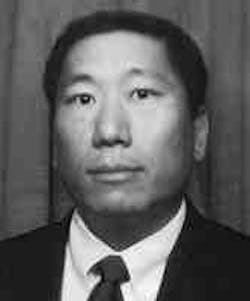
Mike PaikOil and gas production departments should already be reducing their power costs. Regardless of how U.S. deregulation of electricity finally shakes out, power costs are a large portion of total operating expense.
Ohm Corp.
Orange, Calif.
Much has been written in recent months about the rosy days ahead, when electric utilities will be fully deregulated. But this will only be an extension of the opportunities available today; although, after deregulation, many new options will add both opportunities along with complexities.
These is no magic to reducing power costs. It is simply a matter of working at it. Fig. 1 [24911 bytes] shows the recommended steps for lowering power costs.
Electricity basics
Many companies do not fully understand electricity. Therefore, they do not manage their power costs but only endure them. This situation is totally unnecessary.
Electricity is simultaneously a physical phenomenon, an economic commodity, and a bundled service. From the interplay of these different aspects, utilities have developed today's "standard" method for producing and distributing electric power.
Although most companies are familiar with the end result, a little reflection reveals how different electricity is from other business activities.
As a physical phenomenon, electricity moves at the speed of light, 186,000 miles/sec. Electric power engineers are concerned with events that occur in a hundredth of a second over networks spanning hundreds or thousands of miles.
Because of these high speed events, power systems operate automatically. Human involvement is extremely limited. For all practical purposes, the typical power grid operates itself.
The existing power grids were not designed for "open access" or "competition." They were designed for reliability and to provide everyone with power. There will be growing pains as utilities learn to operate existing systems in the new, competitive environment and rebuild systems to meet conditions never contemplated by the original designers.
The two recent blackouts in the Western U.S. are dramatic examples of these growing pains.
Electricity is a commodity that cannot be effectively stored. A battery does well to return half of the power used to charge it. Consider how different oil or natural gas sales and distribution would be if one could not have storage.
However, electricity can be measured, graded for quality, and delivered in various packages; for example, low voltage, high voltage, interruptible, stand-by, etc.
Finally, electricity today is a uniform, bundled service at the deluxe level. All electric utilities strive to give every customer the same standard. This standard is equivalent to a fully loaded luxury car with every option included whether you want it or not.
There are few other commodities that allow customers to use as much or little as they desire, whenever they want, with no notice to the supplier, with nearly 100% availability and uniform quality of product. Few other products include round the clock repair services without additional charge.
This is completely different from the bundle of service operating companies expect from other types of vendors.
In the future, electricity will be unbundled. One can see the confusion that arises in the market when a "standard" service suddenly becomes unbundled by looking at the telephone industry. Operating companies will have to be aware of what services they are really buying and what those services are actually worth.
One cannot assume that the service will be the same. It may be better for one company, and worse for another. But it will be different.
Power bills
Power costs are not fundamentally different from any other cost companies already manage. But somehow, at many companies, power costs are not managed at all. Bills flow in and are paid without review by the operating staffs who use the electricity.
Bills often are not reviewed for correct rate application or even for correct addition. There are few other bills that an operating company would handle in this fashion.
The first step to managing power costs is to find all the power bills. This is usually harder than it sounds, and a lot harder than should be necessary with such a major cost.
Once the actual bills are found, they should be examined in depth. Sad to say, many companies are paying bills on locations they no longer operate, are paying bills on several different power rates for identical end uses, are paying unnecessary charges, etc.
Close attention to your bills is essential. As oil fields age, their power requirements change. Power rates also change every year. Therefore, the correct rate will continue to change over the life of the field.
The second step is to develop a working relationship with the local power company or companies. Most operating companies have no business relationship with their electric utilities, yet the power companies are one of their biggest suppliers. The way operating firms have dealt with utilities is not consistent with how other larger vendor relationships are managed.
A good place to start improving this relationship is to meet with the electric utility. Discuss all the different rates on all the different power bills.
Operating companies should realize that regardless of whom they buy power from, the local electric utility will continue to provide the physical delivery of electricity to their sites. You will be dealing with these utilities now and in the future. It therefore is prudent to place this relationship on the best basis possible.
It is not unusual to find significant savings (10% or more) through these steps. This review is easy, has zero investment cost, and produces fast results. Ideally, a company should make a review of this sort twice a year.
Managing power cost
The next area that should be addressed is your company's procedures for managing power cost. This means how operating and supervising personnel manage the dollars spent for electricity. This should not be confused with tracking kilowatt-hours. Few operating companies care about kilowatt-hours, but everyone cares about dollars.
This may require different procedures than the existing ones. As most operating personnel will realize, it is difficult to change procedures.
The bad news is that change will be painful. The good news is that electrical power costs are variable costs, not fixed costs. Translated this means power cost can be cut without reducing production.
Again, the emphasis should be on managing the dollars spent. We really do not care about the kilowatt-hour usage, or kilowatt-hours per net barrel or power factor or other measures of electrical efficiency except as they are reflected in dollars on the bill.
All too often people assume that their power bills are related only to the number of kilowatt-hours used. This is usually not true.
A few hints on managing power costs are as follows:
- Prepare pie charts of how electricity dollars are spent in your company.
- Set a power cost reduction goal for the year (10%? 20%?) and break it down into monthly goals.
- Assign the monthly power cost reduction goal to specific people. Hold regular progress review meetings and hold people accountable.
- Hold quarterly meetings with the local power company's management. Tell them your problems, ask them about theirs, listen to them carefully.
- Determine what your power rates will be for the next 2 years.
- Calculate how your reserves increase when power costs are reduced by 10%, 20%, etc.
None of these activities involve capital investment. However, they all require mental investment to overcome the inertia of years and years of operating without paying close attention to power costs. The reward for this effort is additional power cost reductions. It is not unusual for an additional 20% savings to be earned this way.
Field equipment changes
After coming to grips with power bills and starting to manage your power costs, one then is ready to think about equipment changes.
The most important change is to give the operating personnel a way to instantly tell how many dollars of electricity their equipment is using. They can then use the existing equipment better, minimizing power cost within the limits of the operating flexibility they already have. This can reduce power cost an additional 15%.
Bear in mind that an electric power meter is a custody transfer point. It is where one takes ownership of the electricity. There is no other custody transfer situation in your plant where the seller's meter is not checked or his paperwork is not audited.
Many operators have oil wells with individual power company meters. In this situation, the operating staff should be taught how to read the meters and how to translate the meter readings to dollars.
One good method is to give them copies of the power bills every month, have the local power company teach them how to read the meter and how to understand the power rate involved.
Where many wells or larger plants are on a single meter, it is important to add meters for the operators to use. Examples of this type of plant are water flood pumping plants and multiple unit gas compression plants.
Waterflood pumping plants typically have several motor-pump sets in parallel. Typical motor sizes range up to 2,000 hp each. Gas plants typically have two or more stages of compression. Larger plants will have several motor-compressor sets in parallel for each stage. Typical motor sizes range up to 1,000 hp each.
In both types of plants, excess output is usually recycled through throttling valves back to the plant inlet. This is a very low return on investment in electricity dollars spent to produce the higher pressure plant output.
These meters must be located near the equipment being monitored and should have instant feedback capability. This will allow your operators to "fine tune" their operating methods. The monthly power bill simply does not have enough data and arrives much too late for this purpose.
Remember that reading these meters in kilowatt-hours is just an accounting stepping stone to determining the dollars being spent.
Adding meters reduces power costs because there is a complex relationship between plant output and the monthly power bill. It is not a linear relationship (Figs. 2 [25696 bytes] and 3 [23387 bytes]). Several factors cause this.
First, power cost is usually time varying, the exact cost at any given time depends on the power rate. Secondly, the output of the plant is usually not constant, but varies with operating requirements. Thirdly, different motor-pump sets will consume different amounts of power, depending on the particular hydraulics and equipment condition. Finally, without metering, operators have no way to control this variable.
Eventually, a company will have real data on how many electricity dollars are used by the equipment in its field or plant. Then, and only then, should it consider replacing pumps, valves, pipes, or motors to reduce power costs.
The tighter the net revenues are, the better the real data should be before making this type of investment. Insist on payout calculations done with real data using actual power rates to determine the revenue savings.
These cautionary warnings do not mean that one cannot save real dollars with this type of project. But one will have to invest money to do the work and one can expect payouts to be longer than for downhole project. Payouts of 3 months to 5 years are not unusual for this type of work. As with any investment, an appropriate level of due diligence is necessary.
There are two major types of equipment projects: outright replacement and modifications to existing equipment.
An example of replacement would be installing new pumps in a waterflood's injection plant. The pumps should be sized for the volumes and pressures actually needed today and volumes and pressures that can be foreseen will be needed till the economic limit. This usually works in fields that are mature because the original plant designers could only estimate today's operating requirements.
A modification project could involve trimming the impellers or changing cylinder volumes on existing water injection pumps. New pumps might give a better match of pump capacity to the water demand, but modification projects are faster, cheaper, and therefore less risky.
Electrical equipment changes
We usually recommend that operators attack changing out electrical equipment last. It requires completing most of the groundwork discussed previously. These projects usually require expert assistance to determine the project cost and expected savings.
This does not mean that these projects cannot be highly cost effective. That depends on what one does with electricity and the precise details of power rates.
Examples of this type of project include high efficiency motors for constant loads, variable speed motor drives in areas with highly time variable power rates, and power meter consolidations.
About deregulation
The companies that will be winners in the electricity buyer's market are the ones that really know what electricity they need, how they use it, and what trade-offs they can accept.
If deregulation were to be 100% implemented tomorrow morning, some operating companies would be in a poor position to take maximum advantage of the opportunities. They would lack the necessary internal data to realistically compare various power rate options.
Electric utilities are not completely ready for deregulation either. The basic mission of electric utilities since the 1930s has been to provide everyone with electricity, not to maximize profit or rate of return.
Historically, utilities had a company mission statement of universal service, in a strictly defined geographical area, limited to a single product. It is difficult for people who have never worked with utilities to understand how truly different this is from running a business for profit.
Electric utilities are being pushed into a different business environment. Their managers, supervisors, engineers, lawyers, etc., may not have ever worked in this environment, as a team, before now. They will have to evolve as teams and companies, which will take significant time.
Power generators, cogenerators, etc., also will have to adapt. They will have a much broader range of power sales options than they had in the past under "standard" utility purchase contracts. This added freedom brings greater potential for profit or loss.
Therefore, deregulation will be an extension of the opportunities available today. How can one best take advantage of having 10,000 options tomorrow instead of only 100 options today?
As with any skill, one needs to practice. To position a company for deregulation tomorrow, one must work at reducing power cost today. This will force the company to acquire the knowledge it must have to take advantage of whatever new opportunities become available. To a great extent the key operating and management techniques can be applied today, without waiting for deregulation.
In a very real sense deregulation started several years ago. Many utilities and other market players have already moved to lock in customers.
But it is never too late to start. Companies should not wait for deregulation, but cut their power costs now.
The Author
![Fig. 1 [24911 bytes]](http://images.pennwellnet.com/ogj/images/ogj/9441jpa1.gif)
![Figs. 2 [25696 bytes]](http://images.pennwellnet.com/ogj/images/ogj/9441jpa2.gif)
![3 [23387 bytes]](http://images.pennwellnet.com/ogj/images/ogj/9441jpa3.gif)
Mike Paik is an engineering consultant with the Ohm Corp. in Orange, Calif. His focus is on practical power cost reduction, upgrading obsolete systems, and plant automation. He previously worked for oil companies and electric utilities.Paik has a BS in electrical engineering from the University of Southern California. He is a registered electrical engineer in California.
Copyright 1996 Oil & Gas Journal. All Rights Reserved.