Saudi Arabia again key to global crude oil market outlook
In many ways, the current crude oil market situation is similar to the last major oil crisis in 1986, with Saudi Arabia as the key player.
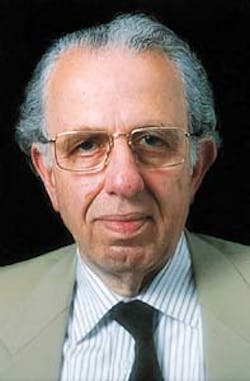
This is the view of Fadhil Chalabi, now executive director of London's Centre for Global Energy Studies, and deputy secretary general of the Organization of Petroleum Exporting Countries from July 1983 to June 1988.
Comparing with 1986
Chalabi told OGJ that, while the current crisis is essentially the same as in 1986, there is a difference in degree of the price collapse and in the financial situations of OPEC's major producers between then and now."The biggest difference," said Chalabi, "is that, since 1986, many OPEC countries have opened their industries to foreign investment.
"This has led to increased production capacity, which these countries have not been able to control completely because of the need to recover the heavy investments that have been made."
The major similarity between 1986 and now is that OPEC is generally viewed as the swing producer, with the role of reducing production to maintain a certain level of oil prices.
Within OPEC, until 1986, Saudi Arabia was viewed as the swing producer, and took on its shoulders the bulk of reductions. By 1985, the call on OPEC crude had been reduced by half from the 1979 level.
As swing producer, Saudi Arabia's production was reduced to 2 million b/d in the summer of 1985 from 10 million b/d in the 1970s. Eventually, the Saudis could no longer be swing producers, said Chalabi, because of their reduced income and market share, and because of their associated gas problems.
In December 1985, OPEC agreed to seek increased market share, said Chalabi, and this ultimately has led to the situation where the quota system has collapsed and prices subsequently fell.
"Now, as in 1986, Saudi Arabia is no longer willing to be the swing producer," said Chalabi.
"From 1993 to 1997, Saudi Arabia's policy was to maintain production at 8 million b/d, but other countries increased theirs. During that period, OPEC production increased by 4 million b/d.
"Saudi Arabia thought it should have had a share in this increase, but, instead, other members exceed their quotas while calling on Saudi Arabia to maintain its quota.
Latest price fall
"So at the OPEC meeting in Jakarta, Saudi Arabia, Kuwait, and U.A.E. increased their share of production by 10%. This was the direct cause of the recent fall in prices" (OGJ, Dec. 8, 1997, p. 21).Now, as in 1986, demand has fallen short of increased capacity, but this time this is mainly because of the Asian financial crisis.
"There is competition between OPEC and non-OPEC producers," said Chalabi, "but the situation is now complicated by competition within OPEC itself.
"Everybody is increasing capacity, yet the industry is still waiting for Saudi Arabia to decrease production to maintain prices. The industry wants to retain this imbalance, but now, unlike in 1986, the Saudi budget is in deficit.
"Saudi Arabia still has 1.5 million b/d of idle capacity, while Kuwait and U.A.E. also have unused capacity. Saudi Arabia is now producing 8.4 million b/d.
"The industry needs a further reduction of 1 million b/d in output to protect prices. The Saudis will not take the whole burden on themselves. Saudi Arabia will not cut back to 7.4 million to make the reduction the industry needs."
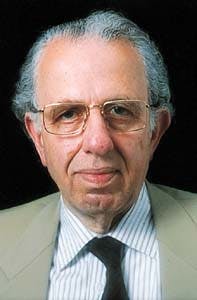
Fadhil Chalabi, CGES Now, as in 1986, Saudi Arabia is no longer willing to be the swing producer. The industry needs a further reduction of 1 million b/d in output to protect prices. The Saudis will not take the whole burden on themselves.
Copyright 1998 Oil & Gas Journal. All Rights Reserved.